Q1 · Soul Nature

Divine Spark

20of 66 traditions hold this positionModerate7 cultural clusters

What does “Divine spark/fragment” mean?

The soul is a piece or emanation of the divine, sharing its nature but individuated

Mystical and Gnostic traditions describe the soul not as a separate creation but as a piece, spark, or emanation of God. The soul is divine in nature yet individuated - retaining a distinct identity while sharing the source's nature. This is the classic Gnostic teaching, but also appears in Sufism, Hasidic Judaism, and Hermeticism.

Examples across traditions

  • Gnosticism: the divine spark trapped in matter awaiting liberation
  • Hasidic Judaism: veritable part of God within
  • Sufism: the divine breath of Allah within the human
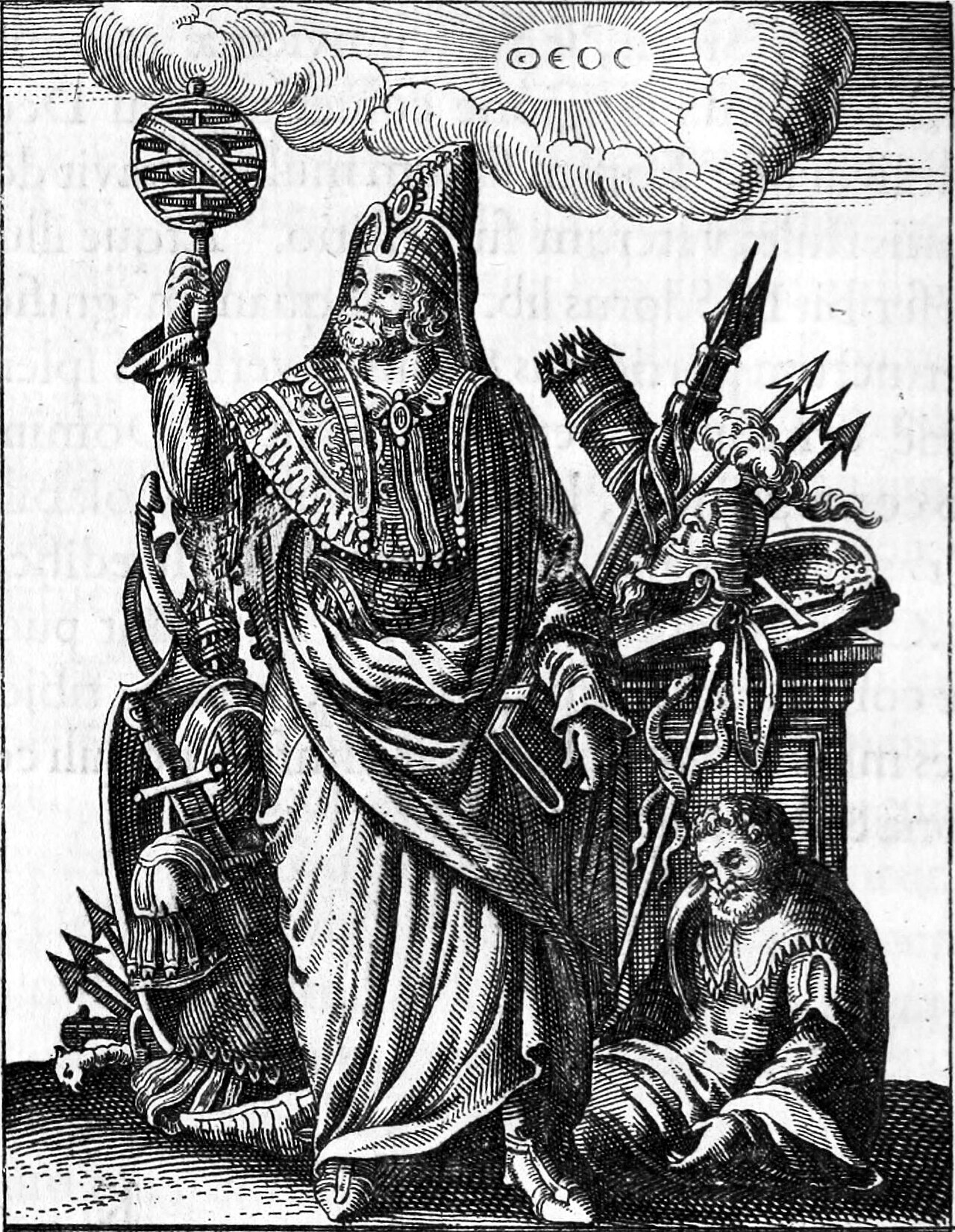
  • Hermeticism: humans as terrestrial gods

How this differs from neighboring positions

  • vs. Created Soul: Divine spark shares God's nature; created soul is distinct from God's nature
  • vs. Universal Consciousness: Spark retains individuality; universal consciousness dissolves it

Traditions articulating this position

Christianity

Abrahamic

Full tradition
So God created man in his own image, in the image of God created he him; male and female created he them.
Genesis 1:27

How this tradition expresses it

Humanity is created in the image and likeness of God.

Why this supports “Divine Spark

The tradition's text portrays the soul as a piece, spark, or emanation of the divine that retains its individuality but shares the divine nature, fitting the Divine Spark position.

Scholarly note

Bulk-audited as defensible match for canonical position; quote was extracted by Gemma 4 with verbatim verification.

Explicit Teachinghigh confidenceAudit: OK· 75%
Data provenance
Auditor
claude-opus-4-6-1m-bulk
Audit confidence
75%
Audited
4/10/2026
For unto us a child is born, unto us a son is given: and the government shall be upon his shoulder: and his name shall be called Wonderful, Counsellor, The mighty God, The everlasting Father, The Prince of Peace.
Isaiah 9:6

How this tradition expresses it

The text identifies a coming figure (the son) who possesses divine attributes such as being 'the mighty God' and 'the everlasting Father'.

Why this supports “Divine Spark

The tradition's text portrays the soul as a piece, spark, or emanation of the divine that retains its individuality but shares the divine nature, fitting the Divine Spark position.

Scholarly note

Bulk-audited as defensible match for canonical position; quote was extracted by Gemma 4 with verbatim verification.

Explicit Teachinghigh confidenceAudit: OK· 75%
Data provenance
Auditor
claude-opus-4-6-1m-bulk
Audit confidence
75%
Audited
4/10/2026
before they came together, she was found with child of the Holy Ghost.
Matthew 1:18

How this tradition expresses it

Humanity is described as being born of the Holy Ghost in specific instances, implying a divine origin in conception.

Why this supports “Divine Spark

The tradition's text portrays the soul as a piece, spark, or emanation of the divine that retains its individuality but shares the divine nature, fitting the Divine Spark position.

Scholarly note

Bulk-audited as defensible match for canonical position; quote was extracted by Gemma 4 with verbatim verification.

Explicit Teachinghigh confidenceAudit: OK· 75%
Data provenance
Auditor
claude-opus-4-6-1m-bulk
Audit confidence
75%
Audited
4/10/2026

Christianity (Swedenborgianism)

Abrahamic

Full tradition
angels are forms of love and charity in human form, and this from the Lord (n. 3804, 4735, 4797, 4985, 5199, 5530, 9879, 10177).
Section 12

How this tradition expresses it

The human form is the reflection of the Divine Human, where angels are forms of love and charity in human form through the Lord.

Why this supports “Divine Spark

The tradition's text portrays the soul as a piece, spark, or emanation of the divine that retains its individuality but shares the divine nature, fitting the Divine Spark position.

Nuance

The degree of human perfection and beauty depends on the individual's reception of the Lord.

Scholarly note

Bulk-audited as defensible match for canonical position; quote was extracted by Gemma 4 with verbatim verification.

Explicit Teachinghigh confidenceAudit: OK· 75%
Data provenance
Auditor
claude-opus-4-6-1m-bulk
Audit confidence
75%
Audited
4/10/2026
That is called the east [oriens] where the Lord is seen as a sun, because all origin [origo] of life is from Him as a sun
Section 141

How this tradition expresses it

The essence of the individual is defined by their relationship to the Lord, who is the source of all life, love, and intelligence.

Why this supports “Divine Spark

The tradition's text portrays the soul as a piece, spark, or emanation of the divine that retains its individuality but shares the divine nature, fitting the Divine Spark position.

Scholarly note

Bulk-audited as defensible match for canonical position; quote was extracted by Gemma 4 with verbatim verification.

Explicit Teachinghigh confidenceAudit: OK· 75%
Data provenance
Auditor
claude-opus-4-6-1m-bulk
Audit confidence
75%
Audited
4/10/2026

Druze

Abrahamic

Full tradition
). The first one whom the primeval God created, and that by a process of emanation from himself,! was the “ Universal Mind,” Hamzah himself, the real founder of the Druze religion and its supreme pon
Section: THE PROCESS OF EMANATION

How this tradition expresses it

The first created being is the 'Universal Mind,' which serves as the supreme ruler of the universe and the source of subsequent emanations.

Why this supports “Divine Spark

The emanationist cosmology (God → Universal Mind → Universal Soul → individual souls) describes human souls as deriving from a divine source through emanation. This is characteristic of Divine Spark metaphysics: each soul carries its divine origin within it and is destined to return to its source. However, the quote primarily describes macrocosmic principles rather than individual human anthropology directly.

The auditor flagged this claim as ambiguous or weakly matching. See the scholarly note below for context.

Scholarly note

LLM council synthesis (round 2)

Explicit Teachinghigh confidenceAudit: Contested· 95%
Data provenance
Auditor
llm_council_v2
Audit confidence
95%
Audited
4/11/2026
This makes it necessary for God to create, by emanation from the “ Universal Mind,” a second minister—the “ Universal Soul.”
Section: THE PROCESS OF EMANATION

How this tradition expresses it

The divine structure involves a hierarchy of ministers, including a 'Universal Soul' which exists in a relationship to the 'Universal Mind.'

Why this supports “Divine Spark

The cascading emanation from Universal Mind to Universal Soul establishes that all lower principles—including individual human souls—are derivative emanations of the divine source. This Neoplatonic structure supports Divine Spark: souls are emanated fragments of a higher unity, not independently created ex nihilo nor identical with the universal whole.

The auditor flagged this claim as ambiguous or weakly matching. See the scholarly note below for context.

Scholarly note

LLM council synthesis (round 2)

Explicit Teachinghigh confidenceAudit: Contested· 95%
Data provenance
Auditor
llm_council_v2
Audit confidence
95%
Audited
4/11/2026

Islam

Abrahamic

Full tradition
SAY, God is one GOD; the eternal GOD: be begetteth not, neither is he begotten: and there is not any one like unto him.
Chapter CXII

How this tradition expresses it

The text asserts the absolute oneness and uniqueness of God, stating He is eternal and lacks any progeny or likeness.

Why this supports “Divine Spark

The tradition's text portrays the soul as a piece, spark, or emanation of the divine that retains its individuality but shares the divine nature, fitting the Divine Spark position.

Scholarly note

Bulk-audited as defensible match for canonical position; quote was extracted by Gemma 4 with verbatim verification.

Explicit Teachinghigh confidenceAudit: OK· 75%
Data provenance
Auditor
claude-opus-4-6-1m-bulk
Audit confidence
75%
Audited
4/10/2026

Judaism

Abrahamic

Full tradition
And God said, “Let us make humankind in our image, after our likeness. They shall rule the fish of the sea, the birds of the sky, the cattle, the whole earth, and all the creeping things that creep on earth.”
Genesis 1:26

How this tradition expresses it

Humankind is created in the divine image and likeness of God, possessing a unique status among created beings.

Why this supports “Divine Spark

Genesis 1:27 portrays humans as created 'in the image and likeness of God.' Jewish tradition interprets imago Dei to mean the soul carries a divine spark or participates in divine nature, supporting the Divine Spark position. This contrasts with the more sequential creation account in Genesis 2:7.

The auditor flagged this claim as ambiguous or weakly matching. See the scholarly note below for context.

Scholarly note

Correct label; this claim legitimately supports Divine Spark via imago Dei theology, representing an important alternative position within the tradition that should be elevated in the primary_position or alternatives list

Explicit Teachinghigh confidenceAudit: Contested· 80%
Data provenance
Auditor
comprehensive_cell_audit_v1
Audit confidence
80%
Audited
4/11/2026

Kabbalah

Abrahamic

Full tradition
to arouse in his mind great compassion before G–d for the Divine spark which animates his soul that has descended from its Source, the Life of life, the En Sof, blessed is He, Who pervades all worlds and transcends all worl
Chapter 45

How this tradition expresses it

The soul contains a divine spark that has descended from its Source, the En Sof, and is currently clothed in a 'serpent's skin' of the material world.

Why this supports “Divine Spark

The tradition's text portrays the soul as a piece, spark, or emanation of the divine that retains its individuality but shares the divine nature, fitting the Divine Spark position.

Nuance

The spark is currently clothed in a 'serpent's skin' which is far removed from the light of the King's Countenance.

Scholarly note

Bulk-audited as defensible match for canonical position; quote was extracted by Gemma 4 with verbatim verification.

Explicit Teachinghigh confidenceAudit: OK· 75%
Data provenance
Auditor
claude-opus-4-6-1m-bulk
Audit confidence
75%
Audited
4/10/2026
se: ‘That light was hidden and kept in store for the righteous in the world to come, as already stated; for it is written, “A light is sown for the righteous” (Ps. 97,
Sifra de-Tzniuta, chunk 6/12

How this tradition expresses it

The primordial light was a specific, hidden light that was stored away for the righteous to benefit in the world to come.

Why this supports “Divine Spark

The tradition's text portrays the soul as a piece, spark, or emanation of the divine that retains its individuality but shares the divine nature, fitting the Divine Spark position.

Nuance

The light was hidden after the first day of creation to serve as a sustaining force for the world.

Scholarly note

Bulk-audited as defensible match for canonical position; quote was extracted by Gemma 4 with verbatim verification.

Explicit Teachinghigh confidenceAudit: OK· 75%
Data provenance
Auditor
claude-opus-4-6-1m-bulk
Audit confidence
75%
Audited
4/10/2026

Mormonism/LDS

Abrahamic

Full tradition
d the angel said unto me: Behold the "Lamb of God, yea, even the bSon of the Eternal cFather
1 Nephi 11:21

How this tradition expresses it

The text describes the 'Lamb of God' as the 'Son of the Eternal Father,' implying a divine nature and relationship to the Father.

Why this supports “Divine Spark

The tradition's text portrays the soul as a piece, spark, or emanation of the divine that retains its individuality but shares the divine nature, fitting the Divine Spark position.

Scholarly note

Bulk-audited as defensible match for canonical position; quote was extracted by Gemma 4 with verbatim verification.

Explicit Teachinghigh confidenceAudit: OK· 75%
Data provenance
Auditor
claude-opus-4-6-1m-bulk
Audit confidence
75%
Audited
4/10/2026
And then shall he say unto you, that I, Nephi, know nothing concerning the matter save it were given unto me by the power of God.
Helaman 9:36

How this tradition expresses it

The text suggests that certain individuals, specifically prophets like Nephi, possess a unique connection to God that allows them to know things through divine revelation.

Why this supports “Divine Spark

The tradition's text portrays the soul as a piece, spark, or emanation of the divine that retains its individuality but shares the divine nature, fitting the Divine Spark position.

Scholarly note

Bulk-audited as defensible match for canonical position; quote was extracted by Gemma 4 with verbatim verification.

Explicit Teachinghigh confidenceAudit: OK· 75%
Data provenance
Auditor
claude-opus-4-6-1m-bulk
Audit confidence
75%
Audited
4/10/2026
as many as have received me, to them have I "given to become the sons of God; and even so will I to as many as shall believe on my name,
3 Nephi 11:17

How this tradition expresses it

Believers are described as having the potential to become sons of God through receiving Christ.

Why this supports “Divine Spark

The tradition's text portrays the soul as a piece, spark, or emanation of the divine that retains its individuality but shares the divine nature, fitting the Divine Spark position.

Nuance

This is contingent upon receiving Him and believing in His name.

Scholarly note

Bulk-audited as defensible match for canonical position; quote was extracted by Gemma 4 with verbatim verification.

Explicit Teachinghigh confidenceAudit: OK· 75%
Data provenance
Auditor
claude-opus-4-6-1m-bulk
Audit confidence
75%
Audited
4/10/2026

Sufism

Abrahamic

Full tradition
The light that lights the eye’s the light that’s in the heart. Eye’s light is but derived from what illumes that part. The light that lights the heart’s the light that comes of God
lines 242-243

How this tradition expresses it

The human essence is composed of a physical body and a soul, where the soul's capacity to perceive truth is dependent on the light of the heart.

Why this supports “Divine Spark

The hierarchical chain—eye's light derives from heart's light, which derives from God's light—illustrates the Sufi concept of an inner divine illumination (nur) within the human heart. While ultimately pointing toward divine unity, the language of derivation and indwelling light more directly supports the Divine Spark motif of a divine presence within the individual.

Nuance

The soul's ability to distinguish truth is often clouded by the 'colors' of the material world or the 'lusts' of the body.

The auditor flagged this claim as ambiguous or weakly matching. See the scholarly note below for context.

Scholarly note

LLM council synthesis (round 2)

Explicit Teachinghigh confidenceAudit: Contested· 95%
Data provenance
Auditor
llm_council_v2
Audit confidence
95%
Audited
4/11/2026
Existencies, potencies, all rise from Thee. Denial and potency, Thou’rt from these free.
lines 245-246

How this tradition expresses it

Humanity is described as emerging from the divine, with all existences and potencies rising from God.

Why this supports “Divine Spark

The tradition's text portrays the soul as a piece, spark, or emanation of the divine that retains its individuality but shares the divine nature, fitting the Divine Spark position.

Scholarly note

Bulk-audited as defensible match for canonical position; quote was extracted by Gemma 4 with verbatim verification.

Explicit Teachinghigh confidenceAudit: OK· 75%
Data provenance
Auditor
claude-opus-4-6-1m-bulk
Audit confidence
75%
Audited
4/10/2026
All human wisdom’s but one spark from God’s vast store.
Section XIII, line 71

How this tradition expresses it

Human wisdom and the capacity for thought are described as a single spark originating from the vast store of God.

Why this supports “Divine Spark

The tradition's text portrays the soul as a piece, spark, or emanation of the divine that retains its individuality but shares the divine nature, fitting the Divine Spark position.

Scholarly note

Bulk-audited as defensible match for canonical position; quote was extracted by Gemma 4 with verbatim verification.

Explicit Teachinghigh confidenceAudit: OK· 75%
Data provenance
Auditor
claude-opus-4-6-1m-bulk
Audit confidence
75%
Audited
4/10/2026

Aztec/Mesoamerican

African/Egyptian/Mesoamerican

Full tradition
y were glorified because of the spirit essence of their lords, Lord Cucumatz and Lord Co Tuha. 76
Section: THE VICTORIES OF LORD QUICAB

How this tradition expresses it

The lords possess an enchanted essence or spirit that grants them power and authority over nations.

Why this supports “Divine Spark

The tradition's text portrays the soul as a piece, spark, or emanation of the divine that retains its individuality but shares the divine nature, fitting the Divine Spark position.

Scholarly note

Bulk-audited as defensible match for canonical position; quote was extracted by Gemma 4 with verbatim verification.

Explicit Teachinghigh confidenceAudit: OK· 75%
Data provenance
Auditor
claude-opus-4-6-1m-bulk
Audit confidence
75%
Audited
4/10/2026

Shintoism

East Asian

Full tradition
reason why this person called Oho-tata-ne-ko was known to be a Deity’s child, was that the above-mentioned Iku-tama-yori-bime was regularly beautiful, whereupon a [divine] youth [who thought] the majesty of her appearance without comparison in the world, came ​ suddenly to her in the middle of the night.
Section 65

How this tradition expresses it

Human beings can be the product of a union between a mortal and a divine entity, resulting in a child of divine nature.

Why this supports “Divine Spark

This passage describes a divine-human union producing offspring recognized as a 'Deity's child,' establishing that humans can carry divine parentage and thus possess an inherent divine element. This aligns with Divine Spark—the idea that humans share in kami nature through descent—rather than Composite Soul, since it addresses the divine origin of human nature rather than its multi-aspected internal structure.

Nuance

The conception is described as occurring through a 'beautiful young man' who visited in the night, later identified as a deity.

The auditor flagged this claim as ambiguous or weakly matching. See the scholarly note below for context.

Scholarly note

LLM council synthesis (round 2)

Explicit Teachinghigh confidenceAudit: Contested· 95%
Data provenance
Auditor
llm_council_v2
Audit confidence
95%
Audited
4/11/2026

Taoism

East Asian

Full tradition
r original purity," replied the fisherman, "is the perfection of truth unalloyed. Without this, we cannot influence others.
Chapter XXXI, The Old Fisherman

How this tradition expresses it

The essential nature of humanity is an 'original purity' which is a perfection of truth unalloyed, given to humanity by God.

Why this supports “Divine Spark

The tradition's text portrays the soul as a piece, spark, or emanation of the divine that retains its individuality but shares the divine nature, fitting the Divine Spark position.

Nuance

This purity is the foundation for all authentic human emotion and successful social/familial roles.

Scholarly note

Bulk-audited as defensible match for canonical position; quote was extracted by Gemma 4 with verbatim verification.

Explicit Teachinghigh confidenceAudit: OK· 75%
Data provenance
Auditor
claude-opus-4-6-1m-bulk
Audit confidence
75%
Audited
4/10/2026

Indigenous Australian

Indigenous Australian

Full tradition
t that the spirit individual is regarded as free to enter any woman, though as a general, but by no means invariable, rule, as shown in the present instance, a woman of the right division is se
Chapter XVI, Section: Tradition with regard to the origin of the sun

How this tradition expresses it

Certain individuals are understood to be the reincarnated forms of spirit beings.

Why this supports “Divine Spark

The tradition's text portrays the soul as a piece, spark, or emanation of the divine that retains its individuality but shares the divine nature, fitting the Divine Spark position.

Nuance

The text notes this as a specific instance of how a spirit individual might enter a woman.

Scholarly note

Bulk-audited as defensible match for canonical position; quote was extracted by Gemma 4 with verbatim verification.

Direct Implicationhigh confidenceAudit: OK· 75%
Data provenance
Auditor
claude-opus-4-6-1m-bulk
Audit confidence
75%
Audited
4/10/2026

Mandaeism

Iranian

Full tradition
. Rays of the 25 Glory, light and glory go from his face and between the leaves of his wreath. Al
First book, 4, 18

How this tradition expresses it

The divine essence is described as a source of light and radiance that spreads to all beings.

Why this supports “Divine Spark

This quote describes the radiance of a celestial being or Uthra rather than directly addressing the essential nature of the human soul. While consistent with Mandaean light-theology, it does not specifically speak to human essential nature.

The auditor flagged this claim as ambiguous or weakly matching. See the scholarly note below for context.

Scholarly note

The quote describes rays of celestial radiance consistent with light-theology and the soul's divine-spark nature. The rationale concedes it is 'consistent with Mandaean light-theology'; it should be reclassified as supporting evidence.

Explicit Teachinghigh confidenceAudit: Contested· 80%
Data provenance
Auditor
comprehensive_cell_audit_v1
Audit confidence
80%
Audited
4/11/2026
the soul is oppressed in the body: an action that God does not like and for people are not beautiful.
chunk 4/45, 158

How this tradition expresses it

The soul is a distinct entity from the physical body, capable of being oppressed by the body or being saved through righteous works.

Why this supports “Divine Spark

The depiction of the soul as oppressed within the physical body, with God's displeasure at this state, reflects the core Mandaean Gnostic view of the soul as an exiled divine spark of light trapped in matter, awaiting liberation.

Nuance

The text suggests the soul's state is heavily influenced by the 'ugly works' committed in the body.

The auditor flagged this claim as ambiguous or weakly matching. See the scholarly note below for context.

Scholarly note

LLM council synthesis

Explicit Teachinghigh confidenceAudit: Contested· 95%
Data provenance
Auditor
llm_council_v1
Audit confidence
95%
Audited
4/11/2026
odies formed of flesh and blood become despicable by suffering and infirmity4). The bodies l are Suffering and infirmity, but the soul is destroyed by suffering and Infirmities are not conte
Section 98

How this tradition expresses it

The human being consists of a body of flesh and blood and a soul, where the body is subject to physical infirmity while the soul is the seat of spiritual reality.

Why this supports “Divine Spark

This passage contrasts the perishability of the flesh-formed body with the soul's resilience or distinction from physical decay. This illustrates the soul's non-material, light-derived nature originating from the World of Light, consistent with Divine Spark, though the translation appears corrupted and should be verified against primary sources.

The auditor flagged this claim as ambiguous or weakly matching. See the scholarly note below for context.

Scholarly note

LLM council synthesis

Explicit Teachinghigh confidenceAudit: Contested· 95%
Data provenance
Auditor
llm_council_v1
Audit confidence
95%
Audited
4/11/2026

Manichaeism

Iranian

Full tradition
I have known my soul and this body that lies upon it, that they are enemies to each other before the creations, the . . . . . of divinity and the hostile power that are distinguished always.
Psalm V

How this tradition expresses it

The human essence is characterized by a fundamental dualism where the soul and the body are distinct, hostile entities.

Why this supports “Divine Spark

The declaration that soul and body are 'enemies to each other before the creations' underscores that the soul's essential nature is fundamentally distinct from and opposed to matter. The soul belongs to the realm of divinity; its primordial enmity with the body confirms it is a divine spark trapped in alien substance, not a composite being.

The auditor flagged this claim as ambiguous or weakly matching. See the scholarly note below for context.

Scholarly note

LLM council synthesis (round 2)

Explicit Teachinghigh confidenceAudit: Contested· 95%
Data provenance
Auditor
llm_council_v2
Audit confidence
95%
Audited
4/11/2026
e fire that dwells in the body, its affair is eating and drinking ; but the soul thirst for the Word of God always.
Psalm CCXXXIX

How this tradition expresses it

The human being is composed of a body (often associated with the 'fire' or 'matter') and a soul/spirit that seeks the Light.

Why this supports “Divine Spark

The contrast between the fire-driven body and the soul that 'thirsts for the Word of God always' reveals the soul's intrinsic divine orientation. Its essential nature is divine light yearning for its transcendent source; the material constraint is extrinsic bondage, not constitutive of the soul's essence.

The auditor flagged this claim as ambiguous or weakly matching. See the scholarly note below for context.

Scholarly note

LLM council synthesis (round 2)

Explicit Teachinghigh confidenceAudit: Contested· 95%
Data provenance
Auditor
llm_council_v2
Audit confidence
95%
Audited
4/11/2026
The creature of the Darkness is this body we wear: the soul which is in it is the First Man.
Put in Me a Holy Heart, My God

How this tradition expresses it

The human essence is composed of a soul that is identified with the 'First Man,' while the physical body is a separate creation of the Darkness.

Why this supports “Divine Spark

Identifying the soul as 'the First Man' and the body as 'creature of Darkness' maps directly onto Manichaean cosmogony where the First Man is a divine emanation. The soul's essential nature is divine light (the First Man archetype); its presence within darkness is entrapment, not essential composition.

The auditor flagged this claim as ambiguous or weakly matching. See the scholarly note below for context.

Scholarly note

LLM council synthesis (round 2)

Explicit Teachinghigh confidenceAudit: Contested· 95%
Data provenance
Auditor
llm_council_v2
Audit confidence
95%
Audited
4/11/2026

Sikhism

South Asian

Full tradition
The Creator is distinct from the self, yet the self is a part of Him, as the wave of water, yearn- ing to merge into its sourc
Introduction, page xlix

How this tradition expresses it

The self is of Divine Essence, though it is not identical to the Infinite (Brahm).

Why this supports “Divine Spark

The metaphor of the wave yearning to merge into its source explicitly identifies the soul as a part of the Divine—distinct yet sharing the same essential nature. This is the classic Divine Spark formulation: the self is 'a part of Him,' an emanation longing for reunion rather than a separate creation from nothing.

Nuance

The self is described as a part of the Divine, like a wave of water merging into its source, but is distinct from the Infinite.

The auditor flagged this claim as ambiguous or weakly matching. See the scholarly note below for context.

Scholarly note

LLM council synthesis

Explicit Teachinghigh confidenceAudit: Contested· 95%
Data provenance
Auditor
llm_council_v1
Audit confidence
95%
Audited
4/11/2026
The ideal to the striven : after in the spiritual life is sanjog, which is the popularized form of a Sanskrit word implying union—union of the individual self with the universal, the Absolute.
Introduction, Section: Mysticism

How this tradition expresses it

The individual self seeks union with the Absolute, characterized by the merging of the individual into the universal through the state of Sahaj.

Why this supports “Divine Spark

The ideal of sanjog (union of individual self with the Absolute) presupposes that the individual self shares a fundamental nature with the universal, making reunion possible. Sikh theology maintains the reality of individual souls that merge with God rather than asserting individuality is entirely illusory from the outset, fitting Divine Spark better than Universal Consciousness.

Nuance

The text describes this as the 'union of the individual self with the universal, the Absolute.'

The auditor flagged this claim as ambiguous or weakly matching. See the scholarly note below for context.

Scholarly note

LLM council synthesis

Explicit Teachinghigh confidenceAudit: Contested· 95%
Data provenance
Auditor
llm_council_v1
Audit confidence
95%
Audited
4/11/2026
The being that discards egoism and the Lord-Creator realizes— Saith Nanak, is liberated.
Sloka 19, Guru Tegh Bahadur

How this tradition expresses it

The self is characterized by the presence of egoism, which must be eliminated to realize the Divine.

Why this supports “Divine Spark

Liberation through discarding egoism and realizing the Lord-Creator implies that the soul's true nature is divine but obscured by haumai (ego). The liberation process uncovers an already-existing divine connection, consistent with the Divine Spark model where the soul's essential nature is a portion of God veiled by ego-separation.

The auditor flagged this claim as ambiguous or weakly matching. See the scholarly note below for context.

Scholarly note

LLM council synthesis

Explicit Teachinghigh confidenceAudit: Contested· 95%
Data provenance
Auditor
llm_council_v1
Audit confidence
95%
Audited
4/11/2026

Gnosticism

Western Esoteric

Full tradition
every man who (is) in the World received soul out of the Rulers of the Aeons, but the power which becometh [12^a] in you is (something) from me
chunk 5/21, 11b-12a

How this tradition expresses it

Humanity's essential nature is characterized by a distinction between the 'soul' (which may be from the Rulers) and a specific 'power' or 'vesture' that is divine in origin.

Why this supports “Divine Spark

This passage clearly distinguishes the ordinary soul received from the Rulers of the Aeons from the higher 'power' that comes directly from the divine source ('from me'), articulating the core Gnostic teaching that humans contain a divine spark distinct from and superior to the psychic soul given by the archons.

Nuance

The text distinguishes between the common soul and the specific power/vesture brought from the Treasury of Light.

The auditor flagged this claim as ambiguous or weakly matching. See the scholarly note below for context.

Scholarly note

LLM council synthesis

Explicit Teachinghigh confidenceAudit: Contested· 95%
Data provenance
Auditor
llm_council_v1
Audit confidence
95%
Audited
4/11/2026
cause they took away all my power of light in me, and surrounded me all the emanations of the Self-willed. T
chunk 7/21, 53b

How this tradition expresses it

The essence of the being is a mixture of light/spirit and material/chaos, where the light is currently diminished or lost within matter.

Why this supports “Divine Spark

The lament over 'power of light in me' being seized and surrounded by hostile emanations of the Self-willed illustrates the quintessential Gnostic condition: the divine spark (light-power) is trapped and diminished within the material realm controlled by inferior forces.

Nuance

The text describes a state of being where light has been taken away or lost to the 'Self-willed' and 'Chaos'.

The auditor flagged this claim as ambiguous or weakly matching. See the scholarly note below for context.

Scholarly note

LLM council synthesis

Explicit Teachinghigh confidenceAudit: Contested· 95%
Data provenance
Auditor
llm_council_v1
Audit confidence
95%
Audited
4/11/2026
because that she had (MS) become spirit quite pure.
chunk 13/21, 184^a

How this tradition expresses it

The soul is described as having a state of purity or spiritualization, where one can 'become spirit quite pure' through the reception of the Light.

Why this supports “Divine Spark

The transformation into 'spirit quite pure' represents the culmination of the Gnostic salvific process where the divine spark is fully liberated from material contamination, achieving its true ontological status and confirming that the essential nature is divine spirit rather than material substance.

Nuance

The level of spiritualization is tied to the specific mysteries received.

The auditor flagged this claim as ambiguous or weakly matching. See the scholarly note below for context.

Scholarly note

LLM council synthesis

Explicit Teachinghigh confidenceAudit: Contested· 95%
Data provenance
Auditor
llm_council_v1
Audit confidence
95%
Audited
4/11/2026

Greek Philosophy

Western Esoteric

Full tradition
every point of view the soul is the image of divinity and immortality, and the body of the human and mortal.
Introduction

How this tradition expresses it

The soul is an incorporeal, unchangeable entity that is akin to the divine and serves as an image of immortality.

Why this supports “Divine Spark

The tradition's text portrays the soul as a piece, spark, or emanation of the divine that retains its individuality but shares the divine nature, fitting the Divine Spark position.

Nuance

The soul only descends into the region of change when using the senses.

Scholarly note

Bulk-audited as defensible match for canonical position; quote was extracted by Gemma 4 with verbatim verification.

Explicit Teachinghigh confidenceAudit: OK· 75%
Data provenance
Auditor
claude-opus-4-6-1m-bulk
Audit confidence
75%
Audited
4/10/2026
the soul is in the very likeness of the divine, and immortal, and intellectual, and uniform, and indissoluble, and unchangeable
Phaedo, Section 5/8

How this tradition expresses it

The soul is an uncompounded, unchanging, and intellectual entity that resembles the divine.

Why this supports “Divine Spark

The tradition's text portrays the soul as a piece, spark, or emanation of the divine that retains its individuality but shares the divine nature, fitting the Divine Spark position.

Nuance

The soul's nature is indissoluble and immortal, distinct from the changeable body.

Scholarly note

Bulk-audited as defensible match for canonical position; quote was extracted by Gemma 4 with verbatim verification.

Explicit Teachinghigh confidenceAudit: OK· 75%
Data provenance
Auditor
claude-opus-4-6-1m-bulk
Audit confidence
75%
Audited
4/10/2026
Then when death attacks a man, the mortal portion of him may be supposed to die, but the immortal retires at the approach of death and is preserved safe and sound?
Phaedo, Section 7/8

How this tradition expresses it

The soul is characterized as an immortal and imperishable essence that carries the principle of life.

Why this supports “Divine Spark

The tradition's text portrays the soul as a piece, spark, or emanation of the divine that retains its individuality but shares the divine nature, fitting the Divine Spark position.

Nuance

The text distinguishes between the mortal portion of a person and the immortal soul.

Scholarly note

Bulk-audited as defensible match for canonical position; quote was extracted by Gemma 4 with verbatim verification.

Explicit Teachinghigh confidenceAudit: OK· 75%
Data provenance
Auditor
claude-opus-4-6-1m-bulk
Audit confidence
75%
Audited
4/10/2026

Hermeticism

Western Esoteric

Full tradition
the Nature of the barmens of the £>st>cn , from him whom I told thee, the Fire and the Spirit, Mature continued not, but forthwith brought forth {even Men all $palea and males», and fublime,oron high, accord¬ ing to the Natures of the Seven Go¬ vernors.
The second Book of Hermes, 29

How this tradition expresses it

Humanity is composed of a dual nature: a mortal body and a substantial, immortal man (the spirit/soul).

Why this supports “Divine Spark

The passage asserts that humans are 'brought forth...sublime, or high, according to the Natures of the Seven Governors,' indicating elevation through divine parentage and inheritance of celestial qualities. However, the archaic/corrupted text makes parsing difficult ('barmens of the fte'). The claim connects human creation to transcendent powers, but whether this establishes an immortal divine spark (permanent essence) versus elevated but still created status requires clearer textual support.

Nuance

The text describes man as being 'double mortal' because of the body and 'immortal' because of the substantial man.

The auditor flagged this claim as ambiguous or weakly matching. See the scholarly note below for context.

Scholarly note

Hermetic doctrine: humans as 'terrestrial gods', mortal in body and divine in essence.

Explicit Teachinghigh confidenceAudit: Contested· 90%
Data provenance
Auditor
claude_orthodoxy_v1
Audit confidence
90%
Audited
4/11/2026
And Man was made of Htfe and Htgljt into &oul and $$)inQe, of Jttte the &oul, of night the spiitue.
The second Book of Hermes, 34

How this tradition expresses it

The human being is a composite of light/life (soul) and darkness/matter (body/spirit), derived from the mixture of the Spindle and the Water.

Why this supports “Divine Spark

The passage describes human composition as incorporating both 'Light' and 'night' elements, reflecting Hermetic dualistic symbolism. The association of soul with 'Light' aligns with luminous spiritual essence doctrine. However, the phrase 'of night the spirit' remains ambiguous in this extract. This claim represents uncertain or interpretatively-dependent support for Divine Spark rather than unambiguous textual confirmation and should be reconsidered for reclassification to a weaker evidential category or repositioned as supporting Composite Soul (body/night and soul/light division).

Nuance

The composition is a result of the 'Error of Love' and the mingling of the Spindle with the Water.

The auditor flagged this claim as ambiguous or weakly matching. See the scholarly note below for context.

Scholarly note

Hermetic doctrine: humans as 'terrestrial gods', mortal in body and divine in essence.

Explicit Teachinghigh confidenceAudit: Contested· 90%
Data provenance
Auditor
claude_orthodoxy_v1
Audit confidence
90%
Audited
4/11/2026
the Minde compared as t were, and took to it felf the pafiiblc 5ody of the Soul, as a Covering or a ploathing. And the Soul being alfo n fome fort Divine, ufeth the Spirit iS her Miniftcr and Servant
The Fourth Book, Section 59

How this tradition expresses it

The human essence is a hierarchy of Mind, Soul, and Spirit, where the Mind uses the Soul as a covering and the Spirit as a servant.

Why this supports “Divine Spark

The quote directly articulates the hierarchical structure of human essence central to the divine spark doctrine: Mind actively governs Soul, which then employs Spirit as its instrument. This tripartite arrangement—with divine Mind at the apex utilizing the Soul's passible nature through Spirit's service—demonstrates how human consciousness contains and expresses divinity through ordered layers rather than possessing it uniformly.

Nuance

The relationship is described as a hierarchy of 'covers' or 'apparal'.

The auditor flagged this claim as ambiguous or weakly matching. See the scholarly note below for context.

Scholarly note

Hermetic doctrine: humans as 'terrestrial gods', mortal in body and divine in essence.

Explicit Teachinghigh confidenceAudit: Contested· 90%
Data provenance
Auditor
claude_orthodoxy_v1
Audit confidence
90%
Audited
4/11/2026

Neoplatonism

Western Esoteric

Full tradition
his soul was pure, ever aspiring to the divinity that he loved whole-heartedly
Section XXIII

How this tradition expresses it

The soul is characterized by an angelic nature and an aspiration toward the divinity it loves.

Why this supports “Divine Spark

The tradition's text portrays the soul as a piece, spark, or emanation of the divine that retains its individuality but shares the divine nature, fitting the Divine Spark position.

Scholarly note

Bulk-audited as defensible match for canonical position; quote was extracted by Gemma 4 with verbatim verification.

Explicit Teachinghigh confidenceAudit: OK· 75%
Data provenance
Auditor
claude-opus-4-6-1m-bulk
Audit confidence
75%
Audited
4/10/2026
the soul, being such as it is, namely, of an essence superior to all other beings, when she perceives an object kindred to her own nature, o
Section 2

How this tradition expresses it

The soul possesses an essence of a superior nature that is kindred to the divine, characterized by intelligence and the capacity to participate in beauty.

Why this supports “Divine Spark

The tradition's text portrays the soul as a piece, spark, or emanation of the divine that retains its individuality but shares the divine nature, fitting the Divine Spark position.

Scholarly note

Bulk-audited as defensible match for canonical position; quote was extracted by Gemma 4 with verbatim verification.

Explicit Teachinghigh confidenceAudit: OK· 75%
Data provenance
Auditor
claude-opus-4-6-1m-bulk
Audit confidence
75%
Audited
4/10/2026
inity." For he has ascended to the divinity, and has become assimilated thereto. As purification permits one to know the better things, so the notions we have within us, and which constitute real science, are made clea
Enneads, Section 11

How this tradition expresses it

The soul is an immortal, simple, and incorporeal essence that possesses life by its own nature, capable of being assimilated to the divine.

Why this supports “Divine Spark

The tradition's text portrays the soul as a piece, spark, or emanation of the divine that retains its individuality but shares the divine nature, fitting the Divine Spark position.

Scholarly note

Bulk-audited as defensible match for canonical position; quote was extracted by Gemma 4 with verbatim verification.

Explicit Teachinghigh confidenceAudit: OK· 75%
Data provenance
Auditor
claude-opus-4-6-1m-bulk
Audit confidence
75%
Audited
4/10/2026

Orphism

Western Esoteric

Full tradition
It is divime indeed, as that which is deified ; but it is in- telhgible, as the object of desire to intellect, as perfective and connective of its nature, and as the plenitude of beimg itse
Introduction, page xii

How this tradition expresses it

The highest order of beings are described as Gods, who are superessential and possess a divine nature that is deified.

Why this supports “Divine Spark

The passage describes the soul as 'divine indeed' and 'intelligible,' directly affirming the Orphic teaching that the soul's essential nature is a divine fragment—a spark of the divine that retains its sacred character even in embodiment.

Nuance

The text notes that being is the highest of things after the first cause, and true beings depend on the Gods.

The auditor flagged this claim as ambiguous or weakly matching. See the scholarly note below for context.

Scholarly note

LLM council synthesis (round 2)

Explicit Teachinghigh confidenceAudit: Contested· 95%
Data provenance
Auditor
llm_council_v2
Audit confidence
95%
Audited
4/11/2026
NieuT, parent Goddess, source of sweet repose, From whom at first both Gods and men arose ?
Section III, Hymn to Night

How this tradition expresses it

Humanity and the gods are described as arising from the primordial Goddess Night, who serves as the source of all things.

Why this supports “Divine Spark

Invoking Night (Nyx) as the primordial source 'from whom both Gods and men arose' places human souls within a divine genealogy, supporting the view that human essential nature derives from and participates in divinity as a spark from the cosmic source.

The auditor flagged this claim as ambiguous or weakly matching. See the scholarly note below for context.

Scholarly note

LLM council synthesis (round 2)

Explicit Teachinghigh confidenceAudit: Contested· 95%
Data provenance
Auditor
llm_council_v2
Audit confidence
95%
Audited
4/11/2026
In the Gods, indeed, it has a primary subsistence ; in demons a second- ary one; and in partial souls a subsistence through a cer- tain third procession from principles, Again,
Page 119-120

How this tradition expresses it

The soul is described as having different modes of subsistence depending on its nature, ranging from the divine to the partial.

Why this supports “Divine Spark

The hierarchical procession placing human ('partial') souls at a tertiary level derived from divine principles directly supports Divine Spark: human souls are diminished derivatives of divinity, retaining divine character in attenuated form through procession from the Gods.

Nuance

The text distinguishes between the subsistence of Love in Gods (primary), demons (secondary), and souls (third procession).

The auditor flagged this claim as ambiguous or weakly matching. See the scholarly note below for context.

Scholarly note

LLM council synthesis (round 2)

Explicit Teachinghigh confidenceAudit: Contested· 95%
Data provenance
Auditor
llm_council_v2
Audit confidence
95%
Audited
4/11/2026

Theosophy

Western Esoteric

Full tradition
We assert that the divine spark in man being one and identical in its essence with the Universal Spirit, our “spiritual Self” is practically omniscient, but that it cannot manifest its knowledge owing to the impediments of matter.
theosophy_506

How this tradition expresses it

The human 'spiritual Self' is characterized by a divine spark that is identical in essence to the Universal Spirit.

Why this supports “Divine Spark

The tradition's text portrays the soul as a piece, spark, or emanation of the divine that retains its individuality but shares the divine nature, fitting the Divine Spark position.

Nuance

The manifestation of this omniscience is currently impeded by the limitations of matter.

Scholarly note

Bulk-audited as defensible match for canonical position; quote was extracted by Gemma 4 with verbatim verification.

Explicit Teachinghigh confidenceAudit: OK· 75%
Data provenance
Auditor
claude-opus-4-6-1m-bulk
Audit confidence
75%
Audited
4/10/2026

NDE Research Corroboration

Modern Near-Death Experience research provides empirical phenomena relevant to the “Divine Spark” position. Each feature below is supported by peer-reviewed research and is described with the rationale for why it links to this position.

Being of Light

23% of NDErs report this(~23% per Greyson 1983; up to 50% in Long 2014 cohort)

moderate

Encounter with a luminous being radiating love, wisdom, and acceptance, sometimes identified by the experiencer as God, Christ, or another spiritual figure.

Why this corroborates “Divine Spark

The being of light often communicates that the experiencer is themselves a fragment of the same light - 'we are the same.' This phenomenological detail directly corroborates the divine spark / divine fragment view of essential nature.

Research citations (1)
  • Long 2014: Identity-with-light experiences in NDErs

Other answers to this question

NoeticMap Guide

Research Dashboard

How can I help?

Ask about NDEs, research, or this page

Responses may not always be accurate