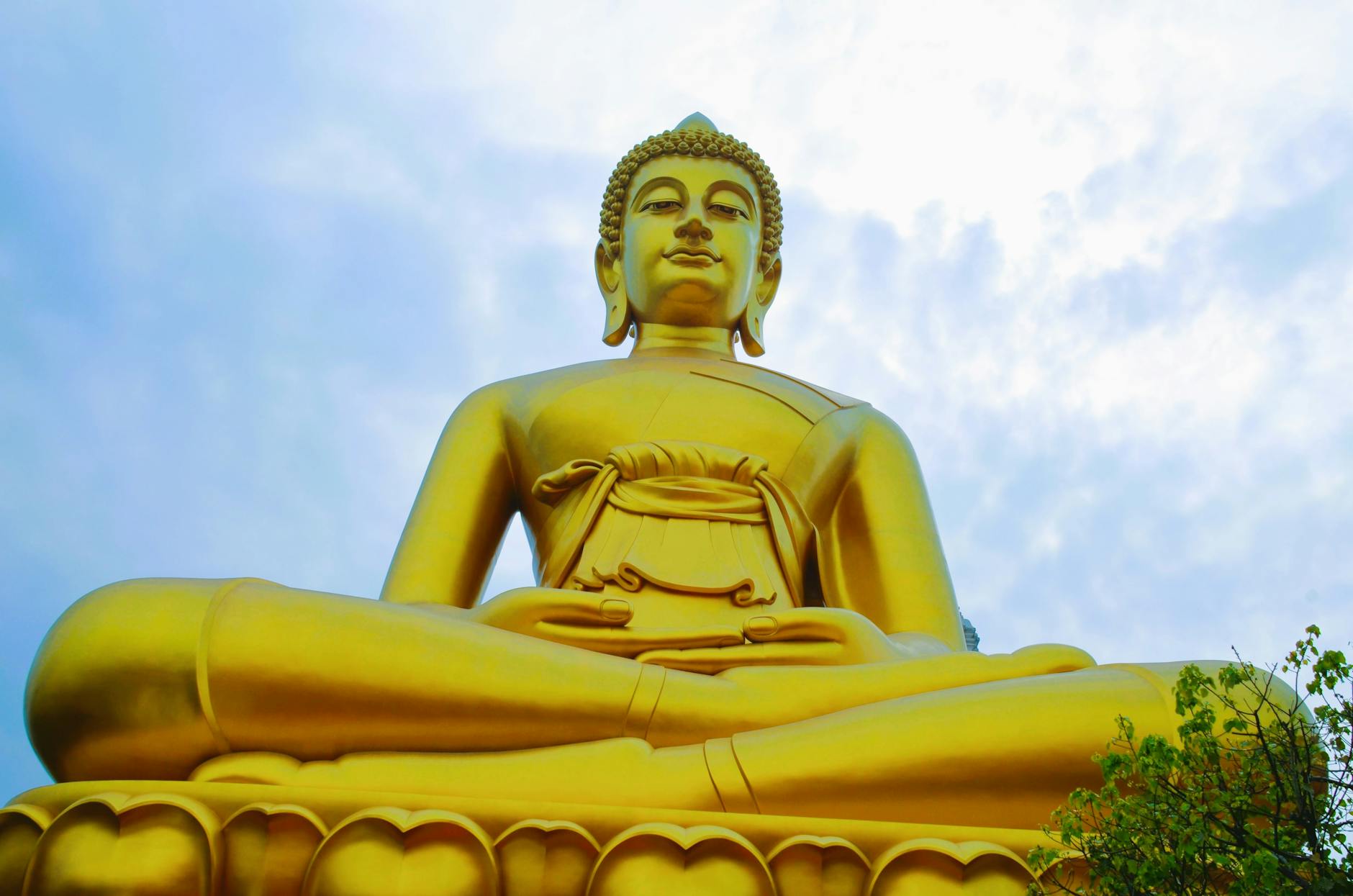
Q1 · Soul Nature

Stream of Consciousness

2of 66 traditions hold this positionPreliminary2 cultural clusters

What does “Stream of consciousness” mean?

No permanent self; consciousness is a continuous but impermanent process (Buddhist anatta/anatman)

The Buddhist doctrine of anatta: there is no soul, no atman, no permanent self. What we experience as 'I' is actually a continuous flow of momentary mental events - the five aggregates of form, feeling, perception, formations, and consciousness. These arise and pass away in dependence on prior moments, creating the illusion of a continuous self. This is one of Buddhism's most distinctive teachings and the most direct challenge to soul-based metaphysics across all traditions.

Examples across traditions

  • Buddhism: anatta - the five aggregates and their dependent origination

How this differs from neighboring positions

  • vs. Eternal Individual: Direct opposites - one of the deepest disagreements in world religion
  • vs. Divine Spark: Stream denies any permanent essence; spark affirms a divine essence

Traditions articulating this position

Kabbalah

Abrahamic

Full tradition
We have been taught that all souls emanate from one holy Body, and animate human beings.
Sifra de-Tzniuta, chunk 12/12

How this tradition expresses it

All souls are understood to emanate from a single, holy primordial Body.

Why this supports “Stream of Consciousness

The tradition's text describes consciousness as a continuous but impermanent process without a permanent self (Buddhist anatta), fitting Stream of Consciousness.

Scholarly note

Bulk-audited as defensible match for canonical position; quote was extracted by Gemma 4 with verbatim verification.

Explicit Teachinghigh confidenceAudit: OK· 75%
Data provenance
Auditor
claude-opus-4-6-1m-bulk
Audit confidence
75%
Audited
4/10/2026

Buddhism

South Asian

Full tradition
five groups of factors into which the Buddha analyzes the living being — material form, feeling, perception, mental formations, and consciousne
Note 17

How this tradition expresses it

The human condition is characterized by an inescapable duality and complexity, where the individual is composed of various factors such as the five aggregates.

Why this supports “Stream of Consciousness

The five aggregates (skandhas) represent the standard Buddhist analysis of personhood as a composite stream of physical and mental factors without a permanent self—the core of anatta doctrine.

Nuance

The text notes the 'immense complexity' of the human condition and the 'five groups of factors into which the Buddha analyzes the living being'.

The auditor flagged this claim as ambiguous or weakly matching. See the scholarly note below for context.

Scholarly note

LLM council synthesis (round 2)

Explicit Teachinghigh confidenceAudit: Contested· 95%
Data provenance
Auditor
llm_council_v2
Audit confidence
95%
Audited
4/11/2026
complex in continual change, and, therefore, a series of physical and psychical momentary states, succes- sively generated the one from the other, a continuous trans- formation, as the Buddhists are said to ho
Foreword, p. xxix

How this tradition expresses it

The individual is viewed as a 'soul-complex' consisting of a series of physical and psychical momentary states in continuous transformation.

Why this supports “Stream of Consciousness

This passage explicitly describes the individual as a succession of momentary physical and psychical states in continuous transformation with no permanent substratum, directly articulating the Buddhist stream-of-consciousness model under anatta.

Nuance

The text notes that this complex is in continual change rather than being a permanent, unchanging entity.

The auditor flagged this claim as ambiguous or weakly matching. See the scholarly note below for context.

Scholarly note

LLM council synthesis (round 2)

Explicit Teachinghigh confidenceAudit: Contested· 95%
Data provenance
Auditor
llm_council_v2
Audit confidence
95%
Audited
4/11/2026
s. What is so born is not altogether different from what has gone before, because it is the present trans- formation of it; and has no other independent exist
Workings of Karma, p. xliii

How this tradition expresses it

The essential nature is a series of psychic states or a 'fluid soul-complex' that continues through time without an independent, permanent soul.

Why this supports “Stream of Consciousness

The teaching that what arises is 'not altogether different from what has gone before' yet has 'no other independent existence' captures dependent origination and causal continuity without a permanent essence—hallmarks of the stream-of-consciousness position.

Nuance

The text notes that what is born is not independent but is the present transformation of what went before.

The auditor flagged this claim as ambiguous or weakly matching. See the scholarly note below for context.

Scholarly note

LLM council synthesis (round 2)

Explicit Teachinghigh confidenceAudit: Contested· 95%
Data provenance
Auditor
llm_council_v2
Audit confidence
95%
Audited
4/11/2026

Other answers to this question

NoeticMap Guide

Research Dashboard

How can I help?

Ask about NDEs, research, or this page

Responses may not always be accurate