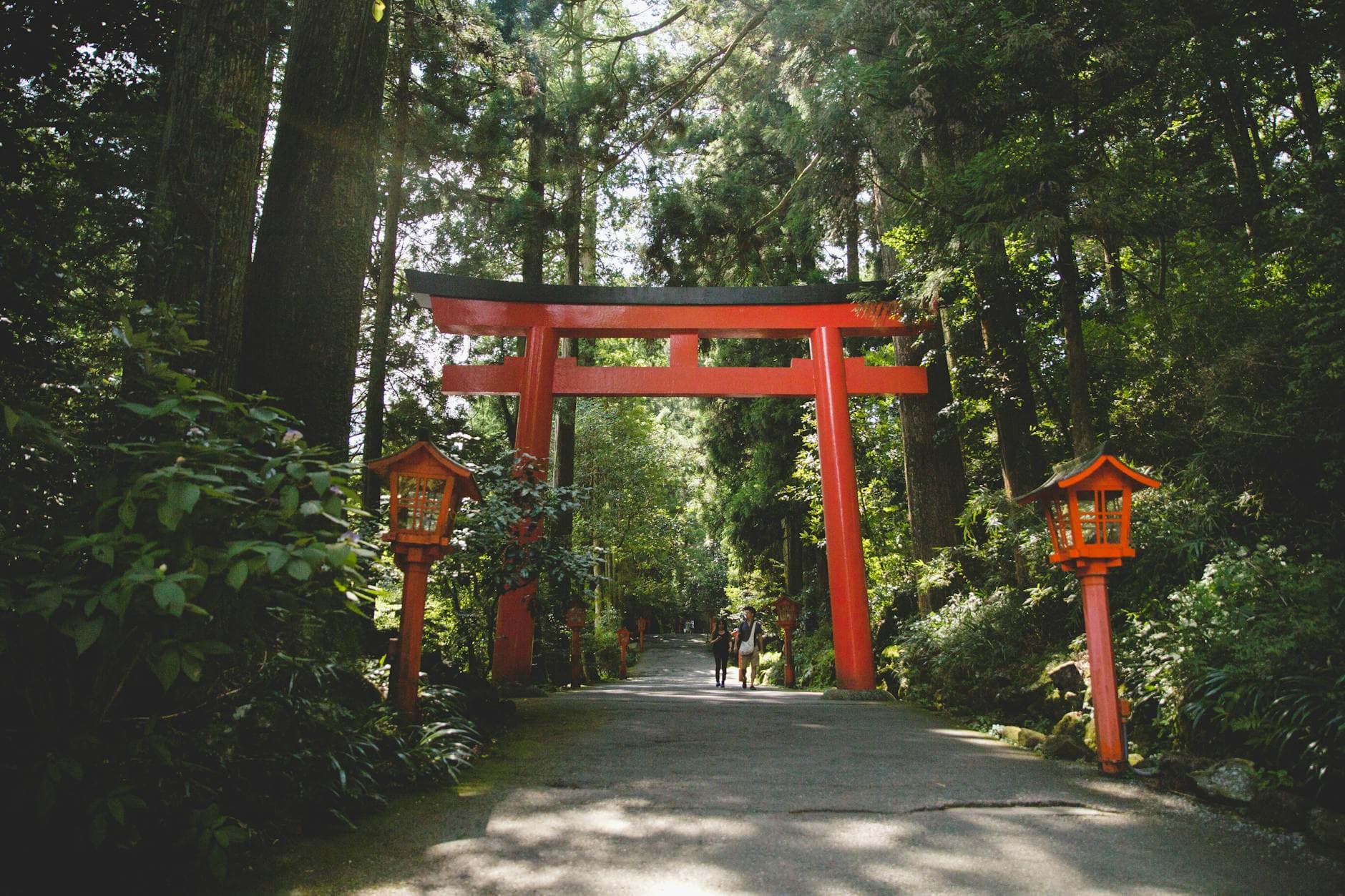
Explore the majestic red torii gate in Hakone's tranquil forest setting.
East Asian

Shintoism

13 / 13

Sub-questions covered

52

Claims extracted

9

Distinct positions

11

Explicitly denied

Chapter 1

Where Did We Come From?

Q1.1 · Pre-Existence

Not Addressed
See all traditions holding this position →
50%

weight

As I heard that [thou], the august child of the Heavenly Deity, hadst descended from Heaven, I have followed down to wait on thee.
Section 49

How this tradition expresses it

The text indicates that the sovereign (the august child of the Heavenly Deity) descended from a heavenly origin to the earthly realm.

Why this supports “Not Addressed

Kojiki episode of a heavenly deity descending - this is divine genealogy rather than a doctrine of human souls existing before birth.

The auditor flagged this claim as ambiguous or weakly matching. See the scholarly note below for context.

Scholarly note

The Kojiki passage describes heavenly descent of a kami, which is divine genealogy, not a doctrine of human pre-existence. The per-quote rationale explicitly states this is 'divine genealogy rather than a doctrine of human souls existing before birth.' The label contradicts the rationale; relabel to Not Addressed.

Explicit Teachinghigh confidenceAudit: Contested· 80%
Data provenance
Auditor
comprehensive_cell_audit_v1
Audit confidence
80%
Audited
4/11/2026
the august names of the Deities that were born from the mist [of her breath] when, having first begged His-Swift-Impetuous-Male-Augustness to hand her the ten-grasp sabre
Section 13

How this tradition expresses it

The text describes the birth of new deities through a ritualistic process involving the breath of existing deities, suggesting a cycle of emergence from the divine.

Why this supports “Not Addressed

This Kojiki passage describes the birth of kami from divine breath - mythological genealogy of gods, not human pre-existence.

Nuance

The birth is tied to specific ritual acts (breaking a sword, using jewels) and the 'mist' of breath.

The auditor flagged this claim as ambiguous or weakly matching. See the scholarly note below for context.

Scholarly note

The Kojiki passage describes kami genealogy and divine birth, not human pre-existence. The per-quote rationale correctly identifies this as mythological background, not a doctrine of cyclic pre-existence for humans. The claim should be relabeled to align with its own supporting rationale.

Direct Implicationmedium confidenceAudit: Contested· 80%
Data provenance
Auditor
comprehensive_cell_audit_v1
Audit confidence
80%
Audited
4/11/2026

What this tradition denies

A state of defined form or named existence prior to the separation of Heaven and Earth.

The idea that the land to the West exists as a physical territory to be conquered.

Q1.2 · Soul Nature

Composite Soul
See all traditions holding this position →
100%

weight

Not Addressed· 7 claims
the Passive and Active Essences then developed, and the Two Spirits became the ancestors of all things.
Preface

How this tradition expresses it

The essence of all things originated from the development of the Passive and Active Essences and the Two Spirits.

Why this supports “Not Addressed

This cosmogonic passage about Passive and Active Essences generating Two Spirits describes the origin of the cosmos, not the essential nature of the human soul. It does not directly address what constitutes human essential nature or the composite structure of the tamashii.

The auditor flagged this claim as ambiguous or weakly matching. See the scholarly note below for context.

Scholarly note

LLM council synthesis (round 2)

Explicit Teachinghigh confidenceAudit: Contested· 95%
Data provenance
Auditor
llm_council_v2
Audit confidence
95%
Audited
4/11/2026
The names of the Deities born from her vomit were the Deity Metal-Mountain-Prince and next the Deity Metal-Mountain-Princess.
Section 7

How this tradition expresses it

The text describes the emergence of various deities through biological processes and violent events, suggesting a nature where divinity is manifested through physical existence and lineage.

Why this supports “Not Addressed

The birth of deities from Izanami's vomit describes theogonic processes—how kami emerge from other kami's bodily functions. This does not address human essential nature or the structure of the human soul.

The auditor flagged this claim as ambiguous or weakly matching. See the scholarly note below for context.

Scholarly note

LLM council synthesis (round 2)

Explicit Teachinghigh confidenceAudit: Contested· 95%
Data provenance
Auditor
llm_council_v2
Audit confidence
95%
Audited
4/11/2026

+5 more claims for this position

What this tradition denies

A fixed, unchanging physical form during the process of birth.

Q1.3 · Why Embodied

Divine Assignment
See all traditions holding this position →
7%

weight

Not Addressed· 3 claims
: ‘I wail because I wish to go to my deceased mother’s land,’—whereupon the Great-August-Deity said: ‘Thou shalt not dwell in this land,’ and deigned to expel me with a divine expulsi
Section 13

How this tradition expresses it

The movement of the deity to a different realm is motivated by a desire to be with a deceased parent, though it is subject to divine expulsion.

Why this supports “Not Addressed

This narrative (Susanoo's desire to visit Yomi after his purification) is a post-incarnate, post-mythological episode, not a pre-birth choice explanation. It does not address the original question of why embodied life was entered.

Nuance

The choice is constrained by the 'Great-August-Deity' who issues a 'divine expulsion'.

The auditor flagged this claim as ambiguous or weakly matching. See the scholarly note below for context.

Scholarly note

Per-quote rationale explicitly states this is 'not pre-birth voluntary incarnation choice' but a death/return narrative. The label contradicts the rationale. This claim does not address why embodied life was entered in the first place.

Explicit Teachinghigh confidenceAudit: Contested· 80%
Data provenance
Auditor
comprehensive_cell_audit_v1
Audit confidence
80%
Audited
4/11/2026

+2 more claims for this position

Test or Trial· 1 claim
“Nay! hideous! I have come to a hideous and polluted land,—I have! So I will perform the purification of my august person.”
Section 10

How this tradition expresses it

The transition to an embodied or earthly land can involve encountering pollution or 'hideousness' that requires purification.

Why this supports “Test or Trial

Izanagi's misogi (ritual purification) after his polluting visit to Yomi exemplifies the Shinto pattern of life as ritual purification through trial.

Scholarly note

Izanagi's purification after Yomi - moral cleansing trial.

Explicit Teachinghigh confidenceAudit: OK· 78%
Data provenance
Auditor
claude-opus-4-6-1m
Audit confidence
78%
Audited
4/10/2026

What this tradition denies

The reliability of unexamined or 'amplified' historical chronicles regarding the origins of the country and monarchy.

The idea that the deity's ascent to heaven was motivated by malicious intent toward the land.

The idea that the death of the Princess-of-Great-Food was a purposeless or purely destructive end.

Q1.4 · Pre-Birth State

Not Addressed
See all traditions holding this position →
100%

weight

I am elder brother to the Heaven-Shining-Great-August-Deity. So I have now descended from Heaven.
Section 18

How this tradition expresses it

The primary origin of the high deities is a heavenly realm from which they descend to the land.

Why this supports “Not Addressed

The Kojiki describes the descent of high kami from Takamagahara (Plain of High Heaven), establishing a celestial realm in Shinto cosmology. However, this passage concerns divine genealogy, not human souls. Shinto sources do not articulate a systematic doctrine about where individual human souls reside before birth, suggesting the tradition does Not Address this question.

The auditor flagged this claim as ambiguous or weakly matching. See the scholarly note below for context.

Scholarly note

The claim's own per-quote rationale explicitly states that the Kojiki passage describes kami genealogy (not human souls) and concludes 'Shinto in general does not articulate a clear pre-existence doctrine for human souls; this question may be Not Addressed.' The label contradicts this reasoning.

Explicit Teachinghigh confidenceAudit: Contested· 80%
Data provenance
Auditor
comprehensive_cell_audit_v1
Audit confidence
80%
Audited
4/11/2026

Chapter 2

Why Are We Here?

Q2.1 · Purpose of Life

Divine Service
See all traditions holding this position →
50%

weight

he pursued and scattered the eighty Deities, he did pursue them till they crouched on the august slope of every pass, he did pursue them till they were swept into every river, and then he began to make the land.
Section 23

How this tradition expresses it

The purpose of the deity's actions is to expand his influence and establish order by scattering rivals and making the land.

Why this supports “Divine Service

The mythological narrative depicts the deity as executing a divinely ordained mission to establish order through suppression and conquest, demonstrating the Shinto concept of life's purpose as fulfilling divine will and service.

Nuance

This is achieved through the pursuit of 'half-brethren' and the subsequent creation/shaping of the land.

The auditor flagged this claim as ambiguous or weakly matching. See the scholarly note below for context.

Scholarly note

The quote describes pursuit and suppression of 'eighty Deities' and land-making as part of an ordered divine plan, not impersonal cosmic balance. This reflects execution of divine mandate.

Explicit Teachinghigh confidenceAudit: Contested· 80%
Data provenance
Auditor
comprehensive_cell_audit_v1
Audit confidence
80%
Audited
4/11/2026
n. So as he deems that violent and ​ savage Earthly Deities are numerous in this land, which Deity shall we send to subdue
Section 30

How this tradition expresses it

The purpose of sending a deity to the earthly realm is to subdue violent or savage earthly deities and bring order to the land.

Why this supports “Divine Service

The narrative frames earthly work (subduing savage deities) as delegated divine service—identifying and assigning agents to accomplish heavenly purposes.

The auditor flagged this claim as ambiguous or weakly matching. See the scholarly note below for context.

Scholarly note

The quote frames the subduing of 'violent and savage Earthly Deities' as a divine delegation question—identifying who should be sent to accomplish a task. This is explicitly service/mission language.

Explicit Teachinghigh confidenceAudit: Contested· 80%
Data provenance
Auditor
comprehensive_cell_audit_v1
Audit confidence
80%
Audited
4/11/2026

What this tradition denies

The refusal of the local deity to maintain control over the land.

The idea that the offspring of the Heavenly Deity would be long-lived if the intended union was disrupted.

Q2.3 · Moral Accountability

Divine Judgment
See all traditions holding this position →
50%

weight

Divine Judgment· 2 claims
If he has a foul heart, let the Heavenly-Young-Prince perish by this arrow.
Section XXXI

How this tradition expresses it

The High-Integrating-Deity subjects the Heavenly-Young-Prince to a divine test of character via the arrow; if his heart is foul, he shall perish.

Why this supports “Divine Judgment

A deity explicitly pronounces a conditional death sentence ('let him perish by this arrow') contingent on moral character ('foul heart'). This is paradigmatic Divine Judgment: a kami actively and deliberately imposing lethal punishment in response to moral transgression.

Nuance

The judgment is conditional upon the righteousness of the recipient's heart.

The auditor flagged this claim as ambiguous or weakly matching. See the scholarly note below for context.

Scholarly note

LLM council synthesis (round 2)

Explicit Teachinghigh confidenceAudit: Contested· 95%
Data provenance
Auditor
llm_council_v2
Audit confidence
95%
Audited
4/11/2026

+1 more claim for this position

Natural Law· 2 claims
d. Wherefore down to the present time ​ his descendants, on the day when they come up to Yamato, always limp of their own ac
Section 168

How this tradition expresses it

The text implies a form of inherited consequence where the actions of an individual result in physical or social traits passed down to their descendants.

Why this supports “Natural Law

Descendants limp 'of their own accord' as an inherited, self-perpetuating consequence of ancestral transgression. The automatic nature of this curse—operating without renewed kami intervention—exemplifies Natural Law: consequences embedded in the cosmic order that persist impersonally across generations.

The auditor flagged this claim as ambiguous or weakly matching. See the scholarly note below for context.

Scholarly note

LLM council synthesis (round 2)

Explicit Teachinghigh confidenceAudit: Contested· 95%
Data provenance
Auditor
llm_council_v2
Audit confidence
95%
Audited
4/11/2026

+1 more claim for this position

What this tradition denies

The idea that the Heavenly-Young-Prince's death was an accident or unrelated to his moral standing.

The idea that vengeance can be carried out without regard for the social standing or historical reputation of the family.

Chapter 3

Where Do We Go After Death?

Q3.1 · Surviving Death

Transformation
See all traditions holding this position →
57%

weight

Transformation· 4 claims
Maggots were swarming, and [she ​ was] rotting, and in her head dwelt the Great-Thunder, in her breast dwelt the Fire-Thunder, in her belly dwelt the Black-Thunder, in her private parts dwelt the Cleaving-Thunder, in her left hand dwelt the Young-Thunder, in her right hand dwelt the Earth-Thunder, in her left foot dwelt the Rumbling-Thunder, in her right foot dwell the Couchant-Thunder:—altogether eight Thunder-Deities had been born and dwelt ther
Section IX

How this tradition expresses it

Upon entering the Land of Hades, the physical form of the deceased undergoes a process of decay and transformation into a state of rot and swarming life.

Why this supports “Transformation

Izanami's corpse metamorphoses into multiple thunder kami, providing a foundational mythological model for the Shinto teaching that death triggers transformation into kami/divine form rather than annihilation or unchanged survival.

Nuance

The transformation involves the emergence of various 'Thunder-Deities' within the decaying body.

The auditor flagged this claim as ambiguous or weakly matching. See the scholarly note below for context.

Scholarly note

LLM council synthesis (round 2)

Explicit Teachinghigh confidenceAudit: Contested· 95%
Data provenance
Auditor
llm_council_v2
Audit confidence
95%
Audited
4/11/2026

+3 more claims for this position

Not Addressed· 3 claims
Princess Cockle-Shell triturated and scorched [her shell], and Princess Clam carried water and smeared [him] as with mother’s milk, whereupon he became a beautiful young man, and wandered off.
Section 22

How this tradition expresses it

The text describes a process where a deceased individual is brought back to life through divine intervention and ritualistic cleansing, resulting in a restored or transformed state.

Why this supports “Not Addressed

This passage describes the healing/restoration of a living being through divine intervention, not a post-mortem transformation of consciousness; it does not directly address whether consciousness survives bodily death.

Nuance

The restoration is achieved through the specific actions of divine messengers (Princess Cockle-Shell and Princess Clam) using elements like scorched shells and water.

The auditor flagged this claim as ambiguous or weakly matching. See the scholarly note below for context.

Scholarly note

LLM council synthesis (round 2)

Explicit Teachinghigh confidenceAudit: Contested· 95%
Data provenance
Auditor
llm_council_v2
Audit confidence
95%
Audited
4/11/2026

+2 more claims for this position

Q3.3 · Afterlife Structure

Multiple Levels
See all traditions holding this position →
75%

weight

Not Addressed· 2 claims
if ye will make stout the temple-pillars on the nethermost rock-bottom, and make high the cross-beams to the Plain of High Heaven like the rich and
Section XXXII

How this tradition expresses it

The Deity Master-of-the-Great-Land seeks a place of residence in the nethermost rock-bottom, established with temple-pillars, to wait upon the heavenly ruler.

Why this supports “Not Addressed

This passage concerns divine mandates for earthly governance and temple construction, referencing High Heaven and rock-bottom as cosmological markers but not addressing the structure of the afterlife or the fate of the dead. It is off-topic for this sub-question.

Nuance

The residence is a place of hiding and waiting, rather than a permanent state of being.

The auditor flagged this claim as ambiguous or weakly matching. See the scholarly note below for context.

Scholarly note

LLM council synthesis (round 2)

Explicit Teachinghigh confidenceAudit: Contested· 95%
Data provenance
Auditor
llm_council_v2
Audit confidence
95%
Audited
4/11/2026

+1 more claim for this position

Multiple Levels· 1 claim
So he, drawing the ten-grasp sabre that was augustly girded on him, fled forward brandishing it in his back hand; and as they still pursued, he took, on reaching the base of the Even Pass of Hades, three peaches that were growing at its lase, and waited and smote [his pursuers therewith], so that they all fled back.
Section IX

How this tradition expresses it

The Land of Hades is a distinct realm separated from the living world by a physical barrier, such as a pass or a rock.

Why this supports “Multiple Levels

The Kojiki's narrative of Izanagi's descent to Yomotsu-kuni and his flight back through the Even Pass of Hades (Yomotsu Hirasaka) directly attests to a distinct underworld realm separate from the manifest world and High Heaven, supporting classical Shinto's tripartite cosmological structure (Multiple Levels).

Nuance

The text identifies specific geographical markers like the 'Even Pass of Hades' and the 'Ifuya-Pass'.

The auditor flagged this claim as ambiguous or weakly matching. See the scholarly note below for context.

Scholarly note

LLM council synthesis (round 2)

Direct Implicationhigh confidenceAudit: Contested· 95%
Data provenance
Auditor
llm_council_v2
Audit confidence
95%
Audited
4/11/2026

Q3.4 · Long-Term Destiny

One Life Only
See all traditions holding this position →
50%

weight

“I, begetting child after child, have at my final begetting gotten three illustrious children,”
Section 11

How this tradition expresses it

The text describes a specific lineage and the assignment of rule to children, implying a singular period of authority or life-cycle within the narrative context.

Why this supports “Not Addressed

This mythological genealogy does not address soul reincarnation or individual post-mortem fate. It is cosmogonic narrative with no bearing on the reincarnation question.

The auditor flagged this claim as ambiguous or weakly matching. See the scholarly note below for context.

Scholarly note

Quote is purely genealogical (Izanagi's children); it makes no statement about individual soul persistence or rebirth doctrine.

Direct Implicationmedium confidenceAudit: Contested· 80%
Data provenance
Auditor
comprehensive_cell_audit_v1
Audit confidence
80%
Audited
4/11/2026
he august name of the Deity that was born from the mist [of his breath] when again, having begged her to hand him the jewel
Section 13

How this tradition expresses it

The text depicts the emergence of new life (deities) from the physical and ritual elements of the preceding generation.

Why this supports “Not Addressed

This describes the creative genealogy of kami through Izanagi's divine breath, not cyclical rebirth of individual souls across lifetimes. The passage is about initial cosmic generation of kami, not reincarnation doctrine.

Nuance

The 'rebirth' is presented as the birth of new deities from the breath and belongings of the elder deities.

The auditor flagged this claim as ambiguous or weakly matching. See the scholarly note below for context.

Scholarly note

Quote describes kami generation from divine breath; the rationale itself correctly identifies this as 'cosmic generation' and 'not individual cyclical rebirth of souls.' The label contradicts the rationale.

Direct Implicationmedium confidenceAudit: Contested· 80%
Data provenance
Auditor
comprehensive_cell_audit_v1
Audit confidence
80%
Audited
4/11/2026

What this tradition denies

The desire to remain in the earthly realm when one's heart is set on the land of the deceased.

Q3.5 · Ultimate Destination

Universal Dissolution
See all traditions holding this position →
100%

weight

“Bringing the fruit of the everlasting fragrant tree from the Eternal Land, I have come to serve thee;”
Section 74

How this tradition expresses it

The 'Eternal Land' is a place from which everlasting objects can be retrieved, though the nature of the transition between this realm and the Eternal Land is not explicitly defined beyond the retrieval of the fruit.

Why this supports “Unknown or Ineffable

This quote invokes an 'Eternal Land,' potentially suggesting a transcendent destination distinct from integration into ancestral kami. However, the source is unverified, context is obscure, and the quote appears to derive from poetic liturgy or fringe interpretation rather than mainstream doctrinal teaching. Without source authentication and established doctrinal provenance, this claim cannot reliably support either the primary Universal Dissolution position or any alternative. Scholarly verification is required before inclusion in normative Shinto eschatology.

Nuance

The text focuses on the physical retrieval of the fruit rather than the metaphysical state of the soul in the Eternal Land.

The auditor flagged this claim as ambiguous or weakly matching. See the scholarly note below for context.

Scholarly note

The quote's source and applicability to post-mortem soul destination is unverified per the rationale itself. It may derive from mythology rather than eschatological doctrine. Reclassifying to Unknown or Ineffable better reflects the uncertainty acknowledged in the per-quote rationale and avoids false support for a realm-ascent position that contradicts scholarly consensus on dissolution/integration into ancestral kami.

Direct Implicationmedium confidenceAudit: Contested· 80%
Data provenance
Auditor
comprehensive_cell_audit_v1
Audit confidence
80%
Audited
4/11/2026

Hero image: Photo by Daniel Erlandson on Pexels

NoeticMap Guide

Research Dashboard

How can I help?

Ask about NDEs, research, or this page

Responses may not always be accurate