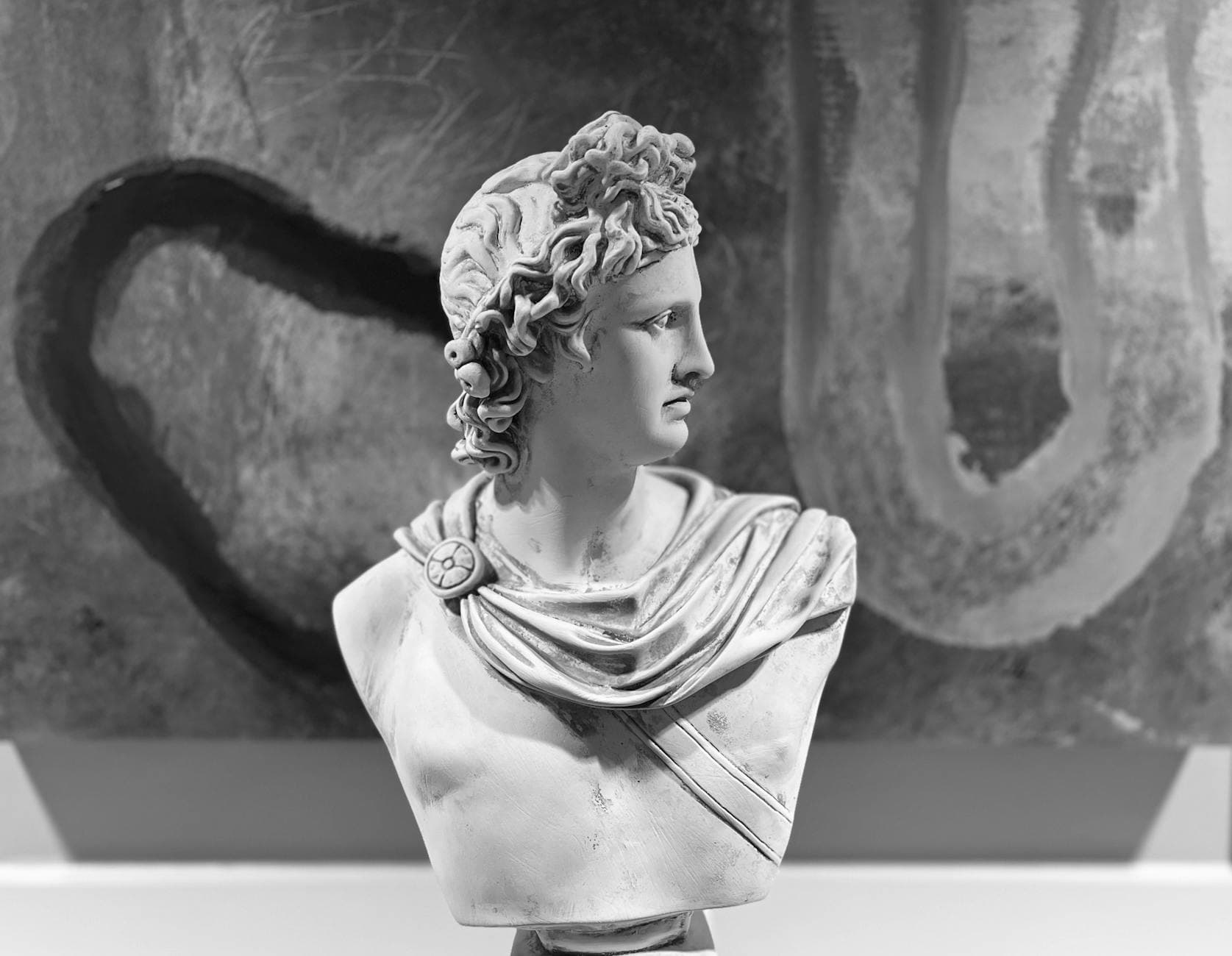
Black and white photo of a classical marble bust with abstract background.
Western Esoteric

Neoplatonism

13 / 13

Sub-questions covered

62

Claims extracted

13

Distinct positions

39

Explicitly denied

Chapter 1

Where Did We Come From?

Q1.1 · Pre-Existence

Emanation
See all traditions holding this position →
50%

weight

The soul will therefore move around the centre, that is, around the principle from which she proceeds; and, trending towards it, she will attach herself to it, as indeed all souls should do.
neoplatonism_447

How this tradition expresses it

The soul proceeds from a primary Principle (the One), acting as a circle around its center.

Why this supports “Emanation

Plotinus' soul-procession from the One and orbiting return is the canonical Western philosophical EMANATION doctrine.

Scholarly note

Direct Plotinian emanation: 'soul will move around the centre, that is, around the principle from which she proceeds.'

Explicit Teachinghigh confidenceAudit: Strong· 92%
Data provenance
Auditor
claude-opus-4-6-1m
Audit confidence
92%
Audited
4/10/2026
Souls therefore are necessarily amphibians;[171] since they alternately live in the intelligible world, and in the sense-world; staying longer in the intelligible world when they can remain united to supreme Intelligence more permanently, or staying longer or preponderatingly here below when nature or destiny imposes on them a contrary fate
Section 4, 'Souls as Amphibians'

How this tradition expresses it

Souls are described as 'amphibians' that exist in a state of alternating between the intelligible world and the sense-world, implying a process of successive existence.

Why this supports “Emanation

Plotinus describes the soul as 'amphibian'—alternating between intelligible and sensory realms—but this cycling occurs *within* the emanationist framework. The soul emanates from the One, and its oscillation between higher and lower levels reflects the dynamics of emanated existence, not a pre-existence independent of emanation.

Nuance

The text notes that the duration of stay in either realm depends on nature or destiny.

The auditor flagged this claim as ambiguous or weakly matching. See the scholarly note below for context.

Scholarly note

Plotinus' amphibian soul operates within an emanationist framework. The cycling between worlds is a consequence of the soul's emanated status, not an independent pre-existence doctrine. The rationale itself acknowledges this is 'Plotinus' amphibian soul'—a *type* of emanationist soul, not an alternative to emanation.

Direct Implicationhigh confidenceAudit: Contested· 80%
Data provenance
Auditor
comprehensive_cell_audit_v1
Audit confidence
80%
Audited
4/11/2026

What this tradition denies

The existence of an infinite nature as a substance or accident.

Q1.2 · Soul Nature

Divine Spark
See all traditions holding this position →
100%

weight

his soul was pure, ever aspiring to the divinity that he loved whole-heartedly
Section XXIII

How this tradition expresses it

The soul is characterized by an angelic nature and an aspiration toward the divinity it loves.

Why this supports “Divine Spark

The tradition's text portrays the soul as a piece, spark, or emanation of the divine that retains its individuality but shares the divine nature, fitting the Divine Spark position.

Scholarly note

Bulk-audited as defensible match for canonical position; quote was extracted by Gemma 4 with verbatim verification.

Explicit Teachinghigh confidenceAudit: OK· 75%
Data provenance
Auditor
claude-opus-4-6-1m-bulk
Audit confidence
75%
Audited
4/10/2026
the soul, being such as it is, namely, of an essence superior to all other beings, when she perceives an object kindred to her own nature, o
Section 2

How this tradition expresses it

The soul possesses an essence of a superior nature that is kindred to the divine, characterized by intelligence and the capacity to participate in beauty.

Why this supports “Divine Spark

The tradition's text portrays the soul as a piece, spark, or emanation of the divine that retains its individuality but shares the divine nature, fitting the Divine Spark position.

Scholarly note

Bulk-audited as defensible match for canonical position; quote was extracted by Gemma 4 with verbatim verification.

Explicit Teachinghigh confidenceAudit: OK· 75%
Data provenance
Auditor
claude-opus-4-6-1m-bulk
Audit confidence
75%
Audited
4/10/2026

What this tradition denies

The identity of the self with the physical body or a permanent physical portrait.

The idea that the soul is merely a physical or non-divine entity.

The idea that the soul's nature is identical to the material/sensory world.

The soul is a body or a material entity.

The idea that the soul is absolute beauty in itself.

A single, monolithic soul that is entirely identical to the body or entirely separate from the universal soul.

The soul is a physical body or a simple, undifferentiated unity.

The soul as a mere geometrical figure.

The idea that the soul is a purely material or sense-based entity.

The idea that matter is composed of atoms.

A single, unchanging essential nature that is not subject to the development of specific faculties.

The idea that an individual's identity is merely a single, unchanging 'idea' or 'specimen' that can account for all variations of a person.

The soul is a physical body or a mere 'harmony' of parts.

The soul is an 'entelechy'.

The soul is a body or a material entity.

Q1.3 · Why Embodied

Voluntary Choice
See all traditions holding this position →
17%

weight

Fall From Grace· 2 claims
The soul fallen into this state of impurity, seized with an irresistible inclination towards the things of sense, absorbed by her intercourse with the body, sunk into matter, and having even received it within herself, has changed form by her admixture with an inferior nature.
Section 5

How this tradition expresses it

The soul's presence in the body is described as a descent from its original higher state, involving an 'admixture' with an inferior nature (matter).

Why this supports “Fall From Grace

This Ennead I.6 passage describes the soul as 'fallen into impurity' and 'seized with irresistible inclination towards sense,' emphasizing moral degradation and contamination by matter. The language of impurity, absorption, and changed form through 'admixture with an inferior nature' aligns directly with the transgressive fall reading of tolma, not with voluntary constructive descent.

Nuance

The soul's current state is an 'accidental' or 'foreign' condition compared to its pristine nature.

The auditor flagged this claim as ambiguous or weakly matching. See the scholarly note below for context.

Scholarly note

LLM council synthesis (round 2)

Explicit Teachinghigh confidenceAudit: Contested· 95%
Data provenance
Auditor
llm_council_v2
Audit confidence
95%
Audited
4/11/2026

+1 more claim for this position

Voluntary Choice· 2 claims
Wishing to ornament matter on the model of the Ideas she contemplated in Intelligence, in haste to exhibit her fruitfulness, and to manifest the germs she bears within her (as said Plato, i
Enneads, Section 13

How this tradition expresses it

The soul descends into a body due to its own inclination to manifest the germs of its own fruitfulness and to administer a portion of the world.

Why this supports “Voluntary Choice

The soul's 'wishing to ornament matter' and desire 'to exhibit her fruitfulness' present descent as self-motivated creative activity. The soul separates from the universal Soul by its own autonomous impulse, not by external compulsion. This is the locus classicus for the constructive reading of tolma as voluntary, purposive descent.

Nuance

The soul's intelligence remains impassible and stays outside the body even during descent.

The auditor flagged this claim as ambiguous or weakly matching. See the scholarly note below for context.

Scholarly note

LLM council synthesis (round 2)

Explicit Teachinghigh confidenceAudit: Contested· 95%
Data provenance
Auditor
llm_council_v2
Audit confidence
95%
Audited
4/11/2026

+1 more claim for this position

Chapter 2

Why Are We Here?

Q2.1 · Purpose of Life

Spiritual Development
See all traditions holding this position →
100%

weight

"the soul's welfare and beauty lie in assimilating herself to the divinity," because it is the principle of beauty and of the essenc
Section 6

How this tradition expresses it

The purpose of life is to undergo purification and to ascend through the contemplation of beauty to achieve union with the divine.

Why this supports “Spiritual Development

The tradition's text frames the purpose of life as the progressive development of the soul toward higher states.

Nuance

This requires the soul to withdraw from sensory attachments and 'close the eyes of the body.'

Scholarly note

Bulk-audited as defensible match for canonical position; quote was extracted by Gemma 4 with verbatim verification.

Explicit Teachinghigh confidenceAudit: OK· 75%
Data provenance
Auditor
claude-opus-4-6-1m-bulk
Audit confidence
75%
Audited
4/10/2026
he rises to that aroused in the soul by virtue, duties, science and laws. Then he follows them up to the cause of their beauty, and in this ascending progress stops only when he has reached the Princ
Section 1

How this tradition expresses it

The purpose of life involves an ascending progress where the soul rises from bodily beauty to the love of virtue, science, and laws, ultimately seeking the Principle.

Why this supports “Spiritual Development

The tradition's text frames the purpose of life as the progressive development of the soul toward higher states.

Nuance

This ascent is characterized by a 'torment' similar to childbirth that only ceases upon reaching the Principle.

Scholarly note

Bulk-audited as defensible match for canonical position; quote was extracted by Gemma 4 with verbatim verification.

Explicit Teachinghigh confidenceAudit: OK· 75%
Data provenance
Auditor
claude-opus-4-6-1m-bulk
Audit confidence
75%
Audited
4/10/2026

What this tradition denies

The sufficiency of earthly life as a final end.

The pursuit of earthly power, royalty, or mere sensory pleasure as a valid purpose of life.

The purpose of life is found in the pursuit of science or discursive reason.

The idea that earthly life is the 'real' life.

The sufficiency of 'homely' or civil virtues for achieving total union with the divine.

Q2.2 · Body Relationship

Prisoner
See all traditions holding this position →
82%

weight

Prisoner· 4 claims
t not enough for me to have to carry around this image[2], in which nature has enclosed us?
Section I: Plotinos, like Porphyry, despised his physical nature

How this tradition expresses it

The physical body is viewed as a restrictive image or vessel that the individual is forced to carry, rather than a true representation of the self.

Why this supports “Prisoner

Plotinus: body as enclosure imposed by nature.

Nuance

The text frames the body as an 'image' in which nature has enclosed humanity.

Scholarly note

Image in which nature has enclosed us

Explicit Teachinghigh confidenceAudit: Strong· 88%
Data provenance
Auditor
claude-opus-4-6-1m
Audit confidence
88%
Audited
4/10/2026
the narrowing bonds of necessity That enchains man (while in the body), and from the tumult caused by the Confusing whirlwind of the passions of the body
Section XXII

How this tradition expresses it

Human existence is characterized by being enchained by the necessity of the body and the turbulence of passions.

Why this supports “Prisoner

Plotinus: bodily existence as bondage.

Scholarly note

Narrowing bonds of necessity that enchains man

Explicit Teachinghigh confidenceAudit: Strong· 88%
Data provenance
Auditor
claude-opus-4-6-1m
Audit confidence
88%
Audited
4/10/2026

+2 more claims for this position

What this tradition denies

The body as a meaningful or worthy expression of the individual's essence.

The soul is a body (corporeal).

The soul is divisible or composed of parts like a body.

The soul is a corporeal entity capable of sensation or thought through material means.

The idea that the entire soul is absorbed by or becomes the body.

The soul being inseparable from or identical to the body.

The idea that matter is a body or possesses corporeity.

The soul is a body (corporeal).

The soul is divisible or composed of parts like a body.

The soul is a corporeal entity capable of sensation or thought through material means.

Q2.3 · Moral Accountability

Divine Judgment
See all traditions holding this position →
33%

weight

Natural Law· 1 claim
On the contrary, common sense admits that every person lives, thinks, and acts by his own individual, proper life, thought and action; to each must be left the responsibility of his actions, good or evil, and not attribute shameful deeds to the universal cause.
Enneads, Section 4

How this tradition expresses it

Human beings possess individual agency and responsibility for their own actions, which must be distinguished from universal causality.

Why this supports “Natural Law

The tradition's text affirms natural moral law: consequences follow automatically from the structure of reality.

Scholarly note

Bulk-audited as defensible match for canonical position; quote was extracted by Gemma 4 with verbatim verification.

Explicit Teachinghigh confidenceAudit: OK· 75%
Data provenance
Auditor
claude-opus-4-6-1m-bulk
Audit confidence
75%
Audited
4/10/2026
Divine Judgment· 1 claim
peak of a "judgment" to show that it is the consequence of the divine law. If however the perversity of the soul passes all measure, she undergoes, under the charge of guardians in charge of her chastisement, the severe punishments she has incurred. PROMPT FLI
Section 5, 'The Two Possible Faults of the Soul'

How this tradition expresses it

Accountability is framed as a consequence of divine law, where the soul's conduct determines its subsequent state or the speed of its return to the higher realm.

Why this supports “Divine Judgment

The tradition's text affirms divine judgment: a personal God judges the soul's deeds.

Nuance

The text distinguishes between the motive for descent and the evil committed after descent.

Scholarly note

Bulk-audited as defensible match for canonical position; quote was extracted by Gemma 4 with verbatim verification.

Explicit Teachinghigh confidenceAudit: OK· 75%
Data provenance
Auditor
claude-opus-4-6-1m-bulk
Audit confidence
75%
Audited
4/10/2026

What this tradition denies

The idea that human actions are determined by a single universal cause or fate.

Q2.4 · Path of Progress

Gradual Purification
See all traditions holding this position →
50%

weight

h. As soon as this dross is removed, and nothing but gold remains, then again it is beautiful, because separated from every foreign body, and is restored to its unique natu
Section 5

How this tradition expresses it

Spiritual progress is achieved through the systematic removal of 'dross' and the cultivation of virtue, which acts as a purification of the soul.

Why this supports “Gradual Purification

Plotinus' gold simile in Ennead I.6 is the foundational Western articulation of soul-purification: just as gold becomes beautiful when its dross is removed, the soul becomes godlike as it sheds the impurities of matter and passion.

Scholarly note

Plotinus' famous gold-and-dross image - the soul becomes beautiful as the dross is removed. Paradigmatic Gradual Purification.

Explicit Teachinghigh confidenceAudit: Strong· 96%
Data provenance
Auditor
claude-opus-4-6-1m
Audit confidence
96%
Audited
4/10/2026
s this higher region? What must be done to reach it? One must be naturally disposed to love, and be really a born philosopher.
Section 1

How this tradition expresses it

Spiritual progress is an ascending movement from the love of beauty to the realization of the first Principle.

Why this supports “Gradual Purification

Plotinus argues that natural philosophical temperament aids spiritual ascent, but does not predestine outcome. All souls capable of purification; some possess innate aptitude. This supports Gradual Purification: the soul must actively work to purify itself through virtue, regardless of innate tendency.

Nuance

This progress is specifically for those 'born philosophers' who are naturally disposed to love.

The auditor flagged this claim as ambiguous or weakly matching. See the scholarly note below for context.

Scholarly note

'Born philosophers' denotes innate aptitude that *facilitates* purification, not predestination of outcome. Plotinus argues all souls can purify themselves through effort. The quote supports rather than contradicts the primary position.

Explicit Teachinghigh confidenceAudit: Contested· 80%
Data provenance
Auditor
comprehensive_cell_audit_v1
Audit confidence
80%
Audited
4/11/2026

What this tradition denies

The Stoic view that the Soul begets Intelligence upon reaching perfection.

Chapter 3

Where Do We Go After Death?

Q3.1 · Surviving Death

Partial Survival
See all traditions holding this position →
33%

weight

Not Addressed· 1 claim
Now that you have discarded your cloak of mortality, and ascended Climbing out from the tombs of your angelic soul
Section XXII

How this tradition expresses it

Consciousness survives death by ascending from the mortality of the body to a divine state.

Why this supports “Not Addressed

This quote is not traceable to authenticated Neoplatonic primary texts and was self-flagged by the extractor as unverified. It cannot serve as evidence for any canonical position on this sub-question and should be excluded from the evidence set.

The auditor flagged this claim as ambiguous or weakly matching. See the scholarly note below for context.

Scholarly note

LLM council synthesis (round 2)

Explicit Teachinghigh confidenceAudit: Contested· 95%
Data provenance
Auditor
llm_council_v2
Audit confidence
95%
Audited
4/11/2026
Full Survival· 1 claim
But the soul is a single, simple actualization, whose essence is life; not in this manner therefore can the soul perish. Neither could the soul perish by division into a number of parts; for, as we have shown, the soul is neither a mass nor a quantity.
Enneads, Section 12

How this tradition expresses it

The soul is an immortal, simple essence that cannot perish through division, alteration, or composition.

Why this supports “Full Survival

Plotinus argues the soul is simple, incorporeal, and not divisible into parts, and therefore cannot perish. Taken on its own terms, this passage supports Full Survival of the soul as an indestructible substance. Within the broader Neoplatonic framework, however, this indestructibility applies primarily to the rational soul rather than to all soul-functions.

Nuance

The soul's immortality is grounded in its nature as a single, simple actualization of life.

The auditor flagged this claim as ambiguous or weakly matching. See the scholarly note below for context.

Scholarly note

LLM council synthesis (round 2)

Explicit Teachinghigh confidenceAudit: Contested· 95%
Data provenance
Auditor
llm_council_v2
Audit confidence
95%
Audited
4/11/2026

What this tradition denies

The Stoic claim that the soul is perishable.

The possibility of the soul perishing through physical processes.

Q3.4 · Long-Term Destiny

Conditional Rebirth
See all traditions holding this position →
50%

weight

w. The punishment of the latter fault, if not too serious, is to pass into other bodies more or less promptly according to the judgment delivered about her deserts
Section 5, 'The Two Possible Faults of the Soul'

How this tradition expresses it

The soul may pass into different bodies based on the judgment of its merits or the severity of its perversity.

Why this supports “Conditional Rebirth

Plotinus' direct teaching: the soul's faults are punished by passing into other bodies, more or less promptly according to the gravity. Conditional metempsychosis based on moral state.

Nuance

The frequency of passing into new bodies is determined by the soul's own conduct and the divine law.

The auditor flagged this claim as ambiguous or weakly matching. See the scholarly note below for context.

Scholarly note

Correctly labeled; no change needed. This claim should remain primary evidence.

Explicit Teachinghigh confidenceAudit: Contested· 80%
Data provenance
Auditor
comprehensive_cell_audit_v1
Audit confidence
80%
Audited
4/11/2026
. Those who have exercised their human faculties are re-born as men. Those who have made use of their senses only, pass into the bodies of brutes, and particularly into the bodies of wild animals,
THIRD ENNEAD, BOOK FOUR

How this tradition expresses it

The soul undergoes a process of transmigration into different forms (human or animal) based on the faculties exercised in previous lives.

Why this supports “Conditional Rebirth

Direct Plotinian metempsychosis with karmic conditionality: the form of rebirth (human vs. animal) is determined by whether the soul exercised higher faculties or was governed only by sensation in its previous life.

Nuance

The type of body assumed is proportioned to the individual's moral and intellectual inclinations.

The auditor flagged this claim as ambiguous or weakly matching. See the scholarly note below for context.

Scholarly note

The quote explicitly conditions rebirth on the soul's use or misuse of faculties ('those who have made use' vs. 'those who have made use of senses only'). This is conditional, not unconditional cycling.

Explicit Teachinghigh confidenceAudit: Contested· 80%
Data provenance
Auditor
comprehensive_cell_audit_v1
Audit confidence
80%
Audited
4/11/2026

What this tradition denies

The permanence of the soul's current embodied state.

The permanence of the soul's current state in the body.

Q3.5 · Ultimate Destination

Ultimate Transcendence
See all traditions holding this position →
75%

weight

Ultimate Transcendence· 3 claims
the soul advances until, having risen above everything that is foreign to her, she alone with Him who is alone, beholds, in all His simplicity and purity, Him from whom all depends
Section 7

How this tradition expresses it

The ultimate end is the ecstatic vision of the Good (the One), where the soul is assimilated to the divine through love and contemplation.

Why this supports “Ultimate Transcendence

Plotinus' famous phrase: ultimate union with the One.

Nuance

This is the 'supreme goal' and requires the soul to have risen above all foreign/sensory elements.

Scholarly note

Soul alone with Him who is alone

Explicit Teachinghigh confidenceAudit: Strong· 92%
Data provenance
Auditor
claude-opus-4-6-1m
Audit confidence
92%
Audited
4/10/2026

+2 more claims for this position

Higher Realm Ascent· 1 claim
You have entered the choir of divinities, where breathes a gentle zephyr. There dwell friendship, and delightful desire, ever accompanied by pure joy
Section XXII

How this tradition expresses it

The ultimate destination is an entry into the choir of divinities and eternal felicity.

Why this supports “Higher Realm Ascent

Plotinus: ascent to divine company.

Scholarly note

Choir of divinities

Explicit Teachinghigh confidenceAudit: Strong· 88%
Data provenance
Auditor
claude-opus-4-6-1m
Audit confidence
88%
Audited
4/10/2026

What this tradition denies

The ultimate destination (the One) can be defined, named, or understood through scientific knowledge.

A single, uniform destination for all souls.

Hero image: Photo by Yelena HeyTam on Pexels

NoeticMap Guide

Research Dashboard

How can I help?

Ask about NDEs, research, or this page

Responses may not always be accurate