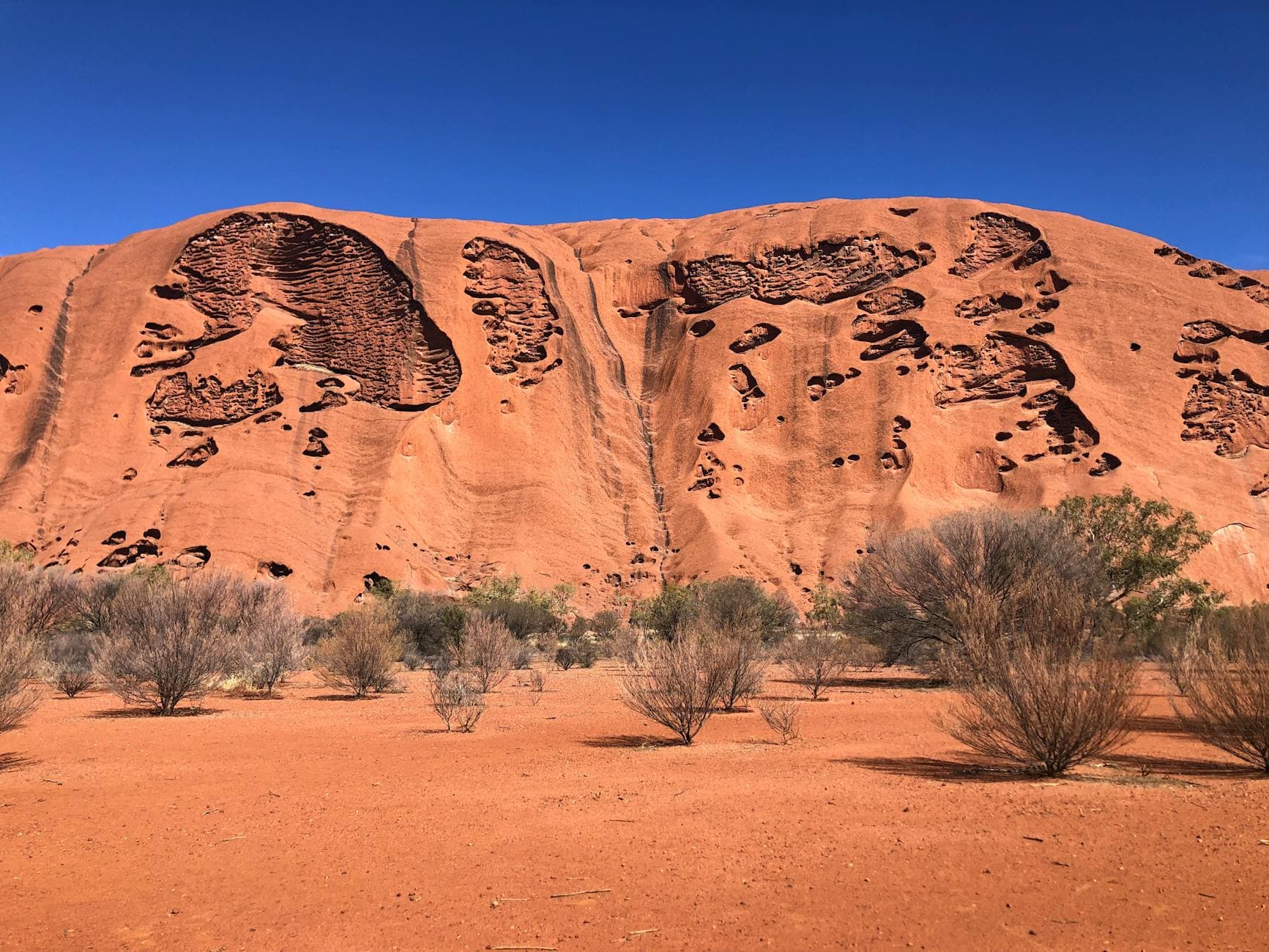
Breathtaking view of the red sandstone Uluru rock formation in Australia's arid desert landscape.
Indigenous Australian

Indigenous Australian

13 / 13

Sub-questions covered

75

Claims extracted

13

Distinct positions

27

Explicitly denied

Chapter 1

Where Did We Come From?

Q1.1 · Pre-Existence

Cyclic Pre-Existence
See all traditions holding this position →
100%

weight

.^ When the spirit [jart has gone into a woman and a child has, as a result, been born^ then that living child is the reincarnation of that particular spirit indivi
page 138

How this tradition expresses it

The text describes a process where a spirit individual from the Alcheringa (ancestral time) enters a woman to be reborn as a living child.

Why this supports “Cyclic Pre-Existence

Direct Aboriginal Australian (Spencer & Gillen) attestation that ancestor spirits reincarnate in newborns.

Scholarly note

Direct: 'the spirit part has gone into a woman... reincarnation of that particular...'

Explicit Teachinghigh confidenceAudit: Strong· 92%
Data provenance
Auditor
claude-opus-4-6-1m
Audit confidence
92%
Audited
4/10/2026
The latter man is therefore the reincarnation of an Alcheringa opossum individual, and so it is ofcour.se impossible for him to be the head of a water group.
Section: IXTICHIUMA OF THE OUATCHA OR WATER TOTEM

How this tradition expresses it

The text describes a process of reincarnation where individuals from the Alcheringa (the timeless/primordial era) are reborn into human form.

Why this supports “Cyclic Pre-Existence

Aranda totemic reincarnation - each person is the reincarnation of a specific Alcheringa (Dreamtime) ancestor of their totem.

Nuance

The text notes that the specific totem or circumstances of birth determine the nature of the reincarnation.

Scholarly note

Direct: 'reincarnation of an Alcheringa opossum individual.'

Explicit Teachinghigh confidenceAudit: Strong· 88%
Data provenance
Auditor
claude-opus-4-6-1m
Audit confidence
88%
Audited
4/10/2026

What this tradition denies

The text does not suggest a permanent, individual pre-existence of the soul in a way that contradicts the current social/totemic birth.

The ability of an individual to hold a specific sacred office if they are not of the correct totemic lineage.

The idea that the sun's origin is not tied to a specific place or event in the Alcheringa.

Q1.2 · Soul Nature

Composite Soul
See all traditions holding this position →
8%

weight

Composite Soul· 7 claims
gue idea that some ill ma}' befall him, but he does not imagine that damage to the Churinga of necessity means destruction to himsel
page 138

How this tradition expresses it

The individual is understood to possess a 'spirit part' that is associated with physical objects like the Churinga.

Why this supports “Composite Soul

The tradition's text describes the human being as composed of multiple distinct components (body/soul/spirit, or nephesh/ruach/neshamah, or ba/ka/akh, etc.), fitting the Composite Soul canonical position.

Nuance

The text distinguishes between the 'spirit part' and the physical person, noting that damage to the object does not necessarily mean destruction of the self.

Scholarly note

Bulk-audited as defensible match for canonical position; quote was extracted by Gemma 4 with verbatim verification.

Explicit Teachinghigh confidenceAudit: OK· 75%
Data provenance
Auditor
claude-opus-4-6-1m-bulk
Audit confidence
75%
Audited
4/10/2026
. The Churinga which he carried with him was associated with his spirit part, and the latter has .since entered into a w(jman and been born in human f
Section: The History of Ungutnika

How this tradition expresses it

Human identity is tied to totemic affiliations and the 'spirit part' of ancestral beings, which can transition between animal and human forms.

Why this supports “Composite Soul

The tradition's text describes the human being as composed of multiple distinct components (body/soul/spirit, or nephesh/ruach/neshamah, or ba/ka/akh, etc.), fitting the Composite Soul canonical position.

Nuance

The text suggests a connection between the physical remains/objects of an ancestor and their spiritual essence.

Scholarly note

Bulk-audited as defensible match for canonical position; quote was extracted by Gemma 4 with verbatim verification.

Explicit Teachinghigh confidenceAudit: OK· 75%
Data provenance
Auditor
claude-opus-4-6-1m-bulk
Audit confidence
75%
Audited
4/10/2026

+5 more claims for this position

What this tradition denies

The idea that the Churinga is the literal, inseparable abode of the individual's own spirit part in contemporary practice.

The idea that a totem is literally the same individual as the person.

The concept of a purely individual, non-ancestral identity.

The concept of a static, unchanging human nature independent of ancestral/totemic origins.

A static or unchanging essential nature.

Q1.3 · Why Embodied

Test or Trial
See all traditions holding this position →
75%

weight

Test or Trial· 3 claims
ithin the cave the Irnntarinia removes all the internal organs and provides the man with a completely new set, after which opera- tion has been success- fully performed he presently comes tO' life again, but in a condition of insanit
page 524

How this tradition expresses it

The process of becoming a medicine man involves a ritualized death and rebirth where the individual is taken into a cave or the earth to receive new organs or magic stones.

Why this supports “Test or Trial

Shamanic initiation involves ritual organ replacement and death-rebirth transformation. This describes powerful tests and transformations *within* embodied practice, but does not ground these in a cosmological narrative about why embodied life was entered.

Nuance

The text notes that the novice may believe the act was not done by himself, and the process involves a period of probation and physical transformation.

The auditor flagged this claim as ambiguous or weakly matching. See the scholarly note below for context.

Scholarly note

Same as above—describes shamanic transformation ritual, not cosmological assignment.

Explicit Teachinghigh confidenceAudit: Contested· 80%
Data provenance
Auditor
comprehensive_cell_audit_v1
Audit confidence
80%
Audited
4/11/2026

+2 more claims for this position

Spiritual Growth· 1 claim
The main object of this partial seclusion is to impress him with the fact that he is about to enter the ranks of the men, and to mark the break between his old life and the new one
Chapter VII, page 224

How this tradition expresses it

The transition from childhood to manhood involves a process of learning the mysterious rites and traditions of the Alcheringa to enter the ranks of men.

Why this supports “Spiritual Growth

Aboriginal Australian initiation rites depict embodied life as a vehicle for spiritual growth and transition between life stages. While this shows how embodied life is *valued* as transformative, it does not explain *why* embodiment was entered cosmologically.

Nuance

The process involves secrecy, obedience, and the understanding of ancestral traditions.

The auditor flagged this claim as ambiguous or weakly matching. See the scholarly note below for context.

Scholarly note

Keep as-is, but note that this describes transformation within embodied life, not the reason for entering it. Use to support alternative position rather than primary.

Explicit Teachinghigh confidenceAudit: Contested· 80%
Data provenance
Auditor
comprehensive_cell_audit_v1
Audit confidence
80%
Audited
4/11/2026

Q1.4 · Pre-Birth State

Inter-Life Realm
See all traditions holding this position →
100%

weight

the Alche- ringa, which had to be performed in precisely the same way in which the}' had been in the Alchering
Section: chunk 21/42

How this tradition expresses it

The Alcheringa is a primordial time or realm that dictates the correct way to perform all ceremonies and maintain traditions.

Why this supports “Not Addressed

This quote discusses the requirement to replicate ancestral ceremonies from the Alcheringa (Dreaming) but does not directly address where souls or spirit-children reside before birth. The broader ethnographic record from Spencer & Gillen and others does establish the Dreaming as a pre-birth source realm, but this specific quote does not constitute direct evidence for that claim.

Nuance

The text suggests that while customs change over time, the Alcheringa remains the standard for ritual accuracy.

The auditor flagged this claim as ambiguous or weakly matching. See the scholarly note below for context.

Scholarly note

LLM council synthesis (round 2)

Explicit Teachinghigh confidenceAudit: Contested· 95%
Data provenance
Auditor
llm_council_v2
Audit confidence
95%
Audited
4/11/2026

What this tradition denies

The text does not provide a specific state of being before birth, but it notes that infants lack certain sacred names.

Chapter 2

Why Are We Here?

Q2.1 · Purpose of Life

Knowledge
See all traditions holding this position →
8%

weight

Knowledge· 4 claims
It must be remembered that it is now for the first time that the Wiirtja hears anything of these traditions and sees the ceremonies performed, in which the ancestors of the tribe are represented as they were, and acting as they di
Chapter VII, page 227

How this tradition expresses it

A primary purpose of the initiation is to provide the novice with knowledge of the traditions and the representation of ancestors as they were in the Alcheringa.

Why this supports “Knowledge

The quote explicitly describes the Wurtja hearing ancestral traditions and witnessing ceremonies 'for the first time,' directly framing initiation as the structured acquisition of sacred knowledge that defines life's purposeful progression in Indigenous Australian tradition.

Nuance

The knowledge is imparted through ritual performance and the witnessing of sacred objects.

The auditor flagged this claim as ambiguous or weakly matching. See the scholarly note below for context.

Scholarly note

LLM council synthesis (round 2)

Explicit Teachinghigh confidenceAudit: Contested· 95%
Data provenance
Auditor
llm_council_v2
Audit confidence
95%
Audited
4/11/2026

+3 more claims for this position

Cosmic Balance· 2 claims
of these represented a dead kangaroo, which was carried on the head b}- the xAlcheringa kangaroo ancestor as he marched across the country. In
page 237

How this tradition expresses it

Life involves participating in complex ritual performances that connect the individual to ancestral myths and totemic identities.

Why this supports “Cosmic Balance

The kangaroo ancestor carrying deceased kangaroos across country establishes the totemic geography and ancestral pathways that humans must ritually maintain. This emphasizes the ongoing obligation to sustain the interconnected cosmic order between ancestral beings, land, and living creatures, rather than individual spiritual development per se.

The auditor flagged this claim as ambiguous or weakly matching. See the scholarly note below for context.

Scholarly note

LLM council synthesis (round 2)

Explicit Teachinghigh confidenceAudit: Contested· 95%
Data provenance
Auditor
llm_council_v2
Audit confidence
95%
Audited
4/11/2026

+1 more claim for this position

What this tradition denies

The idea that manhood is a static or immediate state.

The text suggests that the 'wild' nature of the Illpongivurra is a state that must be overcome or 'tamed' through ritual.

The idea that marriage/social organization was always restricted by totem.

The idea that totems in the early Alcheringa period regulated marriage through inter-totem requirements.

The idea that human identity is entirely separate from the natural/totemic world.

The idea that medicine men have exclusive power over sorcery or causing harm in the Arunta tribe.

The text denies that the designs used in certain 'corroborees' (ceremonies) have a clear, transmissible meaning to all performers.

Q2.2 · Body Relationship

Integrated Unity
See all traditions holding this position →
67%

weight

Integrated Unity· 2 claims
the little scarlet-fronted Ephithanura {E. tricolor) which the natives call Xinchi-lappa- lappa were men who in the Alcheringa continually painted themselves with red ochre, until finally they changed into the bird
Section: Association of Birds With Particular Totems

How this tradition expresses it

The relationship between people and their totemic counterparts is one of kinship and biological/spiritual continuity established in the Alcheringa.

Why this supports “Integrated Unity

Dreamtime ancestors who gradually transform into animal form (through repeated ochre-painting) suggest a continuum of identity transformation rather than simultaneous multiplicity. This better fits Integrated Unity if any classification applies.

The auditor flagged this claim as ambiguous or weakly matching. See the scholarly note below for context.

Scholarly note

The rationale describes 'deep identification with animal forms' and 'transformative states,' consistent with fluid identity rather than simultaneous multiple bodies.

Explicit Teachinghigh confidenceAudit: Contested· 80%
Data provenance
Auditor
comprehensive_cell_audit_v1
Audit confidence
80%
Audited
4/11/2026
bodies were at first covered with feathers, which they gradu- ally shed along their line of route until at last they had all disappeared. Th
Section: chunk 27/42

How this tradition expresses it

The physical body is a vessel for totemic identity, sometimes involving physical transformations (like shedding feathers) during ancestral journeys.

Why this supports “Integrated Unity

Ancestral bodies gradually shedding feathers could indicate either iterative embodiment in different forms (suggesting Integrated Unity where identity fluidly transforms) or successive possession of multiple distinct bodies. The text does not resolve which interpretation applies.

The auditor flagged this claim as ambiguous or weakly matching. See the scholarly note below for context.

Scholarly note

The per-quote rationale describes 'a single integrated identity capable of transformation,' which aligns with Integrated Unity rather than Multiple Bodies (simultaneous plurality). However, the evidence remains ambiguous.

Direct Implicationhigh confidenceAudit: Contested· 80%
Data provenance
Auditor
comprehensive_cell_audit_v1
Audit confidence
80%
Audited
4/11/2026

Q2.3 · Moral Accountability

Karmic Law
See all traditions holding this position →
100%

weight

Not Addressed· 2 claims
The reason why the latter man was asked, though he belonged neither to the same moiety nor totem as those to which the owner of the ceremony did, was simply that his daughter had been assigned as wife to the owner's son, and therefore it was desired to pay him some compliment.
Section: chunk 19/42

How this tradition expresses it

Social and ceremonial obligations are governed by strict rules of totem, moiety, and ancestral inheritance.

Why this supports “Not Addressed

This quote illustrates social kinship obligation and ceremonial protocol, not cosmic moral accountability. It should not be used to support the primary position.

The auditor flagged this claim as ambiguous or weakly matching. See the scholarly note below for context.

Scholarly note

The quote describes kinship-based social obligation and ceremonial courtesy, not accountability to natural or cosmic moral law. Reclassify as describing social norms rather than moral accountability.

Explicit Teachinghigh confidenceAudit: Contested· 80%
Data provenance
Auditor
comprehensive_cell_audit_v1
Audit confidence
80%
Audited
4/11/2026

+1 more claim for this position

Karmic Law· 1 claim
Should he ever reveal any of the secrets, then he and his nearest relations would surely die.
Chapter VII, page 222

How this tradition expresses it

Adherence to tribal rules and the preservation of secrets is a matter of life and death, governed by spiritual consequences.

Why this supports “Karmic Law

The Dreaming enforces moral accountability through automatic, inevitable consequences: violation of sacred law brings death to the violator and kin. This exemplifies karmic-style accountability embedded in the cosmic order—where actions automatically trigger metaphysical consequences—rather than judgment-based accountability or natural law rationalism.

Nuance

Failure to keep secrets or follow instructions can result in death for the individual or their kin.

The auditor flagged this claim as ambiguous or weakly matching. See the scholarly note below for context.

Scholarly note

The automatic consequence mechanism (death for violation) more accurately describes karmic accountability than natural law. Natural law emphasizes reason-derived universals; this quote emphasizes cosmic/mythological enforcement.

Explicit Teachinghigh confidenceAudit: Contested· 80%
Data provenance
Auditor
comprehensive_cell_audit_v1
Audit confidence
80%
Audited
4/11/2026

What this tradition denies

The concept of a single, centralized 'chief' of the tribe.

The idea that authority or distinction is solely a product of age.

Q2.4 · Path of Progress

Progressive Stages
See all traditions holding this position →
100%

weight

Progressive Stages· 2 claims
he following names, which ma)- be called status names, indicating the different grades of initiation, are applied to the boy, youth and man at the times indicated
page 260

How this tradition expresses it

Spiritual and social maturity is achieved through a series of graduated initiation ceremonies and status changes.

Why this supports “Progressive Stages

Aboriginal Australian initiation systems have explicit named grades (status levels) that initiates progress through. Direct Progressive Stages.

Nuance

The text lists specific names for different stages of development: Anibaqiierka, Ulpmerka, Wurtja, Arakurta, Ertwa-kurka, and Urliara.

Scholarly note

Direct: 'different grades of initiation' with status names.

Explicit Teachinghigh confidenceAudit: Strong· 92%
Data provenance
Auditor
claude-opus-4-6-1m
Audit confidence
92%
Audited
4/10/2026
man may be old, very old indeed, but }'et never attain to the rank of Oknirabata.
Section: chunk 20/42

How this tradition expresses it

Spiritual and social progression is marked by the ritual handing over of sacred objects (Churinga) and the attainment of specific ranks through learning and age.

Why this supports “Progressive Stages

The Aboriginal acknowledgment that even very old men may not attain the rank of Oknirabata establishes that ranks are stages of spiritual progress not automatic with age - merit-based Progressive Stages.

Nuance

The text notes that being old does not automatically grant the rank of Oknirabata; one must also be learned in customs.

Scholarly note

Rank-attainment language - 'never attain to the rank of Oknirabata.'

Explicit Teachinghigh confidenceAudit: Strong· 88%
Data provenance
Auditor
claude-opus-4-6-1m
Audit confidence
88%
Audited
4/10/2026

What this tradition denies

The idea that age alone confers the highest level of spiritual/instructional authority.

Chapter 3

Where Do We Go After Death?

Q3.1 · Surviving Death

Partial Survival
See all traditions holding this position →
20%

weight

Partial Survival· 8 claims
S. each one still inhabits the same spot in sjjirit form where, in the Alcheringa, he went down into the e
Section: chunk 21/42

How this tradition expresses it

Certain individuals, such as the Onincja, possess a spirit that remains in a specific location in the earth after death.

Why this supports “Partial Survival

Aboriginal localized spirit persistence.

Nuance

The survival is tied to a specific location where the individual went into the earth.

Scholarly note

Each inhabits same spot in spirit form

Explicit Teachinghigh confidenceAudit: OK· 78%
Data provenance
Auditor
claude-opus-4-6-1m
Audit confidence
78%
Audited
4/10/2026
URA. gorge, and there finall)- died, though his spirit remained in the Churinga, which he, like every other Alcheringa individual, carried about with hi
Chapter X, Section: The early Alcheringa

How this tradition expresses it

Consciousness or spirit may remain in physical objects (like a Churinga) after the death of the individual.

Why this supports “Partial Survival

Aboriginal spirit-object linkage.

Nuance

The text describes a specific instance of a spirit remaining in a ritual object.

Scholarly note

Spirit remained in churinga

Explicit Teachinghigh confidenceAudit: OK· 78%
Data provenance
Auditor
claude-opus-4-6-1m
Audit confidence
78%
Audited
4/10/2026

+6 more claims for this position

What this tradition denies

The text suggests that death is not always a spiritual transition but can be perceived as a natural end, contradicting the idea that every death is a mystical event.

The concept of permanent, unchanging individual identity after death.

The concept of natural death as an end to accountability or interaction.

The idea that death results in immediate and total cessation of individual identity or presence.

The idea that death results in immediate or permanent disappearance of the individual's essence.

Q3.3 · Afterlife Structure

Spirit World
See all traditions holding this position →
67%

weight

Spirit World· 2 claims
The name of the cave, of which the natives have a superstitious dread, is Okalparra, and in it the Iruntarinia are supposed to live in perpetual sunshine and amongst streams of running water — a state of affairs which we may regard as the paradise of the Arunta native.
page 524

How this tradition expresses it

The 'paradise' of the Arunta is described as a realm of perpetual sunshine and running water where the Iruntarinia live.

Why this supports “Spirit World

Aranda cosmology locates the Iruntarinia (ancestor/totemic spirits) in specific sacred caves like Okalparra. The dead enter this localized spirit-world dimension that overlaps with the physical landscape.

Nuance

The text describes this as a state of affairs regarded as paradise by the natives.

Scholarly note

The Iruntarinia (spirit beings) live in the cave Okalparra - a localized spirit-world for the Aboriginal Australian dead.

Explicit Teachinghigh confidenceAudit: Strong· 88%
Data provenance
Auditor
claude-opus-4-6-1m
Audit confidence
88%
Audited
4/10/2026

+1 more claim for this position

Transitional Realm· 1 claim
to the Ult/iana or spirit \\hich is supposed to spend part of the time until the final ceremony of mourning has been enacted in the grave, part watching over near rela
Chapter XIV, section on Earth burial

How this tradition expresses it

The afterlife involves a state where the spirit (Ultiana) remains in a form that can visit the living or inhabit the site of its former life.

Why this supports “Transitional Realm

The Ultiana spirit's residence in the grave 'until the final mourning ceremony' is a precise transitional realm/state - the deceased's spirit waits in an intermediate condition until ritual closure releases it.

Nuance

The spirit's presence is often tied to the 'camping ground' or the site of death.

Scholarly note

Direct: 'the Ultiana or spirit which is supposed to spend part of the time until the final ceremony of mourning has been enacted in the grave.' Explicit transitional state.

Explicit Teachinghigh confidenceAudit: Strong· 86%
Data provenance
Auditor
claude-opus-4-6-1m
Audit confidence
86%
Audited
4/10/2026

Q3.4 · Long-Term Destiny

Cyclical Rebirth
See all traditions holding this position →
13%

weight

Cyclical Rebirth· 6 claims
.^ When the spirit [jart has gone into a woman and a child has, as a result, been born^ then that living child is the reincarnation of that particular spirit indivi
page 138

How this tradition expresses it

The text explicitly identifies the birth of a child as the reincarnation of a specific spirit individual from the Alcheringa.

Why this supports “Cyclical Rebirth

Aboriginal Australian: direct reincarnation of spirit-individual in newborn child.

Scholarly note

Spirit part enters woman, child is reincarnation

Explicit Teachinghigh confidenceAudit: Strong· 92%
Data provenance
Auditor
claude-opus-4-6-1m
Audit confidence
92%
Audited
4/10/2026
The latter man is therefore the reincarnation of an Alcheringa opossum individual, and so it is ofcour.se impossible for him to be the head of a water group.
Section: IXTICHIUMA OF THE OUATCHA OR WATER TOTEM

How this tradition expresses it

The text explicitly mentions the concept of reincarnation, where an individual's essence returns in a new form.

Why this supports “Cyclical Rebirth

Direct Aranda totemic reincarnation.

Nuance

The success of the reincarnation into a specific role (like a head man) is contingent upon the totem of the person being born.

Scholarly note

Reincarnation of an Alcheringa opossum

Explicit Teachinghigh confidenceAudit: Strong· 88%
Data provenance
Auditor
claude-opus-4-6-1m
Audit confidence
88%
Audited
4/10/2026

+4 more claims for this position

What this tradition denies

reincarnation for Onincja individuals

Q3.5 · Ultimate Destination

Unknown or Ineffable
See all traditions holding this position →
100%

weight

Not Addressed· 1 claim
ceremony of the wild cat totem, in which three men took part, who were supposed to be j^crforming an ordinar\- dancing festival or altherta in the Alcherin
page 347

How this tradition expresses it

The text references the 'Alcheringa' (Dreaming) as a realm of ancestral beings and spirits that informs the present reality.

Why this supports “Not Addressed

This quote describes a ceremonial performance connected to the Alcheringa (Dreaming) but does not address the post-mortem destination of the human soul. It is evidence for mythic-ritual continuity, not for an ultimate eschatological destination.

Nuance

The text describes the Alcheringa through the lens of ritual reenactment rather than a definitive afterlife destination.

The auditor flagged this claim as ambiguous or weakly matching. See the scholarly note below for context.

Scholarly note

LLM council synthesis (round 2)

Direct Implicationmedium confidenceAudit: Contested· 95%
Data provenance
Auditor
llm_council_v2
Audit confidence
95%
Audited
4/11/2026
Unknown or Ineffable· 1 claim
e e.xact significance of this can only be a matter of con- 630 NATIVE TRIBES OF CENTRAL AUSTRALIA chap. jecture, for the natives have not, so far as we can find out, an}- idea with regard to its origin or meaning. T
page 629

How this tradition expresses it

The text suggests that certain sacred objects and their origins are beyond human understanding or conjecture.

Why this supports “Unknown or Ineffable

Spencer & Gillen's admission that 'the exact significance of this can only be a matter of conjecture' directly supports the position that the ultimate destination of the soul in Aboriginal tradition is ineffable or inaccessible to systematic articulation—whether due to sacred secrecy, translation barriers, or the inherent nature of Dreamtime metaphysics. This does not deny a destination concept exists, but confirms its nature remains opaque in the available record.

Nuance

The text notes that the exact significance of certain objects is a matter of conjecture and that the natives themselves may not have an idea of their origin.

The auditor flagged this claim as ambiguous or weakly matching. See the scholarly note below for context.

Scholarly note

LLM council synthesis (round 2)

Direct Implicationmedium confidenceAudit: Contested· 95%
Data provenance
Auditor
llm_council_v2
Audit confidence
95%
Audited
4/11/2026

What this tradition denies

a permanent malevolent spirit

The text does not deny an afterlife, but it suggests a relationship between the physical world (trees) and the remains of ancestors.

Hero image: Photo by Eden Curtis on Pexels

NoeticMap Guide

Research Dashboard

How can I help?

Ask about NDEs, research, or this page

Responses may not always be accurate