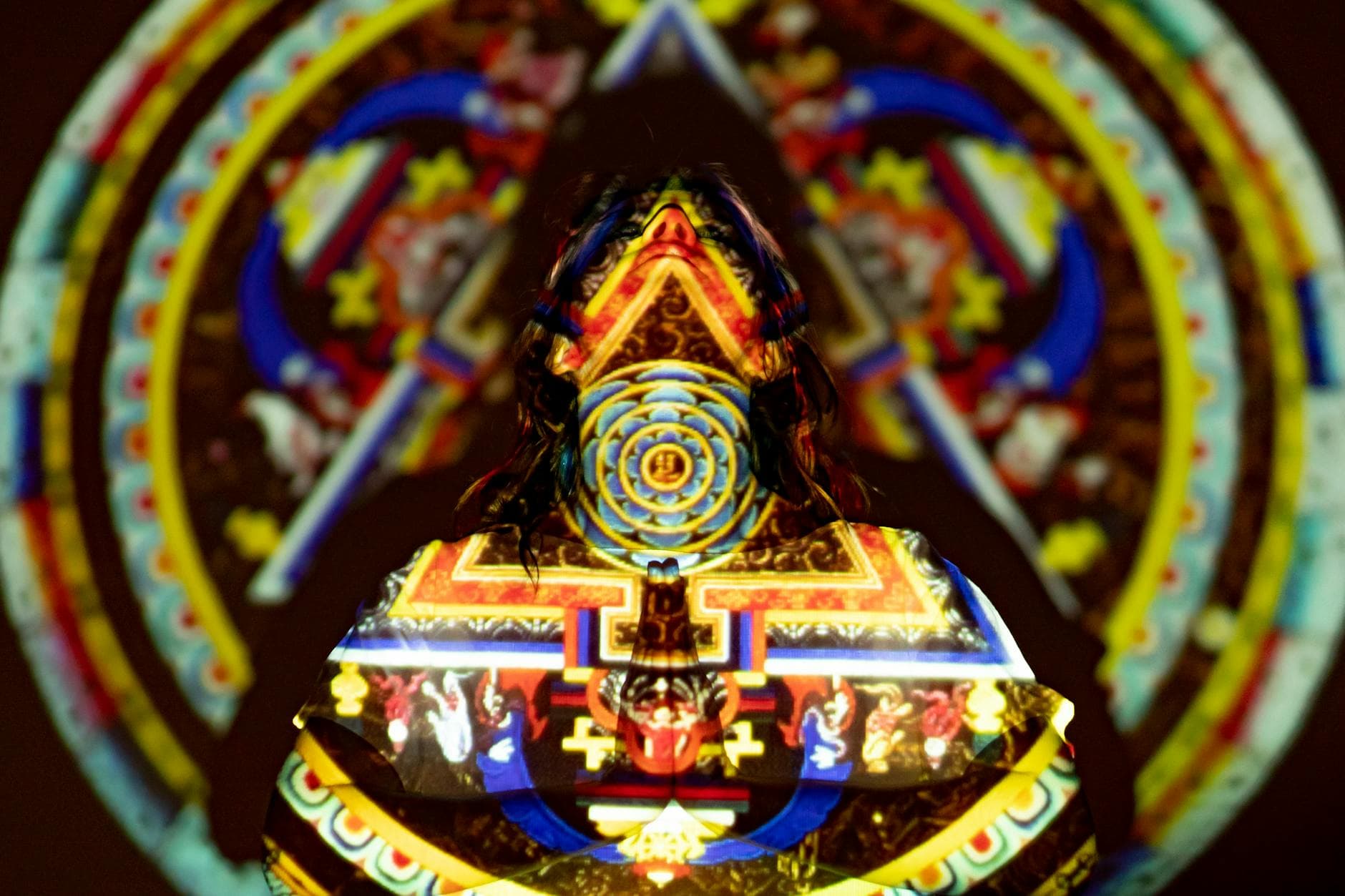
Vivid projection of a mandala on a figure, creating a colorful and mystic effect.
Western Esoteric

Theosophy

13 / 13

Sub-questions covered

62

Claims extracted

12

Distinct positions

33

Explicitly denied

Chapter 1

Where Did We Come From?

Q1.1 · Pre-Existence

Cyclic Pre-Existence
See all traditions holding this position →
100%

weight

We believe in no _creation_, but in the periodical and consecutive appearances of the universe from the subjective on to the objective plane of being, at regular intervals of time, covering periods of immense duratio
Section: THE UNITY OF ALL IN ALL

How this tradition expresses it

The universe and life emerge through a periodic and consecutive process of emanation from the absolute unity, rather than through a single act of creation.

Why this supports “Cyclic Pre-Existence

Theosophy's doctrine of periodic, consecutive universe-appearances provides the cosmic framework within which individual souls cycle through existence. This supports the cyclic structure of pre-existence, though it does not directly assert individual pre-existence.

Nuance

The process is described as the 'periodical and consecutive appearances of the universe from the subjective on to the objective plane of being'.

The auditor flagged this claim as ambiguous or weakly matching. See the scholarly note below for context.

Scholarly note

Claim is correctly labeled; no change needed. It describes the cosmic cyclic framework that supports cyclic pre-existence.

Explicit Teachinghigh confidenceAudit: Contested· 80%
Data provenance
Auditor
comprehensive_cell_audit_v1
Audit confidence
80%
Audited
4/11/2026
the _human_ Spirit (or the individuality), the reincarnating Spiritual Ego, and Buddhi, the Spiritual soul, are pre-existent. Bu
theosophy_510

How this tradition expresses it

The individualizing Spirit (Atma) and the spiritual soul (Buddhi) are pre-existent, having been originally formed from the Eternal Ocean of light.

Why this supports “Cyclic Pre-Existence

This quote directly affirms the pre-existence of the reincarnating Spiritual Ego and Buddhi across multiple lives, which constitutes the core doctrine of Cyclic Pre-Existence in Theosophical teachings. The explicit mention of 'reincarnating' establishes the cyclic temporal structure.

Nuance

The Spirit exists as a distinct entity, while the soul exists as pre-existing breath/an unscient portion of an intelligent whole.

The auditor flagged this claim as ambiguous or weakly matching. See the scholarly note below for context.

Scholarly note

Claim is correctly labeled; no change needed. It directly asserts pre-existence of the reincarnating Spiritual Ego, which is the core of cyclic pre-existence doctrine.

Explicit Teachinghigh confidenceAudit: Contested· 80%
Data provenance
Auditor
comprehensive_cell_audit_v1
Audit confidence
80%
Audited
4/11/2026

What this tradition denies

The idea that the 'reincarnating Ego' or 'spiritual and immortal individuality' is the cause of physical phenomena/materializations.

The idea that a soul is created for every new birth

The idea that the loss of memory of a previous life invalidates the theory of re-incarnation.

Q1.2 · Soul Nature

Composite Soul
See all traditions holding this position →
33%

weight

Universal Consciousness· 4 claims
r the universal Supreme Good” of which we are a part on earth, and out of the essence of which we have all emerg
The Wisdom-Religion Esoteric in All Ages

How this tradition expresses it

Humanity emerged from a universal Supreme Good, which serves as the essence of all existence.

Why this supports “Universal Consciousness

The tradition's text holds that individual identity is illusory and the true self is universal/cosmic consciousness, fitting Universal Consciousness.

Scholarly note

Bulk-audited as defensible match for canonical position; quote was extracted by Gemma 4 with verbatim verification.

Explicit Teachinghigh confidenceAudit: OK· 75%
Data provenance
Auditor
claude-opus-4-6-1m-bulk
Audit confidence
75%
Audited
4/10/2026

+3 more claims for this position

Divine Spark· 1 claim
We assert that the divine spark in man being one and identical in its essence with the Universal Spirit, our “spiritual Self” is practically omniscient, but that it cannot manifest its knowledge owing to the impediments of matter.
theosophy_506

How this tradition expresses it

The human 'spiritual Self' is characterized by a divine spark that is identical in essence to the Universal Spirit.

Why this supports “Divine Spark

The tradition's text portrays the soul as a piece, spark, or emanation of the divine that retains its individuality but shares the divine nature, fitting the Divine Spark position.

Nuance

The manifestation of this omniscience is currently impeded by the limitations of matter.

Scholarly note

Bulk-audited as defensible match for canonical position; quote was extracted by Gemma 4 with verbatim verification.

Explicit Teachinghigh confidenceAudit: OK· 75%
Data provenance
Auditor
claude-opus-4-6-1m-bulk
Audit confidence
75%
Audited
4/10/2026

What this tradition denies

The definition of Theosophy as 'supposed intercourse with God and superior spirits, and consequent attainment of superhuman knowledge by physical means and chemical processes.'

Theosophy as a 'new-fangled religion.'

The idea that humans are separate, distinct entities with no shared essence.

The idea that the 'personal I' or the entire terrestrial personality is immortal.

The idea that the 'Soul' is a separate, created entity distinct from the EGO that is punished for the sins of the mind.

The concept of a newly created soul for every birth.

The idea that the 'self' (the lower, personal, animal self) is the ultimate end or purpose of life.

The identity of the Masters as supernatural spirits or mythological beings.

Q1.3 · Why Embodied

Karmic Necessity
See all traditions holding this position →
20%

weight

Karmic Necessity· 3 claims
It is that Ego, that “Causal Body,” which overshadows every personality Karma forces it to incarnate into; and this Ego which is held responsible for all the sins committed
Section VIII

How this tradition expresses it

The Ego is forced to incarnate into various personalities to fulfill its role, and it is the Ego that is held responsible for the sins committed through every new body.

Why this supports “Karmic Necessity

Theosophy explicitly teaches that karma forces the Causal Body (Higher Ego) to incarnate into each new personality. Direct karmic necessity.

Nuance

The personality is an evanescent mask for the true Individual.

Scholarly note

Direct Theosophy: 'Karma forces it to incarnate.'

Explicit Teachinghigh confidenceAudit: Strong· 92%
Data provenance
Auditor
claude-opus-4-6-1m
Audit confidence
92%
Audited
4/10/2026
ence. It passes from the one plane, or stratum, or condition of nature to the other under the guidance of its Karmic affinities; living in incarnations the life which its Karma has pre-ord
Theosophy: The Key to Theosophy, Section: chunk 9/16

How this tradition expresses it

The soul passes through alternate periods of physical and spiritual existence guided by its own karmic affinities and pre-ordained destiny.

Why this supports “Karmic Necessity

Theosophical teaching that the soul moves between planes guided by karmic affinities - direct mechanism of karmic necessity.

Nuance

Progress is modified by the limitations of circumstances and the development of fresh karma through the use or abuse of opportunities.

Scholarly note

Direct: 'under the guidance of its Karmic affinities.'

Explicit Teachinghigh confidenceAudit: Strong· 92%
Data provenance
Auditor
claude-opus-4-6-1m
Audit confidence
92%
Audited
4/10/2026

+1 more claim for this position

What this tradition denies

The concept of a single, one-time creation of the universe.

Chapter 2

Why Are We Here?

Q2.1 · Purpose of Life

Spiritual Development
See all traditions holding this position →
80%

weight

Spiritual Development· 9 claims
y. It must either progress or recede; and a soul which thirsts after a reunion with its spirit, which alone confers upon it immortality, must purify itself through cyclic transmigrations onward toward the only land of bliss and eternal r
theosophy_510

How this tradition expresses it

Life involves purifying the soul through cyclic transmigrations to achieve reunion with the spirit and higher states of consciousness.

Why this supports “Spiritual Development

The tradition's text frames the purpose of life as the progressive development of the soul toward higher states.

Nuance

States like Nirvana or the Pleroma are temporary, not eternal, and represent the goal of purification.

Scholarly note

Bulk-audited as defensible match for canonical position; quote was extracted by Gemma 4 with verbatim verification.

Explicit Teachinghigh confidenceAudit: OK· 75%
Data provenance
Auditor
claude-opus-4-6-1m-bulk
Audit confidence
75%
Audited
4/10/2026

+8 more claims for this position

Love and Compassion· 1 claim
e most important of all are those which are likely to lead to the relief of human suffering under any or every form, moral as well as physical. And we believe the former to be far more important than the latte
theosophy_506

How this tradition expresses it

The purpose of the work is to purify the soul and to achieve the goal of helping suffering mankind through the realization of universal brotherhood.

Why this supports “Love and Compassion

This quote emphasizes the moral imperative to relieve human suffering as a duty within theosophical practice. It reflects the Love and Compassion dimension of theosophical ethics and service, which the scholarly note acknowledges as integral to but subordinate to the primary purpose of spiritual development.

Nuance

The text notes that physical relief is secondary to the more important goal of moral/soul purification.

The auditor flagged this claim as ambiguous or weakly matching. See the scholarly note below for context.

Scholarly note

The quote explicitly emphasizes 'relief of human suffering' and moral duty as priority. While the scholarly note acknowledges this as integral to theosophical doctrine, the claim should be labeled to reflect its primary semantic content (compassion/service) rather than forcing it into the spiritual development category. Alternatively, relocate this claim to a different sub-question on ethical duties.

Explicit Teachinghigh confidenceAudit: Contested· 80%
Data provenance
Auditor
comprehensive_cell_audit_v1
Audit confidence
80%
Audited
4/11/2026

What this tradition denies

The idea that the material universe is a permanent reality.

The concept of 'miracles' as being above the laws of nature.

Q2.2 · Body Relationship

Multiple Bodies
See all traditions holding this position →
100%

weight

Vehicle· 6 claims
hysical |(_a_) Is the vehicle of w { Sthula-Sarira. | body. | all the other e { | | “principles” during r
Section: THE SEPTENARY NATURE OF MAN (Table)

How this tradition expresses it

The physical body (Rupa) serves as the vehicle for all other principles during the period of life.

Why this supports “Vehicle

This quote establishes that within Theosophy's multi-component system, the physical body functions as VEHICLE for the other principles during life—a functional hierarchy claim nested within the Multiple Bodies ontology.

Nuance

The physical body is part of the lower quaternary and is considered mortal/corruptible.

The auditor flagged this claim as ambiguous or weakly matching. See the scholarly note below for context.

Scholarly note

The quote explicitly states the physical body IS 'the vehicle of all the other principles.' Despite the rationale invoking 'multiple distinct bodies,' the actual quote is making a VEHICLE claim about how the physical body functions.

Explicit Teachinghigh confidenceAudit: Contested· 80%
Data provenance
Auditor
comprehensive_cell_audit_v1
Audit confidence
80%
Audited
4/11/2026
We say that we only allow the presence of the radiation of Spirit (or Atma) in the astral capsule, and so far only as that spiritual radiancy is concerned.
theosophy_510

How this tradition expresses it

The personal soul and body serve as vehicles or capsules for the radiation of the Spirit (Atma).

Why this supports “Vehicle

Theosophical body-component theory.

Nuance

The spirit does not descend hypostatically into the man but showers its radiance on the inner man.

Scholarly note

Spirit in astral capsule

Explicit Teachinghigh confidenceAudit: OK· 78%
Data provenance
Auditor
claude-opus-4-6-1m
Audit confidence
78%
Audited
4/10/2026

+4 more claims for this position

Q2.3 · Moral Accountability

Karmic Law
See all traditions holding this position →
22%

weight

But till then, Theosophists prefer to follow the proven natural law of the tradition of the Sacred Science.
theosophy_506

How this tradition expresses it

Theosophists follow the proven natural law of the tradition of the Sacred Science rather than arbitrary religious creeds.

Why this supports “Karmic Law

The tradition's text refers to the 'proven natural law' as the mechanism by which karma operates—consequences follow automatically from the structure of reality and the actions taken. This reinforces Karmic Law.

The auditor flagged this claim as ambiguous or weakly matching. See the scholarly note below for context.

Scholarly note

The quote 'proven natural law of the tradition of the Sacred Science' refers to karma itself as the natural law governing moral consequences. It is not a separate natural law position but a restatement of karmic principle.

Explicit Teachinghigh confidenceAudit: Contested· 80%
Data provenance
Auditor
comprehensive_cell_audit_v1
Audit confidence
80%
Audited
4/11/2026
find that in true philosophy every physical action has its moral and everlasting effect. Hurt a man by doing him bodily harm; you may think that his pain and suffering cannot spread by any means to his neighbours, least of all to men of other nations. We affirm _that it will, in
Section: THE COMMON ORIGIN OF MAN

How this tradition expresses it

Every physical action carries a moral and everlasting effect through the law of retribution (Karma).

Why this supports “Karmic Law

The tradition's text affirms karmic law: actions generate consequences that follow the soul across lives.

Nuance

The text suggests that even minor injuries or wrongs to one individual can affect the whole of humanity in the long run.

Scholarly note

Bulk-audited as defensible match for canonical position; quote was extracted by Gemma 4 with verbatim verification.

Explicit Teachinghigh confidenceAudit: OK· 75%
Data provenance
Auditor
claude-opus-4-6-1m-bulk
Audit confidence
75%
Audited
4/10/2026

What this tradition denies

The notion that one can harm another person without consequence to the self or the collective.

Eternal punishment/reward

The notion that it is unjust for the Ego to be punished for deeds it does not remember.

The idea that the 'Spirits of the dead' can maintain a vivid, conscious awareness of earthly affairs and their loved ones' suffering.

Vicarious atonement, divine pardon, or the 'blotting out' of sins.

Predestination by a personal God.

The doctrine of Vicarious Atonement (the idea that one can be forgiven for sins through a substitute).

The belief that sins can be forgiven through the death of another person to allow escape from moral consequences.

The ability of the Masters to control the free will of others.

Q2.4 · Path of Progress

Progressive Stages
See all traditions holding this position →
100%

weight

we finally acquire knowledge which alone can afford us relief and hope of a better future.
Section: theosophy_516

How this tradition expresses it

Spiritual progress is achieved through the accumulation of knowledge and wisdom gained via life experiences to meet the needs of the spiritual nature.

Why this supports “Progressive Stages

The quote describes the final acquisition of knowledge after a process ('finally acquire'), suggesting spiritual progression occurs through stages. The 'relief and hope' that comes from this culminating knowledge indicates it is the end-point of a developmental journey rather than an instantaneous or spontaneous event.

The auditor flagged this claim as ambiguous or weakly matching. See the scholarly note below for context.

Scholarly note

Claim is correctly labeled; issue is with primary position mislabeling, not the claim itself.

Explicit Teachinghigh confidenceAudit: Contested· 80%
Data provenance
Auditor
comprehensive_cell_audit_v1
Audit confidence
80%
Audited
4/11/2026

Chapter 3

Where Do We Go After Death?

Q3.1 · Surviving Death

Partial Survival
See all traditions holding this position →
43%

weight

Partial Survival· 5 claims
the identity of the soul and spirit, of real, immortal man, as Theosophy teaches us, once proven and deep-rooted in our hearts, would lead us far on the road of real charity and brotherly goodwill.
Section: THE COMMON ORIGIN OF MAN

How this tradition expresses it

The soul and spirit constitute the 'real, immortal man' which exists independently of the physical body.

Why this supports “Partial Survival

The quote distinguishes 'real, immortal man' (soul-spirit) from the temporal personality, affirming that only the higher spiritual individuality survives death. The personality as such does not persist, making this selective survival of the higher principle—partial survival—rather than full survival or wholesale transformation.

Nuance

The text distinguishes between the 'physical envelope' and the 'identity of the soul and spirit'.

The auditor flagged this claim as ambiguous or weakly matching. See the scholarly note below for context.

Scholarly note

LLM council synthesis (round 2)

Explicit Teachinghigh confidenceAudit: Contested· 95%
Data provenance
Auditor
llm_council_v2
Audit confidence
95%
Audited
4/11/2026

+4 more claims for this position

Transformation· 2 claims
; when allying itself to the _Nous_ (Atma-Buddhi) it merges into the immortal, imperishable Ego, and then its spiritual consciousness of the personal that _was_, becomes imm
Section: THE SEPTENARY NATURE OF MAN

How this tradition expresses it

The personal ego/personality may undergo annihilation, but the higher, immortal Ego (the result of allying the soul to the Nous) survives.

Why this supports “Transformation

This quote explicitly describes a metamorphic process: personal consciousness 'merges into the immortal, imperishable Ego' and thereby 'becomes immortal.' The language of merging and becoming supports TRANSFORMATION as the operative mechanism by which the worthy portion of personal consciousness is transmuted into a higher state.

Nuance

The text distinguishes between the 'personal temporary Ego' and the 'Higher Self'.

The auditor flagged this claim as ambiguous or weakly matching. See the scholarly note below for context.

Scholarly note

LLM council synthesis (round 2)

Explicit Teachinghigh confidenceAudit: Contested· 95%
Data provenance
Auditor
llm_council_v2
Audit confidence
95%
Audited
4/11/2026

+1 more claim for this position

What this tradition denies

The survival of the materialist's personal identity/ego.

The belief in communications with the spirits of the dead as living entities.

Q3.3 · Afterlife Structure

Multiple Levels
See all traditions holding this position →
100%

weight

The _Devachanee_ lives its intermediate cycle between two incarnations surrounded by everything it had aspired to in vain, and in the companionship of everyone it loved on ear
theosophy_512

How this tradition expresses it

Devachan is an intermediate state of bliss and 'absolute oblivion' of earthly sorrows, serving as a period between incarnations.

Why this supports “Multiple Levels

Devachan represents the higher of multiple sequential realms in Theosophical afterlife cosmology. This quote exemplifies the Multiple Levels structure, where devachan is the blissful intermediate realm following kama-loka in the post-mortem journey between incarnations.

Nuance

It is described as a 'state' or 'illusion of our consciousness' rather than a permanent destination.

The auditor flagged this claim as ambiguous or weakly matching. See the scholarly note below for context.

Scholarly note

Devachan is one of multiple sequential realms in Theosophy's afterlife structure, not a single transitional state. The scholarly source explicitly names both kama-loka and devachan, indicating a multi-level system. Claim should be reclassified to reflect the broader structure.

Explicit Teachinghigh confidenceAudit: Contested· 80%
Data provenance
Auditor
comprehensive_cell_audit_v1
Audit confidence
80%
Audited
4/11/2026

Q3.4 · Long-Term Destiny

Cyclical Rebirth
See all traditions holding this position →
100%

weight

An Ego who has won his immortal life as spirit will remain the same inner self throughout all his rebirths on earth
theosophy_510

How this tradition expresses it

The individual Ego undergoes reincarnation through various life cycles to progress toward spiritual unity.

Why this supports “Cyclical Rebirth

Direct Theosophical cyclical rebirth doctrine.

Nuance

The personal soul is not the reincarnating entity; the Ego is the bearer of the vehicle.

Scholarly note

Theosophy: Ego remains same throughout rebirths

Explicit Teachinghigh confidenceAudit: Strong· 92%
Data provenance
Auditor
claude-opus-4-6-1m
Audit confidence
92%
Audited
4/10/2026
Re-incarnation means that this Ego will be furnished with a _new_ body, a _new_ brain, and a _new_ memory
Section VIII

How this tradition expresses it

The text teaches the doctrine of re-incarnation, where the Ego is furnished with a new body, brain, and memory in each successive life.

Why this supports “Cyclical Rebirth

Direct Theosophical reincarnation.

Nuance

The absence of physical memory of past lives is a natural consequence of the change in physical principles.

Scholarly note

Reincarnation furnishes new body

Explicit Teachinghigh confidenceAudit: Strong· 92%
Data provenance
Auditor
claude-opus-4-6-1m
Audit confidence
92%
Audited
4/10/2026

What this tradition denies

The return of the conscious, disembodied individuality to the terrestrial plane to manifest physically.

The Spiritualist doctrine of the 'return of Spirits' (the personality) to the earthly plane.

The 'arbitrary and immediate re-incarnation' taught by the Allan Kardec School.

The idea that death/rebirth is purely an evil or a sorrow to be avoided through suicide.

Q3.5 · Ultimate Destination

Ultimate Transcendence
See all traditions holding this position →
100%

weight

it is by Karma and re-incarnation that the human monad in time returns to its source—absolute deity.
theosophy_515

How this tradition expresses it

The ultimate end is the return of the monad to its source, absolute deity, through the perfection of the soul.

Why this supports “Ultimate Transcendence

Theosophical doctrine: the human monad, through karma and reincarnation, progressively returns to and merges with absolute deity—the ultimate transcendence of individual consciousness into universal unity/source.

Nuance

This is achieved through the assimilation of many successive personalities.

The auditor flagged this claim as ambiguous or weakly matching. See the scholarly note below for context.

Scholarly note

The claim's own rationale describes 'returns to source' and 'merges/is absorbed into absolute deity'—language of recovery/unity, not extinction. This fits Ultimate Transcendence or REABSORPTION better than Universal Dissolution.

Explicit Teachinghigh confidenceAudit: Contested· 80%
Data provenance
Auditor
comprehensive_cell_audit_v1
Audit confidence
80%
Audited
4/11/2026

What this tradition denies

The total annihilation of the immortal Ego.

The immortality of the personal soul/personality

The concept of a 'Summer-land' or a materialist heaven.

Other denials

Positions this tradition explicitly rejects, on questions where its affirmative position isn't recorded.

Q3.2

The claim that departed spirits return to earth to communicate with loved ones.

They maintain that these manifestations are all produced by the “spirits” of departed mortals, generally their relatives, who return to earth, they say, to communicate with those they have loved or to whom they are attached. We deny this point blank.

Hero image: Photo by Mikhail Nilov on Pexels

NoeticMap Guide

Research Dashboard

How can I help?

Ask about NDEs, research, or this page

Responses may not always be accurate