Q1 · Soul Nature

Universal Consciousness

13of 66 traditions hold this positionPreliminary5 cultural clusters

What does “Universal consciousness” mean?

Individual identity is illusory; the true self is the universal/cosmic consciousness

Advaita Vedanta and some mystical traditions teach that individual identity (jiva) is ultimately illusory - the appearance of separation. The true self (atman) is identical with Brahman, the universal consciousness. Realization is recognizing 'I am That' (tat tvam asi). This is monistic in the strictest sense: not many souls united with God, but one consciousness mistakenly appearing as many.

Examples across traditions

  • Hinduism (Advaita): tat tvam asi - thou art that
  • Taoism: the sage who has lost himself in the Tao
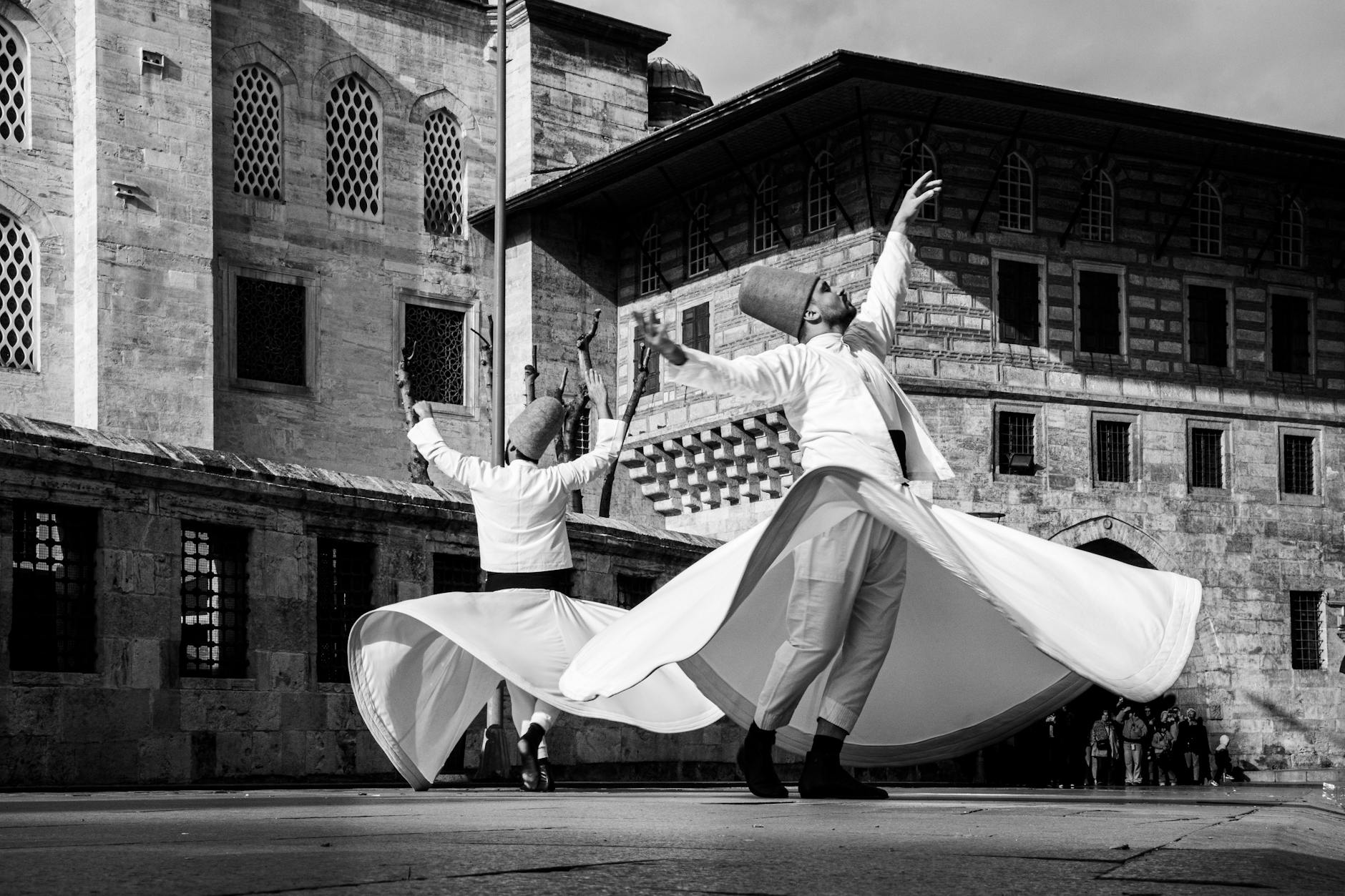
  • Sufism: wahdat al-wujud - unity of being

How this differs from neighboring positions

  • vs. Eternal Individual: Universal consciousness denies the very individuality this affirms
  • vs. Divine Spark: Universal consciousness dissolves individuality; divine spark preserves it within the divine

Traditions articulating this position

Sufism

Abrahamic

Full tradition
The first of them is not He; the second of them is not other than He. Those, apparently, two things are in truth one and the same.
Section 21

How this tradition expresses it

The text suggests that God is the ultimate reality encompassing all existence, where the distinction between the creator and the created is a matter of perspective rather than ontological separation.

Why this supports “Universal Consciousness

The statement that 'two things are in truth one and the same' is a direct expression of wahdat al-wujud non-dualism: apparent duality between self and God is illusory, and our essential nature is identical with the one divine reality.

Nuance

The text notes that while the universe of qualities and the universe of essence are distinct in time/perception, they are essentially one.

The auditor flagged this claim as ambiguous or weakly matching. See the scholarly note below for context.

Scholarly note

LLM council synthesis (round 2)

Explicit Teachinghigh confidenceAudit: Contested· 95%
Data provenance
Auditor
llm_council_v2
Audit confidence
95%
Audited
4/11/2026
I have been hymning in the Bagdād of the world of spirits the heavenly canticle: ‘I am the Truth,’ since a time anterior to the commencement of the present war, ere the truth obtained its victory.
Section 35

How this tradition expresses it

The text suggests a state of being that exists in a spiritual dimension of 'nulliquity' or 'the world of spirits' from which one returns to the physical world.

Why this supports “Universal Consciousness

Hallaj's 'ana'l-Haqq' ('I am the Truth/God') is the paradigmatic Sufi expression of fana, where individual selfhood is annihilated and what remains is divine consciousness alone. This directly supports the position that our essential nature is universal divine consciousness.

The auditor flagged this claim as ambiguous or weakly matching. See the scholarly note below for context.

Scholarly note

LLM council synthesis (round 2)

Explicit Teachinghigh confidenceAudit: Contested· 95%
Data provenance
Auditor
llm_council_v2
Audit confidence
95%
Audited
4/11/2026
One Living is there, death that never knows; Love Him! The life from Him alone still flows.
Section II, lines 86-87

How this tradition expresses it

The text suggests that there is a single, living source of life from which all existence flows, implying a unified reality.

Why this supports “Universal Consciousness

The affirmation that God is the 'One Living' from whom all life flows supports the non-dualistic view that only God possesses true, independent existence. Individual life is derivative and sustained by universal divine life.

The auditor flagged this claim as ambiguous or weakly matching. See the scholarly note below for context.

Scholarly note

LLM council synthesis (round 2)

Explicit Teachinghigh confidenceAudit: Contested· 95%
Data provenance
Auditor
llm_council_v2
Audit confidence
95%
Audited
4/11/2026

Taoism

East Asian

Full tradition
The true sage takes his refuge in God, and learns that there is no distinction between subject and object. This is the very axis of TAO
p. 18

How this tradition expresses it

The essential nature of the sage is to achieve a state of being where the distinction between subject and object is dissolved, attaining the Absolute through the TAO.

Why this supports “Universal Consciousness

Zhuangzi's assertion that the sage learns 'no distinction between subject and object' as 'the very axis of Tao' directly describes non-dual realization where individual selfhood dissolves into unity with Tao. This straightforwardly supports Universal Consciousness as essential nature, not a composite soul model.

The auditor flagged this claim as ambiguous or weakly matching. See the scholarly note below for context.

Scholarly note

LLM council synthesis (round 2)

Explicit Teachinghigh confidenceAudit: Contested· 95%
Data provenance
Auditor
llm_council_v2
Audit confidence
95%
Audited
4/11/2026
The universe and I came into being together; and I, and everything therein, are ONE.
Section: chunk 3/21

How this tradition expresses it

The individual is part of a singular, unified reality where all distinctions between self and universe are ultimately illusory.

Why this supports “Universal Consciousness

Zhuangzi's declaration 'the universe and I came into being together; and I, and everything therein, are ONE' is a paradigmatic statement of non-dual identity with the cosmos. This directly supports Universal Consciousness as essential nature rather than a composite individuality or hun/po framework.

Nuance

The text suggests this unity is realized through the 'light of nature' and the rejection of mental criteria.

The auditor flagged this claim as ambiguous or weakly matching. See the scholarly note below for context.

Scholarly note

LLM council synthesis (round 2)

Explicit Teachinghigh confidenceAudit: Contested· 95%
Data provenance
Auditor
llm_council_v2
Audit confidence
95%
Audited
4/11/2026
. Let the working of the mind stop with itself. Then the soul will be a negative existence, passively responsive to externals. In such a negative existence, only TAO can abide.
Section: Ch'ang Chi / Confucius dialogue

How this tradition expresses it

The essential nature of the self involves cultivating an undivided, indivisible unity of mind and soul, where the individual identity is surrendered to a state of 'negative existence' that allows the TAO to abide.

Why this supports “Universal Consciousness

The instruction to cultivate an 'undivided indivisible ONE' mind until 'only TAO can abide' describes realization that essential nature is unity with Tao. The 'negative existence' (wu) that results is the non-dual ground of being, supporting Universal Consciousness as the deepest self rather than a harmonization of composite soul parts.

Nuance

This state requires the 'fasting of the heart,' where the mind stops with itself and the soul becomes passively responsive to externals.

The auditor flagged this claim as ambiguous or weakly matching. See the scholarly note below for context.

Scholarly note

LLM council synthesis (round 2)

Explicit Teachinghigh confidenceAudit: Contested· 95%
Data provenance
Auditor
llm_council_v2
Audit confidence
95%
Audited
4/11/2026

Indigenous Australian

Indigenous Australian

Full tradition
they are all in some way associated with individual men, women, plants, or animals of the Alcheringa, and at the present da}- are strictl)' tabu to wom
page 157

How this tradition expresses it

The essence of individuals is tied to the Alcheringa, where objects and beings are associated with specific totemic identities.

Why this supports “Universal Consciousness

The tradition's text holds that individual identity is illusory and the true self is universal/cosmic consciousness, fitting Universal Consciousness.

Nuance

The text describes these associations through the lens of totemic objects (Churinga) representing individuals of the Alcheringa.

Scholarly note

Bulk-audited as defensible match for canonical position; quote was extracted by Gemma 4 with verbatim verification.

Direct Implicationmedium confidenceAudit: OK· 75%
Data provenance
Auditor
claude-opus-4-6-1m-bulk
Audit confidence
75%
Audited
4/10/2026

Buddhism

South Asian

Full tradition
Impenetrating all, is the All-Pervading Essence of Spirit, which is Mind. It is uncreated, impersonal, self-existing, immaterial, and indestructible.
Section IV, Introduction

How this tradition expresses it

The essence of all existence is an all-pervading, uncreated, and impersonal Spirit which is Mind.

Why this supports “Universal Consciousness

This passage describes an 'All-Pervading Essence of Spirit' that is 'uncreated, impersonal, self-existing, immaterial, and indestructible,' reflecting Dzogchen/Tathagatagarbha-influenced teachings on primordial awareness. While heterodox relative to Pali canon anatta, this represents a genuine alternative strand within Tibetan Buddhism that scholars recognize as approaching universal consciousness.

The auditor flagged this claim as ambiguous or weakly matching. See the scholarly note below for context.

Scholarly note

LLM council synthesis (round 2)

Explicit Teachinghigh confidenceAudit: Contested· 95%
Data provenance
Auditor
llm_council_v2
Audit confidence
95%
Audited
4/11/2026

Hinduism

South Asian

Full tradition
To see one changeless Life in all the Lives, And in the Separate, One Inseparable.
Chapter XVII/XVIII

How this tradition expresses it

The text teaches that true knowledge is the realization of a single, changeless Life that is present in all living beings, seeing the one as inseparable from the many.

Why this supports “Universal Consciousness

This verse describes seeing 'one changeless Life in all the Lives' and 'in the Separate, One Inseparable,' directly affirming that the multiplicity of individual selves is underlain by a single universal consciousness—a core Universal Consciousness teaching.

The auditor flagged this claim as ambiguous or weakly matching. See the scholarly note below for context.

Scholarly note

LLM council synthesis (round 2)

Explicit Teachinghigh confidenceAudit: Contested· 95%
Data provenance
Auditor
llm_council_v2
Audit confidence
95%
Audited
4/11/2026
e. "1 am Brāhmaṇ, the Supreme Abode; I am Brāhmaṇ, the Highest Goal,"--having realised this and placed the self in the self he should medita
p. 167

How this tradition expresses it

The individual is essentially Brāhmaṇ, and the highest truth is found by realizing the self is the Supreme Abode.

Why this supports “Universal Consciousness

The declaration 'I am Brahman, the Supreme Abode' is a direct identification of the individual self with the universal absolute (echoing the mahavakya 'aham brahmasmi'). Placing 'the self in the self' and meditating on this identity is the quintessential Universal Consciousness teaching of Advaita Vedanta.

The auditor flagged this claim as ambiguous or weakly matching. See the scholarly note below for context.

Scholarly note

LLM council synthesis (round 2)

Explicit Teachinghigh confidenceAudit: Contested· 95%
Data provenance
Auditor
llm_council_v2
Audit confidence
95%
Audited
4/11/2026
He knew, 'I indeed am this creation, for I created all this.' Hence he became the creation, and he who knows this lives in this his creation.
I, 4.5

How this tradition expresses it

The essential nature of the individual is the Self (Brahman), which is the source of all creation and encompasses all things.

Why this supports “Universal Consciousness

Brihadaranyaka Upanishad 1.4.5 describes the creator-Self recognizing 'I indeed am this creation,' identifying the individual self with the totality of creation. This cosmogonic self-recognition is a foundational Universal Consciousness text: the true Self is not separate from but identical with the creative absolute.

The auditor flagged this claim as ambiguous or weakly matching. See the scholarly note below for context.

Scholarly note

LLM council synthesis (round 2)

Explicit Teachinghigh confidenceAudit: Contested· 95%
Data provenance
Auditor
llm_council_v2
Audit confidence
95%
Audited
4/11/2026

Sikhism

South Asian

Full tradition
all beings is He solely pervasive. His own hue and form in all universe 1s manifest. Su
Sukhmani, Section 8

How this tradition expresses it

The Lord is the sole pervasive reality, and His own form and hue are manifest in all of the universe.

Why this supports “Universal Consciousness

The tradition's text holds that individual identity is illusory and the true self is universal/cosmic consciousness, fitting Universal Consciousness.

Scholarly note

Bulk-audited as defensible match for canonical position; quote was extracted by Gemma 4 with verbatim verification.

Explicit Teachinghigh confidenceAudit: OK· 75%
Data provenance
Auditor
claude-opus-4-6-1m-bulk
Audit confidence
75%
Audited
4/10/2026
s self is not subject to birth and death : Whoever his iiusion has shed, the essence has realized. (6
Ashipadi of the Venerable Kabir (Octet), verse 6

How this tradition expresses it

The self is an essence that is not subject to the physical constraints of birth and death, but is instead an eternal reality that can be realized through the shedding of illusion.

Why this supports “Universal Consciousness

The tradition's text holds that individual identity is illusory and the true self is universal/cosmic consciousness, fitting Universal Consciousness.

Nuance

Realization requires the shedding of illusion and the absorption of desires within the self.

Scholarly note

Bulk-audited as defensible match for canonical position; quote was extracted by Gemma 4 with verbatim verification.

Explicit Teachinghigh confidenceAudit: OK· 75%
Data provenance
Auditor
claude-opus-4-6-1m-bulk
Audit confidence
75%
Audited
4/10/2026
By penetrating the distinction between the self and the Absolute Comes about union.
Bhabba bheideh bheid milava (30)

How this tradition expresses it

The individual self is essentially part of the Divine Essence, and true realization involves the merging of the self with the Absolute.

Why this supports “Universal Consciousness

The tradition's text holds that individual identity is illusory and the true self is universal/cosmic consciousness, fitting Universal Consciousness.

Nuance

The text suggests that the distinction between the self and the Absolute is a barrier to be penetrated to achieve union.

Scholarly note

Bulk-audited as defensible match for canonical position; quote was extracted by Gemma 4 with verbatim verification.

Explicit Teachinghigh confidenceAudit: OK· 75%
Data provenance
Auditor
claude-opus-4-6-1m-bulk
Audit confidence
75%
Audited
4/10/2026

Greek Philosophy

Western Esoteric

Full tradition
There is a truth, one and self-existent, to which by the help of a ladder let down from above, the human intelligence may ascend. This unity is like the sun in the heavens, the light by which all things are seen, the being by which they are created and sustained. It is the IDEA of good.
Book X, Section 8/38

How this tradition expresses it

The essential reality is the 'Idea of Good,' a self-existent unity that serves as the first principle and final cause of all things, acting as the light of truth and being.

Why this supports “Universal Consciousness

The tradition's text holds that individual identity is illusory and the true self is universal/cosmic consciousness, fitting Universal Consciousness.

Scholarly note

Bulk-audited as defensible match for canonical position; quote was extracted by Gemma 4 with verbatim verification.

Explicit Teachinghigh confidenceAudit: OK· 75%
Data provenance
Auditor
claude-opus-4-6-1m-bulk
Audit confidence
75%
Audited
4/10/2026
According to him, the true education is that which draws men from becoming to being, and to a comprehensive survey of all being.
greek_philosophy_26

How this tradition expresses it

The text suggests that true education involves moving from the realm of 'becoming' to the realm of 'being,' aiming for a comprehensive survey of all being through the realization of universals.

Why this supports “Universal Consciousness

The tradition's text holds that individual identity is illusory and the true self is universal/cosmic consciousness, fitting Universal Consciousness.

Scholarly note

Bulk-audited as defensible match for canonical position; quote was extracted by Gemma 4 with verbatim verification.

Explicit Teachinghigh confidenceAudit: OK· 75%
Data provenance
Auditor
claude-opus-4-6-1m-bulk
Audit confidence
75%
Audited
4/10/2026
the keen edge will not be blunted, nor the force of his desire abate until he have attained the knowledge of the true nature of every essence by a sympathetic and kindred power in the soul, and by that power drawing near and mingling and becoming incorporate with very being
Republic Book X, chunk 29/38

How this tradition expresses it

The philosophical nature is characterized by a desire for the eternal nature of being, seeking to draw near and mingle with the true being of everything.

Why this supports “Universal Consciousness

The tradition's text holds that individual identity is illusory and the true self is universal/cosmic consciousness, fitting Universal Consciousness.

Nuance

The text describes this as a sympathetic and kindred power in the soul.

Scholarly note

Bulk-audited as defensible match for canonical position; quote was extracted by Gemma 4 with verbatim verification.

Explicit Teachinghigh confidenceAudit: OK· 75%
Data provenance
Auditor
claude-opus-4-6-1m-bulk
Audit confidence
75%
Audited
4/10/2026

Theosophy

Western Esoteric

Full tradition
r the universal Supreme Good” of which we are a part on earth, and out of the essence of which we have all emerg
The Wisdom-Religion Esoteric in All Ages

How this tradition expresses it

Humanity emerged from a universal Supreme Good, which serves as the essence of all existence.

Why this supports “Universal Consciousness

The tradition's text holds that individual identity is illusory and the true self is universal/cosmic consciousness, fitting Universal Consciousness.

Scholarly note

Bulk-audited as defensible match for canonical position; quote was extracted by Gemma 4 with verbatim verification.

Explicit Teachinghigh confidenceAudit: OK· 75%
Data provenance
Auditor
claude-opus-4-6-1m-bulk
Audit confidence
75%
Audited
4/10/2026
nature, objective and subjective, and everything else in the universe, visible and invisible, _is_, _was_, and _ever will be_ one absolute essence, from which all starts, and into which everyt
Section: THE COMMON ORIGIN OF MAN

How this tradition expresses it

Humanity shares a single, infinite, and eternal essence, which is the absolute root of all nature and the universe.

Why this supports “Universal Consciousness

The tradition's text holds that individual identity is illusory and the true self is universal/cosmic consciousness, fitting Universal Consciousness.

Nuance

This essence is described as both the source and the destination of everything in the universe.

Scholarly note

Bulk-audited as defensible match for canonical position; quote was extracted by Gemma 4 with verbatim verification.

Explicit Teachinghigh confidenceAudit: OK· 75%
Data provenance
Auditor
claude-opus-4-6-1m-bulk
Audit confidence
75%
Audited
4/10/2026
All men have spiritually and physically the same origin, which is the fundamental teaching of Theosophy.
Section: THE COMMON ORIGIN OF MAN

How this tradition expresses it

All human beings possess a shared spiritual and physical origin, constituting a single essence.

Why this supports “Universal Consciousness

The tradition's text holds that individual identity is illusory and the true self is universal/cosmic consciousness, fitting Universal Consciousness.

Nuance

null

Scholarly note

Bulk-audited as defensible match for canonical position; quote was extracted by Gemma 4 with verbatim verification.

Explicit Teachinghigh confidenceAudit: OK· 75%
Data provenance
Auditor
claude-opus-4-6-1m-bulk
Audit confidence
75%
Audited
4/10/2026

Chinese_Buddhist_Folk

Independent

Full tradition
身心徧喜。踊躍無量。重觀普賢一一身分。一一毛孔。悉有三千大千世界風輪。水輪。地輪。火輪。大海江河。及諸寶山。須彌鐵圍。村營城邑。宮殿園苑。一切地獄餓鬼畜生閻羅王界。天龍八部。人與非人。欲界色界無色界處。日月星宿。風雲雷電。晝夜月時。及以年劫。諸佛出世。菩薩眾會。道場莊嚴。如是等事悉皆明見。
Section: passage_535600_537100
View original(classical_chinese)

身心徧喜。踊躍無量。重觀普賢一一身分。一一毛孔。悉有三千大千世界風輪。水輪。地輪。火輪。大海江河。及諸寶山。須彌鐵圍。村營城邑。宮殿園苑。一切地獄餓鬼畜生閻羅王界。天龍八部。人與非人。欲界色界無色界處。日月星宿。風雲雷電。晝夜月時。及以年劫。諸佛出世。菩薩眾會。道場莊嚴。如是等事悉皆明見。

How this tradition expresses it

The essential nature of a Buddha's body (specifically Samantabhadra) is characterized by an infinite, all-encompassing reality where the entire dharma-realm is contained within every pore.

Why this supports “Universal Consciousness

The Avatamsaka vision of every pore containing all worlds is the doctrine of dharmadhatu interpenetration (法界缘起). It implies a non-dual cosmology in which the boundary between self and universe is porous, which is loosely related to Universal Consciousness. However, the quote describes what is seen in vision rather than what the self IS. A direct claim about essential nature would require text on tathāgatagarbha or anātman.

The auditor flagged this claim as ambiguous or weakly matching. See the scholarly note below for context.

Scholarly note

This passage from the Avatamsaka tradition describes how every pore of Samantabhadra contains the entire universe (Indra's net imagery). It is a cosmological vision, not a direct teaching about the essential nature of the individual self. Universal Consciousness would require the text to assert that individual identity is illusory or that the true self is universal consciousness; this passage describes interpenetration of phenomena, which is related but not the same.

Explicit Teachinghigh confidenceAudit: Weak match· 75%
Data provenance
Auditor
claude-opus-4-6-1m
Audit confidence
75%
Audited
4/10/2026

NDE Research Corroboration

Modern Near-Death Experience research provides empirical phenomena relevant to the “Universal Consciousness” position. Each feature below is supported by peer-reviewed research and is described with the rationale for why it links to this position.

Cosmic Unity

22% of NDErs report this(~22% per Greyson)

strong

A sense of oneness with the universe, all beings, or ultimate reality - the dissolution of the boundary between self and cosmos.

Why this corroborates “Universal Consciousness

Cosmic unity experiences in NDEs directly corroborate the Advaita-style position that individual identity is ultimately illusory and the true self is universal consciousness. Experiencers describe recognizing this not as belief but as direct realization.

Research citations (1)
  • Ring 1980: Identity-with-cosmos experiences

Other answers to this question

NoeticMap Guide

Research Dashboard

How can I help?

Ask about NDEs, research, or this page

Responses may not always be accurate