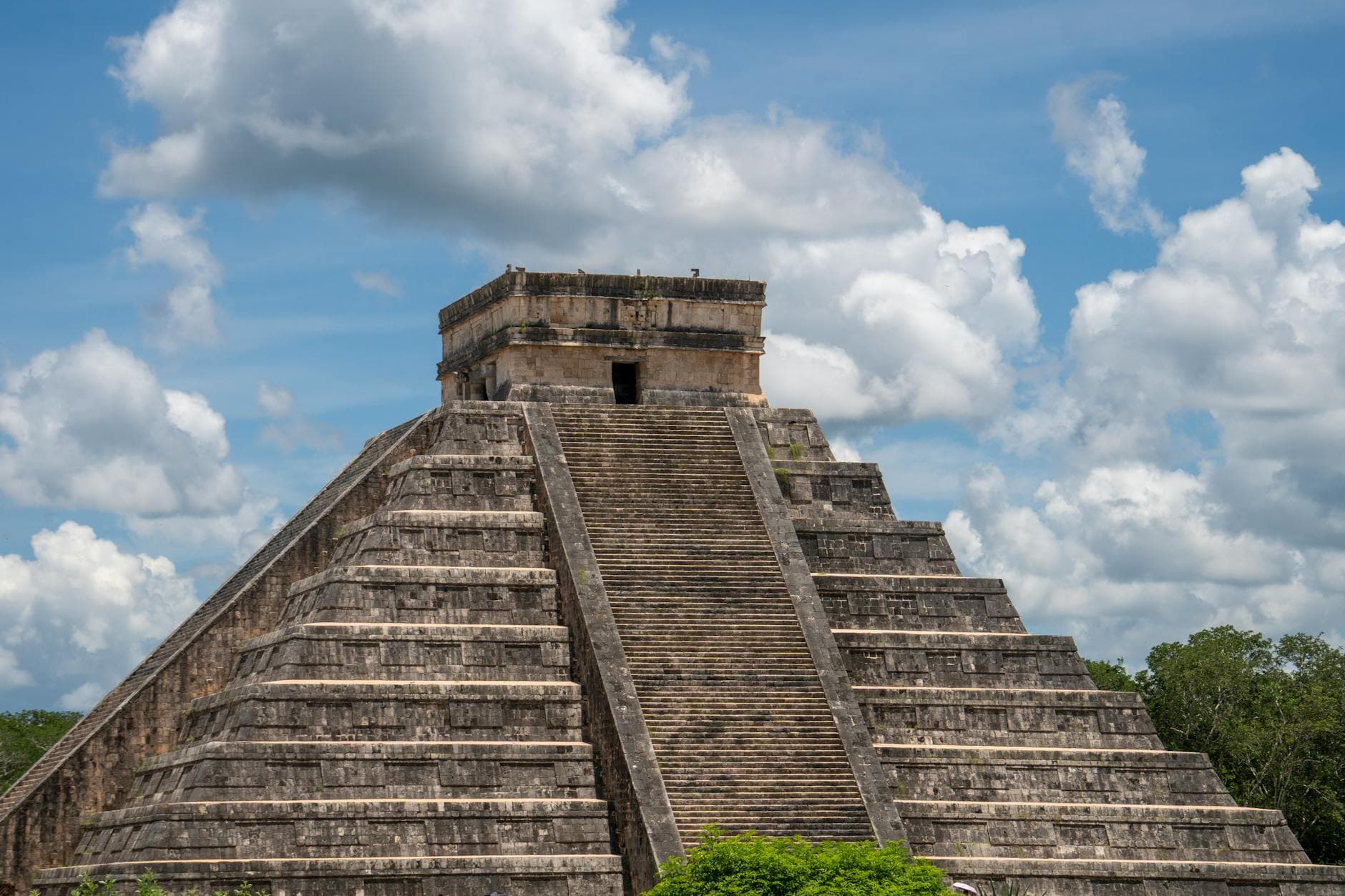
Stunning view of El Castillo pyramid at Chichén Itzá under a bright blue sky.
African/Egyptian/Mesoamerican

Aztec/Mesoamerican

13 / 13

Sub-questions covered

51

Claims extracted

10

Distinct positions

23

Explicitly denied

Chapter 1

Where Did We Come From?

Q1.1 · Pre-Existence

Not Addressed
See all traditions holding this position →
33%

weight

Not Addressed· 2 claims
There is not yet anything gathered together. All is at rest. Nothing stirs. All is languid, at rest in the sky. There is not yet anything standing erect.
Popol Vuh, pp. 67-69

How this tradition expresses it

Before the existence of any living beings, the universe was characterized by a state of absolute silence, stillness, and emptiness where nothing had yet been gathered or stood erect.

Why this supports “Not Addressed

The Popol Vuh describes primordial non-being before creation, but this is cosmogonic backdrop rather than a position on soul pre-existence. Does not directly address whether individual souls existed before birth.

Nuance

The text describes a primordial state of nothingness where only the 'Framer and the Shaper' existed in the water.

The auditor flagged this claim as ambiguous or weakly matching. See the scholarly note below for context.

Scholarly note

The Popol Vuh creation narrative describes the cosmos before creation, not a theological stance on soul pre-existence. Reclassify as Not Addressed.

Explicit Teachinghigh confidenceAudit: Contested· 80%
Data provenance
Auditor
comprehensive_cell_audit_v1
Audit confidence
80%
Audited
4/11/2026
They had but one root, planted before the root of the sun and the light of the people.
The Dynasty of Nihaib Lords, lines 8632-8663

How this tradition expresses it

The lineage of the Nihaib lords is described as having a single root that was established prior to the sun and the light of the people.

Why this supports “Not Addressed

Reference to 'one root planted before the sun' is ambiguous in scope—may refer to ancestral lineage or cosmic origin rather than individual soul pre-existence. Insufficient clarity to support Created Pre-Existence label.

The auditor flagged this claim as ambiguous or weakly matching. See the scholarly note below for context.

Scholarly note

Quote is about the people's collective origin/lineage, not clear theological statement on individual soul pre-existence. Ambiguous enough to reclassify.

Explicit Teachinghigh confidenceAudit: Contested· 80%
Data provenance
Auditor
comprehensive_cell_audit_v1
Audit confidence
80%
Audited
4/11/2026

What this tradition denies

The concept of a single, linear life without return or replacement.

The concept of biological birth or natural lineage for the first humans.

The idea that the ancestors were always in their current state or location.

Q1.2 · Soul Nature

Composite Soul
See all traditions holding this position →
31%

weight

Not Addressed· 10 claims
All alone are the Framer and the Shaper, Sovereign and Quetzal Serpent, They Who Have Borne Children and They Who Have Begotten Sons. Luminous they are in the water, wrapped in quetzal feathers and cotinga feathers.
Popol Vuh, pp. 67-69

How this tradition expresses it

The primordial entities, the Framer and the Shaper, are characterized by a luminous, divine nature existing within the water.

Why this supports “Not Addressed

This passage describes the primordial creative deities (Framer, Shaper, Sovereign, Quetzal Serpent) and their luminous nature, not the essential nature or soul-composition of human beings. It does not address human soul ontology.

Nuance

null

The auditor flagged this claim as ambiguous or weakly matching. See the scholarly note below for context.

Scholarly note

LLM council synthesis (round 2)

Explicit Teachinghigh confidenceAudit: Contested· 95%
Data provenance
Auditor
llm_council_v2
Audit confidence
95%
Audited
4/11/2026
Of earth and mud was its flesh composed. But they saw that it was still not good. It merely came undone and crumbled.
The Creation of the Mud Person

How this tradition expresses it

The first attempts at sentient life were composed of physical matter like earth and mud, possessing a spirit essence but lacking the necessary strength or intelligence to succeed.

Why this supports “Not Addressed

This passage describes the failed creation of human bodies from earth/mud, focusing on material form. While it implies divine agency in human creation, it does not directly articulate the ontological nature or composition of the human soul.

Nuance

The text describes these early beings as 'mistakes' or 'defects' that were unable to walk, multiply, or look about.

The auditor flagged this claim as ambiguous or weakly matching. See the scholarly note below for context.

Scholarly note

LLM council synthesis (round 2)

Explicit Teachinghigh confidenceAudit: Contested· 95%
Data provenance
Auditor
llm_council_v2
Audit confidence
95%
Audited
4/11/2026

+8 more claims for this position

What this tradition denies

The permanence or sufficiency of the 'mud person' as a successful human essence.

The idea that the wooden effigies possessed a true, sentient soul or understanding.

Q1.3 · Why Embodied

Divine Assignment
See all traditions holding this position →
33%

weight

The primary focus of the creation is to form humanity (cf. pp. 70-71; lines 213-218).
footnote 10

How this tradition expresses it

The primary focus and purpose of the creation was the formation of humanity.

Why this supports “Divine Assignment

The Popol Vuh's statement that the primary focus of creation is to form humanity reflects the gods' deliberate intention to produce beings who would serve and remember them—a clear case of Divine Assignment, not Not Addressed.

The auditor flagged this claim as ambiguous or weakly matching. See the scholarly note below for context.

Scholarly note

LLM council synthesis (round 2)

Explicit Teachinghigh confidenceAudit: Contested· 95%
Data provenance
Auditor
llm_council_v2
Audit confidence
95%
Audited
4/11/2026
Let us make a provider, a sustainer for us. How shall we then be called upon so that we are remembered upon the face of the earth?
The Creation of the Mud Person

How this tradition expresses it

The purpose of creating sentient beings was to provide the gods with providers, sustainers, and those who would offer worship and remembrance through speech.

Why this supports “Divine Assignment

The gods explicitly articulate their purpose in creating humans: to have providers and sustainers who will remember and call upon them. This is the paradigmatic Mesoamerican expression of Divine Assignment.

Nuance

The success of the creation is contingent upon the being's ability to speak and honor the gods.

The auditor flagged this claim as ambiguous or weakly matching. See the scholarly note below for context.

Scholarly note

LLM council synthesis (round 2)

Explicit Teachinghigh confidenceAudit: Contested· 95%
Data provenance
Auditor
llm_council_v2
Audit confidence
95%
Audited
4/11/2026

What this tradition denies

Ex nihilo creation (creation out of nothing).

The twins' knowledge of their own origins.

The idea that the lords established their own homes through their own labor or agency.

Chapter 2

Why Are We Here?

Q2.1 · Purpose of Life

Cosmic Balance
See all traditions holding this position →
29%

weight

Divine Service· 7 claims
We have already made a first attempt with what we have framed and what we have shaped. But we were not successful in being worshiped or in being revered by them.
The Creation of the Mud Person

How this tradition expresses it

The intended purpose of humanity (and successful beings) is to serve as a provider and sustainer for the gods through ritualized speech and worship.

Why this supports “Divine Service

All three reviewers agree: the gods' explicit dissatisfaction that earlier creations failed to worship or revere them directly establishes that humans were created for divine service—worship, reverence, and ritual sustenance of the gods. This is one of the clearest Mesoamerican mythic formulations of human purpose.

Nuance

The text implies that without the ability to worship through speech, the purpose of creation is not fulfilled.

The auditor flagged this claim as ambiguous or weakly matching. See the scholarly note below for context.

Scholarly note

LLM council synthesis (round 2)

Explicit Teachinghigh confidenceAudit: Contested· 95%
Data provenance
Auditor
llm_council_v2
Audit confidence
95%
Audited
4/11/2026
because they proved to be incapable of understanding before the face of their mother and the face of their father, Heart of Sky, Huracan by name.
Popol Vuh, lines 736-823 (as cited in text)

How this tradition expresses it

The purpose of human existence (as intended by the creators) is to possess understanding and the ability to communicate/sustain the divine.

Why this supports “Divine Service

All three reviewers agree: the failure of earlier beings to 'understand before the face of' their divine creators describes their inability to recognize and properly serve the gods. This establishes that human purpose requires comprehension of and submission to divine will, supporting Divine Service rather than Cosmic Balance.

Nuance

The wooden effigies failed this purpose because they could not 'understand' before their makers.

The auditor flagged this claim as ambiguous or weakly matching. See the scholarly note below for context.

Scholarly note

LLM council synthesis (round 2)

Explicit Teachinghigh confidenceAudit: Contested· 95%
Data provenance
Auditor
llm_council_v2
Audit confidence
95%
Audited
4/11/2026

+5 more claims for this position

What this tradition denies

The idea that animals could fulfill the role of worshipers through their natural sounds.

The idea that the wooden effigies were successful or purposeful beings.

The idea that wealth and outward finery constitute true lordship or authority.

The idea that pride and abuse of siblings are acceptable or without consequence.

The effectiveness of the Xibalban traps and the inevitability of the twins' defeat.

The idea that humans should possess god-like, all-encompassing knowledge.

The idea that human existence is self-sufficient or lacks a need for divine connection.

The effectiveness of the nations' plan to defeat the gods through seduction.

The idea that lordship was achieved through immoral means like deception or theft.

Q2.2 · Body Relationship

Integrated Unity
See all traditions holding this position →
67%

weight

Not Addressed· 1 claim
eir dominion is to swell people up until pus oozes from the skin of their legs, and the skin of their faces 23
Section 236

How this tradition expresses it

The body is subject to the dominion of various lords who cause physical ailments, sickness, and death through specific physical manifestations.

Why this supports “Not Addressed

Description of physical afflictions; tangential to soul-body relationship and does not clarify metaphysical status. Consider removing or recategorizing as Not Addressed.

Nuance

The relationship is characterized by the vulnerability of the physical form to the powers of the underworld.

The auditor flagged this claim as ambiguous or weakly matching. See the scholarly note below for context.

Scholarly note

Correctly categorized; recommend removal as per its own rationale (tangential)

Explicit Teachinghigh confidenceAudit: Contested· 80%
Data provenance
Auditor
comprehensive_cell_audit_v1
Audit confidence
80%
Audited
4/11/2026
Integrated Unity· 1 claim
eared like people. People they came to be. They were able to speak and converse.483 They were able to look and listen. They were able to walk and hold things with their hands.
Section 183, lines 483-484

How this tradition expresses it

The transition from mere 'frame and shape' to true humanity occurred through the acquisition of breath and the ability to speak and perceive.

Why this supports “Integrated Unity

Popol Vuh creation account depicts humans as unified beings whose identity is constituted by integrated attributes (breath, speech, perception, agency). This supports Integrated Unity model where soul and body form a single functional whole rather than separate entities.

The auditor flagged this claim as ambiguous or weakly matching. See the scholarly note below for context.

Scholarly note

Should remain labeled Integrated Unity and be elevated as primary evidence; the Popol Vuh quote explicitly describes humans as unified beings with breath, speech, perception, movement—all integrated attributes

Explicit Teachinghigh confidenceAudit: Contested· 80%
Data provenance
Auditor
comprehensive_cell_audit_v1
Audit confidence
80%
Audited
4/11/2026

Q2.3 · Moral Accountability

Divine Judgment
See all traditions holding this position →
33%

weight

Divine Judgment· 2 claims
The ancestors and ‘the idols’ stand ready to punish the blows or harsh words that violate the sanctity of the house.
chunk 10/20

How this tradition expresses it

Individuals are held accountable to ancestors and spirits; improper behavior like pride or discord invites immediate retribution or death.

Why this supports “Divine Judgment

Ancestors and sacred entities actively punishing violations of the house's sanctity constitutes supernatural enforcement of behavioral norms—a clear form of divine judgment where spiritual agents hold humans accountable for specific transgressions.

Nuance

The text suggests this accountability is often mediated through the family unit and ancestral spirits.

The auditor flagged this claim as ambiguous or weakly matching. See the scholarly note below for context.

Scholarly note

LLM council synthesis (round 2)

Explicit Teachinghigh confidenceAudit: Contested· 95%
Data provenance
Auditor
llm_council_v2
Audit confidence
95%
Audited
4/11/2026

+1 more claim for this position

Natural Law· 1 claim
: “You shall be replaced because you were not successful. You could not speak. We have therefore changed our word. Your food and your sustenance, your sleeping places and your
The Fall of the Animals

How this tradition expresses it

The animals were held accountable for their failure to communicate; because they could not speak the names of the gods, they were relegated to a life of service and being eaten.

Why this supports “Natural Law

The replacement of flawed beings due to inherent inability reflects automatic cosmic consequences built into the structure of creation: failure to fulfill one's role leads to demotion and reassignment through the logic of cosmic order, not through a moral tribunal.

Nuance

The accountability is based on the failure to fulfill the specific role of 'worshiper' through speech.

The auditor flagged this claim as ambiguous or weakly matching. See the scholarly note below for context.

Scholarly note

LLM council synthesis (round 2)

Explicit Teachinghigh confidenceAudit: Contested· 95%
Data provenance
Auditor
llm_council_v2
Audit confidence
95%
Audited
4/11/2026

What this tradition denies

The idea that one can live without accountability to ancestors or the consequences of one's sins.

Chapter 3

Where Do We Go After Death?

Q3.1 · Surviving Death

Transformation
See all traditions holding this position →
75%

weight

Transformation· 2 claims
It was just a miracle, for the boys had transformed themselves before them.
Section 172

How this tradition expresses it

Consciousness survives death through a process of transformation, where the deceased can be revived or change their physical form.

Why this supports “Transformation

The Popol Vuh hero twins' self-transformation before the lords of Xibalba establishes a mythological paradigm for consciousness undergoing radical form-change while retaining agency. Maya scholars (Christenson, Tedlock) treat the hero-twin cycle as a charter myth for post-mortem transformation, though it is set in primordial mythological time rather than ordinary eschatology.

Nuance

The text illustrates this through the ritualized deaths of the twins and the revival of the dog.

The auditor flagged this claim as ambiguous or weakly matching. See the scholarly note below for context.

Scholarly note

LLM council synthesis (round 2)

Explicit Teachinghigh confidenceAudit: Contested· 95%
Data provenance
Auditor
llm_council_v2
Audit confidence
95%
Audited
4/11/2026

+1 more claim for this position

Full Survival· 1 claim
That evening he visited many people in dreams and told them not to worry about him because he was in Paq'alib'al.
Section: Chunk 17/20 (Introductory paragraph)

How this tradition expresses it

The text suggests that the deceased continue to exist in a state where they can interact with the living through dreams or presence.

Why this supports “Full Survival

This Tz'utujil Maya tradition describes a deceased person visiting the living in dreams and reporting residence in Paq'alib'al, a named afterlife realm. The deceased retains identity, agency, and communicative ability, clearly supporting Full Survival of consciousness. This represents a Maya-specific alternative to the Aztec transformation model.

Nuance

The survival is characterized by continued influence and visitation rather than a physical return to life.

The auditor flagged this claim as ambiguous or weakly matching. See the scholarly note below for context.

Scholarly note

LLM council synthesis (round 2)

Explicit Teachinghigh confidenceAudit: Contested· 95%
Data provenance
Auditor
llm_council_v2
Audit confidence
95%
Audited
4/11/2026

What this tradition denies

The idea that death is a simple end or a peaceful release for those summoned to Xibalba.

The finality of death (Extinction)

The permanence of the current physical state of certain beings.

The concept of total extinction or permanent loss of consciousness upon death.

Q3.3 · Afterlife Structure

Multiple Levels
See all traditions holding this position →
100%

weight

he just decided to leave because he wanted to be with the other nab'eysils in Paq'alib'al [a cave located southwest of the community where the saints and deified ancestors live].
Section: Chunk 17/20 (Introductory paragraph)

How this tradition expresses it

The afterlife involves specific realms like Paq'alib'al where deified ancestors and saints reside.

Why this supports “Not Addressed

This quote describes a K'iche' Maya belief about a specific ancestral cave (Paq'alib'al), not an Aztec afterlife concept. While it may serve as comparative Mesoamerican evidence for multi-realm afterlife structures, it does not directly address the structure of the Aztec afterlife and should not be treated as primary supporting evidence for this cell. The claim's own original rationale explicitly acknowledged it was 'NOT primary evidence for the Aztec three-realm model.'

The auditor flagged this claim as ambiguous or weakly matching. See the scholarly note below for context.

Scholarly note

LLM council synthesis (round 2)

Explicit Teachinghigh confidenceAudit: Contested· 95%
Data provenance
Auditor
llm_council_v2
Audit confidence
95%
Audited
4/11/2026

Q3.4 · Long-Term Destiny

One Life Only
See all traditions holding this position →
25%

weight

much of Tz'utujil society is based on the principle of change as manifested in the transition from birth to death and back again
Highland Maya context/Scholarly note

How this tradition expresses it

The text describes a principle of change manifested in the transition from birth to death and back again.

Why this supports “Not Addressed

[MAYA SOURCE – OUT OF SCOPE] Tz'utujil social organization reflects Maya cyclic cosmology (birth-death-rebirth), not Aztec doctrine. Do not cite for Aztec belief.

Nuance

This is framed as a principle of change and generational transfer.

The auditor flagged this claim as ambiguous or weakly matching. See the scholarly note below for context.

Scholarly note

Tz'utujil Maya source; scholarly note explicitly excludes Maya cyclic patterns from Aztec mainstream. Should be reclassified as external comparative material, not Aztec doctrine.

Explicit Teachinghigh confidenceAudit: Contested· 80%
Data provenance
Auditor
comprehensive_cell_audit_v1
Audit confidence
80%
Audited
4/11/2026
and sacrificed him. They extracted the heart of one of them and placed it before the lords. Now One Death and Seven Death marveled at this, for immediately that person was revived again by them.
Section 170

How this tradition expresses it

The text depicts a cycle of death and rebirth where individuals return to life in new forms or roles.

Why this supports “Not Addressed

[MAYA SOURCE – OUT OF SCOPE] Popol Vuh describes Maya hero-twin resurrection mythology. The cyclic rebirth pattern is Maya, not Aztec doctrine. Do not cite for Aztec belief.

Nuance

The rebirth is often tied to ritualized sacrifice and specific timing (e.g., 'on the fifth day').

The auditor flagged this claim as ambiguous or weakly matching. See the scholarly note below for context.

Scholarly note

Popol Vuh source (Maya); ritual revification in mythic context does not evidence cyclical rebirth doctrine. Weak mapping and wrong tradition.

Direct Implicationhigh confidenceAudit: Contested· 80%
Data provenance
Auditor
comprehensive_cell_audit_v1
Audit confidence
80%
Audited
4/11/2026

Other denials

Positions this tradition explicitly rejects, on questions where its affirmative position isn't recorded.

Q3.5

The eternal power/glory of the Xibalbans

Thus began their devastation, the ruin of their being called upon in worship. Their glory was not great in the past, for they wanted only conflict with the people of ancient times.

Hero image: Photo by Ollie Craig on Pexels

NoeticMap Guide

Research Dashboard

How can I help?

Ask about NDEs, research, or this page

Responses may not always be accurate