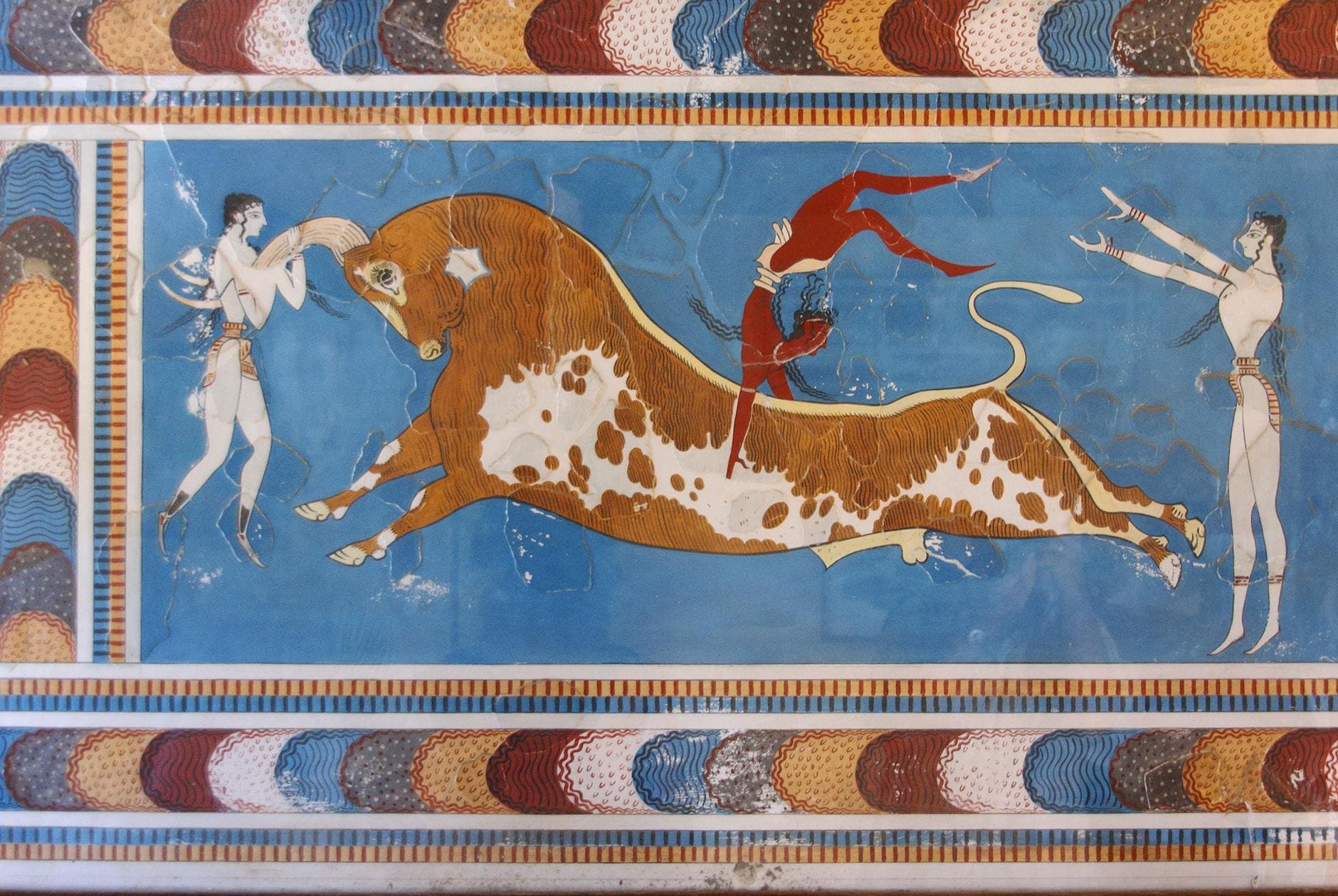
Colorful Minoan fresco depicting bull-leaping from Knossos, Crete, Greece.
Western Esoteric

Orphism

13 / 13

Sub-questions covered

30

Claims extracted

12

Distinct positions

12

Explicitly denied

Chapter 1

Where Did We Come From?

Q1.1 · Pre-Existence

Created Pre-Existence
See all traditions holding this position →
100%

weight

The whole of this first and occult genera of the Gods, which is called by the Chaldean theologists the intelligible triad, was represented by Orpheus under the symbol of an egg, on the exclusion of which by the Goddess Night, the God Phanes came forth
Section VI, Note 14

How this tradition expresses it

The text suggests a primordial origin where the first principle of all things is the 'one' or the good, followed by the emergence of the first visible deity, Phanes, from the exclusion of the egg.

Why this supports “Created Pre-Existence

Orphic cosmogony establishes the theological framework for understanding soul origins: the primordial divine state (represented by the egg and Phanes) is the source from which all souls derive. This divine creation event establishes pre-existence through cosmic creation rather than eternal independence.

The auditor flagged this claim as ambiguous or weakly matching. See the scholarly note below for context.

Scholarly note

The cosmogony of Phanes emerging from the divine egg is the mythological backdrop for creation of souls via divine fragmentation; it directly contextualizes the pre-existence doctrine, even if not explicitly about individual souls.

Explicit Teachinghigh confidenceAudit: Contested· 80%
Data provenance
Auditor
comprehensive_cell_audit_v1
Audit confidence
80%
Audited
4/11/2026
edon.) we are composed from fragments, because through falling into generatiun, i. e, into the sublunary region, our life has proceeded inte the most distant and extreme divi- sion; but from Titannic fragments, because the Titans are the ultimate artificers of
page 88, note 72

How this tradition expresses it

Humanity is composed of fragments from the Titans, who were the original principles of the world, resulting in a life that proceeded through falling into generation.

Why this supports “Created Pre-Existence

Orphic doctrine of the soul's cosmic origin: souls are composed of fragments derived from the Titans (the ultimate artificers), and have fallen from a unified divine state into the sublunary realm of generation, where they experience extreme division. This supports pre-existence through divine/Titanic creation rather than eternal pre-existence.

Nuance

The text notes that through falling into the sublunary region, life has proceeded into the most distant and extreme division.

The auditor flagged this claim as ambiguous or weakly matching. See the scholarly note below for context.

Scholarly note

The quote describes a linear fall into generation and fragmentation from Titanic origins, consistent with creation/emanation rather than cyclical return. Language suggests descent, not cycle.

Explicit Teachinghigh confidenceAudit: Contested· 80%
Data provenance
Auditor
comprehensive_cell_audit_v1
Audit confidence
80%
Audited
4/11/2026

What this tradition denies

A singular, unified origin of humanity that is not composite.

The idea that the soul is purely a product of the current physical life without a connection to higher/prior intellectual orders.

Q1.2 · Soul Nature

Divine Spark
See all traditions holding this position →
11%

weight

Divine Spark· 7 claims
It is divime indeed, as that which is deified ; but it is in- telhgible, as the object of desire to intellect, as perfective and connective of its nature, and as the plenitude of beimg itse
Introduction, page xii

How this tradition expresses it

The highest order of beings are described as Gods, who are superessential and possess a divine nature that is deified.

Why this supports “Divine Spark

The passage describes the soul as 'divine indeed' and 'intelligible,' directly affirming the Orphic teaching that the soul's essential nature is a divine fragment—a spark of the divine that retains its sacred character even in embodiment.

Nuance

The text notes that being is the highest of things after the first cause, and true beings depend on the Gods.

The auditor flagged this claim as ambiguous or weakly matching. See the scholarly note below for context.

Scholarly note

LLM council synthesis (round 2)

Explicit Teachinghigh confidenceAudit: Contested· 95%
Data provenance
Auditor
llm_council_v2
Audit confidence
95%
Audited
4/11/2026
NieuT, parent Goddess, source of sweet repose, From whom at first both Gods and men arose ?
Section III, Hymn to Night

How this tradition expresses it

Humanity and the gods are described as arising from the primordial Goddess Night, who serves as the source of all things.

Why this supports “Divine Spark

Invoking Night (Nyx) as the primordial source 'from whom both Gods and men arose' places human souls within a divine genealogy, supporting the view that human essential nature derives from and participates in divinity as a spark from the cosmic source.

The auditor flagged this claim as ambiguous or weakly matching. See the scholarly note below for context.

Scholarly note

LLM council synthesis (round 2)

Explicit Teachinghigh confidenceAudit: Contested· 95%
Data provenance
Auditor
llm_council_v2
Audit confidence
95%
Audited
4/11/2026

+5 more claims for this position

What this tradition denies

The idea that the first principle can be fully named or categorized within a triad of beings.

The denial of an essential distinction between the members of the intelligible triad.

A purely celestial or non-corporeal existence without the necessity of embodiment.

The idea that the first principle is a plurality or a specific material substance rather than the 'one'.

The idea that the corporeal world possesses real, independent being.

The idea that the generation of secondary natures by Gods involves a loss of essence or a division of their own nature.

The idea that the generation of gods involves motion or mutation.

material indefiniteness/chaos

Q1.3 · Why Embodied

Spontaneous Emergence
See all traditions holding this position →
100%

weight

Spontaneous Emergence· 2 claims
micuty first-begotten, hear my pray’r, Twofold, egg-born, and wand ring thro’ the air ; Bull-roarer }5, glorying in thy golden wings, From whom the race of Gods and mortal sprin
Section VI, Hymn to Protogonus

How this tradition expresses it

The race of gods and mortals springs from the first-begotten deity, Protogonus (Phanes).

Why this supports “Spontaneous Emergence

Phanes, the primordial egg-born deity, is invoked as the source from which gods and mortals spring. This establishes divine origination but does not inherently describe a fall. The quote supports Spontaneous Emergence as the cosmogonic framework.

The auditor flagged this claim as ambiguous or weakly matching. See the scholarly note below for context.

Scholarly note

Phanes as primordial origin-point establishes cosmogonic priority, not prior blessed status. The per-quote rationale's claim that descendants are 'removed from original unified divine state' is interpretive overreach; the quote shows origination, not degradation.

Explicit Teachinghigh confidenceAudit: Contested· 80%
Data provenance
Auditor
comprehensive_cell_audit_v1
Audit confidence
80%
Audited
4/11/2026

+1 more claim for this position

Fall From Grace· 1 claim
eedon.) we are composed from fragments, because through falling into generatiun, i. e, into the sublunary region, our life has proceeded inte the most distant and extreme di
page 88, note 72

How this tradition expresses it

Human existence is the result of 'falling into generation,' a process of descent into the sublunary region.

Why this supports “Fall From Grace

Orphic doctrine (via Neoplatonic interpretation): the soul's fragmentation and suffering in embodied life results from its 'falling into generation'—i.e., descent into the material/sublunary realm. This is the canonical Orphic Fall From Grace teaching, depicting incarnation as a loss of prior divine unity.

The auditor flagged this claim as ambiguous or weakly matching. See the scholarly note below for context.

Scholarly note

Claim label is correct; the issue is that the primary_position should acknowledge this claim as equally valid evidence, not subordinate it.

Explicit Teachinghigh confidenceAudit: Contested· 80%
Data provenance
Auditor
comprehensive_cell_audit_v1
Audit confidence
80%
Audited
4/11/2026

Chapter 2

Why Are We Here?

Q2.1 · Purpose of Life

Spiritual Development
See all traditions holding this position →
50%

weight

Spiritual Development· 1 claim
. Sources of blameless virtue to mankind, Who form to excellence the youthful mind
Hymn to the Muses

How this tradition expresses it

The purpose of life involves the cultivation of the mind through virtue and the pursuit of excellence to refine the intellect.

Why this supports “Spiritual Development

This invocation of virtue as a formative force that shapes and develops the youthful mind directly expresses the Orphic understanding of earthly life's purpose: the cultivation and refinement of the soul's capacities. The focus on 'excellence' and disciplined formation of character indicates that earthly existence serves as an opportunity for Spiritual Development. This is the strongest textual evidence in the cell and should anchor the primary position.

The auditor flagged this claim as ambiguous or weakly matching. See the scholarly note below for context.

Scholarly note

The poetic invocation of virtue-formation and 'excellence' of the mind describes development and refinement, which is more consistent with Spiritual Development than with Moral Testing. Moral testing implies a judgment or trial; spiritual development implies cultivation and growth. The quote supports the latter.

Explicit Teachinghigh confidenceAudit: Contested· 80%
Data provenance
Auditor
comprehensive_cell_audit_v1
Audit confidence
80%
Audited
4/11/2026
Not Addressed· 1 claim
she causes intellect to rule over ne- cessity, and form over matter; and the latter, because she preserves the world“ perpetually whole, perfect, exempt 42 In the very lea
Section: chunk 11/11

How this tradition expresses it

The goddess provides permanency to the universe and ensures it moves according to a specific reason and order, vanquishing material indefiniteness.

Why this supports “Not Addressed

While this Neoplatonic fragment describes the cosmic hierarchy of intellect over necessity and form over matter, it does not directly address the purpose of human earthly life. Without additional evidence linking this cosmic principle to human soteriology or life purpose, this claim does not support any of the available positions and should be excluded from this cell.

Nuance

The purpose is tied to the maintenance of the universe's order and the triumph of intellect over necessity.

The auditor flagged this claim as ambiguous or weakly matching. See the scholarly note below for context.

Scholarly note

Correctly classified; this Neoplatonic cosmic principle does not address human life purpose and should remain excluded or noted as tangential commentary rather than primary source material.

Explicit Teachinghigh confidenceAudit: Contested· 80%
Data provenance
Auditor
comprehensive_cell_audit_v1
Audit confidence
80%
Audited
4/11/2026

Q2.2 · Body Relationship

Prisoner
See all traditions holding this position →
71%

weight

Vehicle· 2 claims
Hence the first of bodies, though they are essentially corporeal, yet Kata oyeow, through habitude or alhance, are most vital, or lives.
Introduction, page xi

How this tradition expresses it

The first of bodies are essentially corporeal but possess life through habit or alliance with higher orders.

Why this supports “Vehicle

The description of bodies acquiring vitality 'through habitude or alliance' with a higher principle frames the body as an instrument animated by soul. This Neoplatonic commentary on Orphic concepts likely refers to the astral vehicle (ochema), fitting the VEHICLE model where the body serves as a medium for life rather than a prison.

Nuance

The text distinguishes between the essential nature of bodies and their vitalized state through alliance.

The auditor flagged this claim as ambiguous or weakly matching. See the scholarly note below for context.

Scholarly note

LLM council synthesis (round 2)

Explicit Teachinghigh confidenceAudit: Contested· 95%
Data provenance
Auditor
llm_council_v2
Audit confidence
95%
Audited
4/11/2026

+1 more claim for this position

Illusory Body· 1 claim
ossess real being; and is like the image of a lofty tree seen in a rapid torrent, which has the appearance of a tree without the real
Page 33

How this tradition expresses it

The corporeal world is described as having an appearance of reality without possessing real being, likened to an image in a stream.

Why this supports “Illusory Body

The comparison of the corporeal world to a reflected image in a torrent—having 'the appearance of a tree without the reality'—directly supports an Illusory Body framework where material existence is ontologically derivative and lacking true substance.

Nuance

The text notes the corporeal world is in a continual state of flowing and formation, preventing it from possessing real being.

The auditor flagged this claim as ambiguous or weakly matching. See the scholarly note below for context.

Scholarly note

LLM council synthesis (round 2)

Explicit Teachinghigh confidenceAudit: Contested· 95%
Data provenance
Auditor
llm_council_v2
Audit confidence
95%
Audited
4/11/2026

Q2.3 · Moral Accountability

Divine Judgment
See all traditions holding this position →
100%

weight

For ev'ry thought within the mind conceal’d Is to thy sight perspicuously reveal’d. The soul unwilling reason to obey, By lawless passion rul’d, thine eyes survey.
Page 124

How this tradition expresses it

Human conduct is subject to the watchful eyes of divine powers like Fate, Nemesis, and Justice, who observe and judge all deeds.

Why this supports “Divine Judgment

The text affirms divine omniscience of the soul's innermost thoughts and moral state. This is consistent with a *precondition* for divine judgment, but does not explicitly establish that judgment occurs, is rendered, or has consequences. The assertion of accountability requires additional evidence beyond divine awareness.

Nuance

The text emphasizes that even hidden thoughts and lawless passions are visible to these divine authorities.

The auditor flagged this claim as ambiguous or weakly matching. See the scholarly note below for context.

Scholarly note

Keep label but upgrade its evidential status: this claim's quote is actually more supportive of Divine Judgment than the scholarly source. Consider making Claim 1's source the primary scholarly support, or demoting the Wikipedia source to secondary context.

Explicit Teachinghigh confidenceAudit: Contested· 80%
Data provenance
Auditor
comprehensive_cell_audit_v1
Audit confidence
80%
Audited
4/11/2026

What this tradition denies

The idea that human actions or thoughts can be hidden from divine justice.

Chapter 3

Where Do We Go After Death?

Q3.1 · Surviving Death

Transformation
See all traditions holding this position →
75%

weight

Transformation· 3 claims
red. And this being per- formed, Dionysius (whose heart during his laceration was snatched away by Minerva and preserved), by a new rege- neration, again emerged, and he, being restored to his pristine life and integrity, afterwards filled up the number of th
page 88, note 72

How this tradition expresses it

The soul's survival involves a process of regeneration and restoration to a pristine state.

Why this supports “Transformation

Orphic Dionysus regeneration myth.

Nuance

The text describes the restoration of Dionysius to his 'pristine life and integrity' following his death/laceration.

Scholarly note

Dionysius regenerated

Explicit Teachinghigh confidenceAudit: OK· 78%
Data provenance
Auditor
claude-opus-4-6-1m
Audit confidence
78%
Audited
4/10/2026
’Tis thine to sink in Tartarus profound, And shine again thro’ heav’ns illustrious round
Page 116

How this tradition expresses it

The text implies a cycle of rising and falling, where certain entities (like Adonis) undergo transitions between deathly realms and the heavens.

Why this supports “Transformation

Orphic dual fate.

Nuance

The text describes a cycle of sinking into the underworld and rising again.

Scholarly note

Sink in Tartarus, shine in heaven

Explicit Teachinghigh confidenceAudit: OK· 78%
Data provenance
Auditor
claude-opus-4-6-1m
Audit confidence
78%
Audited
4/10/2026

+1 more claim for this position

What this tradition denies

The total loss of consciousness or identity upon death (extinction).

Q3.2 · Death Moment

Soul Departure
See all traditions holding this position →
100%

weight

On thee the portion of our time depends, Whose absence lengthenslife, whose presence end
Hymn LXXXVII (To Death)

How this tradition expresses it

Death is viewed as a state where the portion of time depends on the presence or absence of death, and sleep is a precursor to the release of the soul.

Why this supports “Not Addressed

This excerpt from the Orphic Hymn to Thanatos personifies Death and uses poetic metaphor about the cessation of life ('whose absence lengthens life, whose presence ends'), but it does not explicitly describe the soul's departure from the body or any specific death-transition mechanics. It lacks the doctrinal specificity found in the gold tablets regarding soul separation or underworld journey and is therefore insufficient to support any particular position on Q3.2.

The auditor flagged this claim as ambiguous or weakly matching. See the scholarly note below for context.

Scholarly note

LLM council synthesis (round 2)

Explicit Teachinghigh confidenceAudit: Contested· 95%
Data provenance
Auditor
llm_council_v2
Audit confidence
95%
Audited
4/11/2026

Q3.4 · Long-Term Destiny

Conditional Rebirth
See all traditions holding this position →
100%

weight

the descent of souls into the realms of generation is said, by Plato in the tenth book of his Republic, to take place at midnight
Introduction, p. XXXV

How this tradition expresses it

The text references the 'descent of souls into the realms of generation,' implying a process of rebirth or reincarnation.

Why this supports “Cyclical Rebirth

This quote establishes the cyclical mechanism (descent into realms of generation) that applies specifically to uninitiated souls in Orphic doctrine. Since Orphic teaching conditions reincarnation's nature (cyclical vs. escape) on whether one undergoes initiation, this evidence supports the primary Conditional Rebirth framework by documenting the uninitiated's cyclical path. The conditionality—what separates initiated from uninitiated—is the overarching Orphic position.

Nuance

The text notes this descent is associated with the union of the soul with corporeal nature.

The auditor flagged this claim as ambiguous or weakly matching. See the scholarly note below for context.

Scholarly note

The Platonic quote about soul descent into 'realms of generation' describes a universal cosmological mechanism of rebirth, not a conditional outcome dependent on initiation. The quote itself contains no reference to initiation, purification, mystery rites, or differentiation between initiated and uninitiated souls. While the scholarly primary position correctly identifies Orphism as CONDITIONAL (uninitiated = bound wheel; initiated = escape), this particular claim's evidence does not support that conditionality—it only supports the existence of cyclical rebirth as a structural cosmic fact.

Direct Implicationhigh confidenceAudit: Contested· 80%
Data provenance
Auditor
comprehensive_cell_audit_v1
Audit confidence
80%
Audited
4/11/2026

Hero image: Photo by Gu Bra on Pexels

NoeticMap Guide

Research Dashboard

How can I help?

Ask about NDEs, research, or this page

Responses may not always be accurate