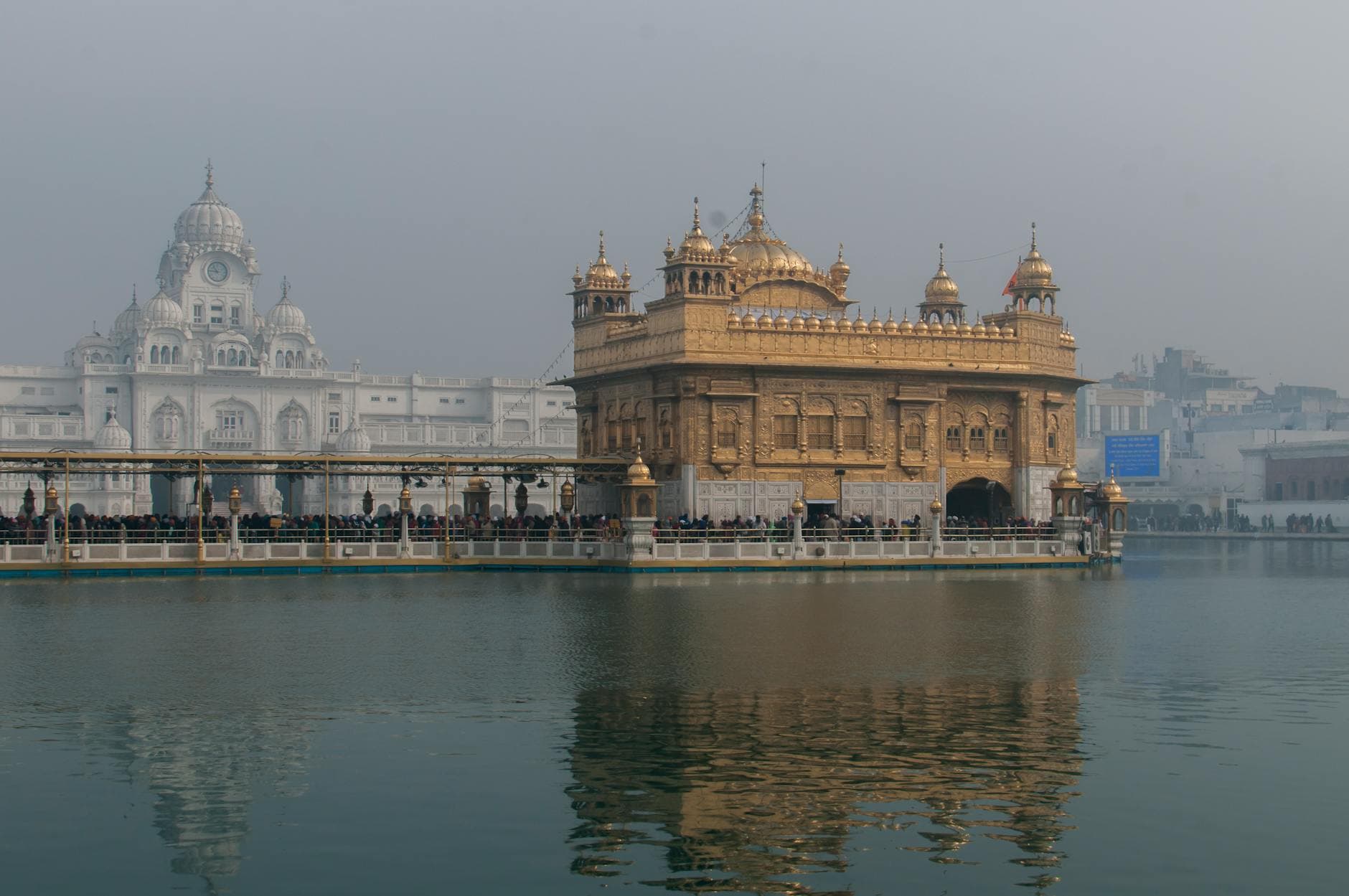
The iconic Golden Temple reflecting in the water at Amritsar, India.
South Asian

Sikhism

13 / 13

Sub-questions covered

528

Claims extracted

12

Distinct positions

50

Explicitly denied

Chapter 1

Where Did We Come From?

Q1.1 · Pre-Existence

Cyclic Pre-Existence
See all traditions holding this position →
4%

weight

Cyclic Pre-Existence· 23 claims
Its true conception is the annulment of the cycle of births and deaths, that is transmipration, and the self abiding ever in bliss of God-consciousness
Section: Mukri—Jivan-MUKTA Mukti

How this tradition expresses it

The text describes the human condition as a cycle of births and deaths (transmigration) that one seeks to be liberated from.

Why this supports “Cyclic Pre-Existence

Sikh doctrine that the goal is to annul the cycle of births and deaths presupposes the cycle as the default condition of unliberated souls.

Scholarly note

Direct: 'annulment of the cycle of births and deaths.'

Explicit Teachinghigh confidenceAudit: Strong· 92%
Data provenance
Auditor
claude-opus-4-6-1m
Audit confidence
92%
Audited
4/10/2026
the first quarter of night. my Merchant-Friend. by Divine will into the womb wast thou cast: S
Pahrei - Composition of Sri Guru Nanak Dev

How this tradition expresses it

Human existence begins with being cast into the womb by Divine will.

Why this supports “Cyclic Pre-Existence

This Sikh verse describes the soul being placed in the womb by Divine will - the act of incarnation rather than the pre-natal state.

The auditor flagged this claim as ambiguous or weakly matching. See the scholarly note below for context.

Scholarly note

The quote describes Divine will casting the soul into the womb as part of the incarnation mechanism within an ongoing cycle. The rationale itself acknowledges this is about 'the act of incarnation rather than the pre-natal state.' This is evidence of cyclic rebirth mechanics, not pre-existence creation.

Explicit Teachinghigh confidenceAudit: Contested· 80%
Data provenance
Auditor
comprehensive_cell_audit_v1
Audit confidence
80%
Audited
4/11/2026

+21 more claims for this position

What this tradition denies

The permanence of the current life/state.

The idea that the physical body or the ego is eternal.

The permanence of the current life/identity.

Q1.2 · Soul Nature

Divine Spark
See all traditions holding this position →
20%

weight

Divine Spark· 52 claims
The Creator is distinct from the self, yet the self is a part of Him, as the wave of water, yearn- ing to merge into its sourc
Introduction, page xlix

How this tradition expresses it

The self is of Divine Essence, though it is not identical to the Infinite (Brahm).

Why this supports “Divine Spark

The metaphor of the wave yearning to merge into its source explicitly identifies the soul as a part of the Divine—distinct yet sharing the same essential nature. This is the classic Divine Spark formulation: the self is 'a part of Him,' an emanation longing for reunion rather than a separate creation from nothing.

Nuance

The self is described as a part of the Divine, like a wave of water merging into its source, but is distinct from the Infinite.

The auditor flagged this claim as ambiguous or weakly matching. See the scholarly note below for context.

Scholarly note

LLM council synthesis

Explicit Teachinghigh confidenceAudit: Contested· 95%
Data provenance
Auditor
llm_council_v1
Audit confidence
95%
Audited
4/11/2026

+51 more claims for this position

Not Addressed· 2 claims
ho moreover, had exhorted the people to rise above caste barriers and to still sectarian strife. According to the account in K
Section: Introduction, regarding the Bhaktas and the Supreme Being

How this tradition expresses it

The Supreme Being is described as the Formless, Unattributed, and all-encompassing reality (Ek Oankar, Nirguna, Nirankar Brahm) who is the prop of all existence.

Why this supports “Not Addressed

This quote addresses God's supremacy and social ethics (rising above caste), but does not directly specify the ontological nature of the individual soul. The inference of individual identity being 'illusory' is not supported by this particular passage.

The auditor flagged this claim as ambiguous or weakly matching. See the scholarly note below for context.

Scholarly note

LLM council synthesis

Explicit Teachinghigh confidenceAudit: Contested· 95%
Data provenance
Auditor
llm_council_v1
Audit confidence
95%
Audited
4/11/2026

+1 more claim for this position

What this tradition denies

The text rejects hatha-yoga-centered spiritual paths as spurious.

The non-duality or Advaita of the Shankara School (the idea that the self is identical to the Absolute).

A permanent, ego-centered self that exists independently of God's will.

A permanent, independent self-identity based on worldly possessions.

Q1.3 · Why Embodied

Karmic Necessity
See all traditions holding this position →
42%

weight

Karmic Necessity· 17 claims
In transmigration is man whirled, Acting as directed by his tendencies of former deeds.
SRI RAGA (9.7)

How this tradition expresses it

Human existence and the actions taken within it are governed by Divine Ordinance and the consequences of one's own deeds.

Why this supports “Karmic Necessity

Sikh teaching: transmigration is driven by tendencies (samskaras) from former deeds - direct karmic necessity.

Nuance

The text notes that while actions are directed by tendencies of former deeds, ultimately things happen as the Lord wills.

Scholarly note

Direct: 'man whirled, acting as directed by his tendencies of former deeds.'

Explicit Teachinghigh confidenceAudit: Strong· 92%
Data provenance
Auditor
claude-opus-4-6-1m
Audit confidence
92%
Audited
4/10/2026

+16 more claims for this position

Test or Trial· 13 claims
His sojourn on this earth is meant for making the true gain, which is spiritual merit.
Pahrei - Commentary/Introductory Note

How this tradition expresses it

Human life is a period of opportunity to acquire spiritual merit through devotion and righteous action.

Why this supports “Test or Trial

Sikh teaching that the human sojourn is specifically meant for spiritual merit-gaining - life as the test/opportunity for spiritual gain.

Nuance

The text suggests that failing to use this time for spiritual gain results in the waste of life in ignorance.

Scholarly note

Direct: 'sojourn on this earth is meant for making the true gain, which is spiritual merit.'

Explicit Teachinghigh confidenceAudit: Strong· 92%
Data provenance
Auditor
claude-opus-4-6-1m
Audit confidence
92%
Audited
4/10/2026

+12 more claims for this position

What this tradition denies

The necessity of asceticism or renunciation of the world through physical isolation/mendicancy.

The idea that worldly attachments or physical life itself is the ultimate purpose.

The idea that human effort alone can achieve spiritual success.

Chapter 2

Why Are We Here?

Q2.1 · Purpose of Life

Spiritual Development
See all traditions holding this position →
92%

weight

Spiritual Development· 73 claims
. The individual is exhorted to rise above these to the state called in Indian thought triguna-atit (beyond the three qualities} and to enter the Fourth State (chautha pad) or absorption in the Infinite, the Absolut
Introduction, page xlix

How this tradition expresses it

Human life is a valuable and rare opportunity to transcend the three qualities (Triguna) and achieve the state of bliss or absorption in the Absolute.

Why this supports “Spiritual Development

The exhortation to rise beyond the three gunas into the 'Fourth State' of absorption in the Infinite describes a progressive developmental journey through stages of consciousness, directly supporting spiritual development as life's purpose.

Nuance

The purpose is to rise above the qualities of sloth, passion, and intelligence to enter the 'Fourth State' (chautha pad).

The auditor flagged this claim as ambiguous or weakly matching. See the scholarly note below for context.

Scholarly note

LLM council synthesis

Explicit Teachinghigh confidenceAudit: Contested· 95%
Data provenance
Auditor
llm_council_v1
Audit confidence
95%
Audited
4/11/2026

+72 more claims for this position

Liberation· 9 claims
u: The Granth is the ship across the ocean of the world; those devoting their hearts to it shall swim across. As he Gu
Section: Introduction, regarding the purpose of the Granth

How this tradition expresses it

The purpose of engaging with the sacred Word (Bani) and the Guru is to achieve the state of liberation and to swim across the ocean of the world.

Why this supports “Liberation

The quote explicitly states the Granth brings 'the state of liberation' and frames life as crossing an 'ocean of the world,' directly articulating liberation from the cycle of rebirth as the stated goal. All three reviewers unanimously agreed on this reclassification.

Nuance

The text suggests that devotion to the Granth and the Word is the means to this end.

The auditor flagged this claim as ambiguous or weakly matching. See the scholarly note below for context.

Scholarly note

Correct as-is; explicitly supports LIBERATION as stated goal. Unanimous reviewer agreement justified.

Explicit Teachinghigh confidenceAudit: Contested· 80%
Data provenance
Auditor
comprehensive_cell_audit_v1
Audit confidence
80%
Audited
4/11/2026

+8 more claims for this position

What this tradition denies

The text denies that the Granth is merely a book, asserting it is the living presence of the Guru.

The text denies that theological learning or scholarly status alone grants the supreme state.

The validity of the Vedantic view that the phenomenal world is an illusion (mithya).

Liberation through ritualistic actions.

The idea that human intellect or mere study can fully grasp the Divine essence.

The efficacy of purely external ritualism or asceticism without Divine grace.

The idea that worldly relationships or material pursuits provide ultimate purpose or worth.

The purpose of life being found in worldly status or ritualistic learning.

The pursuit of worldly wealth and physical pleasures as a valid purpose for life.

The idea that ritualistic study or external codes lead to liberation.

The idea that ritualistic practices or asceticism alone provide spiritual peace.

The sufficiency of worldly pursuits or evil actions for salvation.

The purpose of life being found in ritualistic practices or external austerities.

Ritualistic practices as a means to liberation.

Asceticism and external austerities as the path to seeing the self.

The pursuit of worldly pleasures as a source of lasting satisfaction.

Ritualistic hypocrisy and empty religious displays as a means to liberation.

The efficacy of ritualism and intellectualism for spiritual salvation.

Q2.2 · Body Relationship

Vehicle
See all traditions holding this position →
88%

weight

Vehicle· 35 claims
The moment this body is shattered, a ghost it will be called; Yama’s minions shajl then in bonds march it
Raga Majh 273

How this tradition expresses it

The body is a temporary vessel that will eventually be shattered, while the focus remains on the soul's relationship to the Lord.

Why this supports “Vehicle

Sikh: body's destruction releases ghost.

Nuance

The body is subject to decay and death.

Scholarly note

Body shattered, becomes ghost

Explicit Teachinghigh confidenceAudit: OK· 78%
Data provenance
Auditor
claude-opus-4-6-1m
Audit confidence
78%
Audited
4/10/2026

+34 more claims for this position

Integrated Unity· 1 claim
H SAHIB his gaze on the ultimate, the Absolute, at the same time looks upon -the sphere of duty in the world as real and calling for his eatnest endeavour to do good and to bring good to others. In Jap
Introduction, Page 230

How this tradition expresses it

The text rejects the idea of the body as a prison or an illusion, instead advocating for a life where spiritual focus and worldly duty are synthesized.

Why this supports “Integrated Unity

Sikh teaching of integrated absolute and worldly orientations.

Nuance

The reality of the world is seen as evanescent (like a house of smoke), yet it is a real sphere of duty.

Scholarly note

Sikh ethical synthesis of seeker and Absolute

Explicit Teachinghigh confidenceAudit: Strong· 85%
Data provenance
Auditor
claude-opus-4-6-1m
Audit confidence
85%
Audited
4/10/2026

What this tradition denies

The pursuit of miraculous powers (riddhi and siddhi) through Hatha-yoga.

Q2.3 · Moral Accountability

Karmic Law
See all traditions holding this position →
4%

weight

Karmic Law· 63 claims
All deeds done must find retribution. From this law there is no escape.
Introduction, page xlix

How this tradition expresses it

Human existence is governed by the law of retribution, where every deed produces an effect on the individual's future destiny.

Why this supports “Karmic Law

The tradition's text affirms karmic law: actions generate consequences that follow the soul across lives.

Nuance

Destiny is the accumulated consequence of deeds under the Divine Law (Hukam); there is no escape from this law of retribution.

Scholarly note

Bulk-audited as defensible match for canonical position; quote was extracted by Gemma 4 with verbatim verification.

Explicit Teachinghigh confidenceAudit: OK· 75%
Data provenance
Auditor
claude-opus-4-6-1m-bulk
Audit confidence
75%
Audited
4/10/2026
. (Without performing meritorious deeds no Bhakti can be). That is, the devotee must, to perfect his devotion, engage in holy, beneficent act
Introduction, Section: Bhakti

How this tradition expresses it

Spiritual progress and devotion require the performance of meritorious and beneficent deeds.

Why this supports “Karmic Law

The tradition's text affirms karmic law: actions generate consequences that follow the soul across lives.

Nuance

Bhakti is not merely emotional abandon but requires engagement in holy, beneficent action.

Scholarly note

Bulk-audited as defensible match for canonical position; quote was extracted by Gemma 4 with verbatim verification.

Explicit Teachinghigh confidenceAudit: OK· 75%
Data provenance
Auditor
claude-opus-4-6-1m-bulk
Audit confidence
75%
Audited
4/10/2026

+61 more claims for this position

What this tradition denies

The idea that ego-driven actions lead to peace or salvation.

The validity of caste and dynastic pride as measures of worth.

The efficacy of ego-centered scholarship.

The idea that ritualistic purity (like bathing) can substitute for devotion.

The efficacy of ritualism and intellectualism for salvation.

Q2.4 · Path of Progress

Progressive Stages
See all traditions holding this position →
46%

weight

Gradual Purification· 8 claims
By singing Divine laudation from gross impurity to purity may I attain.
Section 2.4

How this tradition expresses it

Spiritual progress is achieved through the cleansing of the mind via the Name and the service of the holy.

Why this supports “Gradual Purification

The Sikh devotional aspiration to move from impurity to purity through divine praise is a direct Gradual Purification articulation.

Scholarly note

Direct: 'from gross impurity to purity may I attain.'

Explicit Teachinghigh confidenceAudit: Strong· 92%
Data provenance
Auditor
claude-opus-4-6-1m
Audit confidence
92%
Audited
4/10/2026

+7 more claims for this position

Progressive Stages· 5 claims
Jivan-mukta (liberated while alive; that is, while in the flesh) is as a matter of fact, the great ideal of fife upheld by the holy Gurus.
Section: Mukri—Jivan-MUKTA Mukti

How this tradition expresses it

Spiritual progress is achieved through the state of Jivan-mukta, where one is liberated while still in the flesh.

Why this supports “Progressive Stages

Sikh doctrine of jivan-mukta (liberated while alive) names the highest spiritual stage attainable in life, presupposing the progressive stages that lead to it.

Nuance

This is achieved through the elimination of ego, pride, and attachment while alive.

Scholarly note

Jivan-mukta as the realized state - implies stages culminating in this.

Explicit Teachinghigh confidenceAudit: Strong· 86%
Data provenance
Auditor
claude-opus-4-6-1m
Audit confidence
86%
Audited
4/10/2026

+4 more claims for this position

What this tradition denies

The text denies that spiritual realization is achieved through forced austerities, ritualism, or hatha-yoga.

The text denies that ritualistic practices like fasting, wearing specific clothes, or asceticism lead to liberation.

Chapter 3

Where Do We Go After Death?

Q3.1 · Surviving Death

Reabsorption
See all traditions holding this position →
75%

weight

Reabsorption· 51 claims
As water into water mingles, So does light merge into Divine Light. Then is ended wandering in transmigration and rest found.
Introduction, Section: Mysticism

How this tradition expresses it

The ultimate state of the soul is the merging of the individual into the Divine Light, ending the cycle of transmigration.

Why this supports “Reabsorption

The simile of water mingling into water and light merging into Divine Light is the paradigmatic Sikh reabsorption image, describing the soul's dissolution into its divine source and the consequent end of transmigration.

Nuance

This is described using the metaphor of water merging into water.

The auditor flagged this claim as ambiguous or weakly matching. See the scholarly note below for context.

Scholarly note

LLM council synthesis (round 2)

Explicit Teachinghigh confidenceAudit: Contested· 95%
Data provenance
Auditor
llm_council_v2
Audit confidence
95%
Audited
4/11/2026
Its true conception is the annulment of the cycle of births and deaths, that is transmipration, and the self abiding ever in bliss of God-consciousness
Section: Mukri—Jivan-MUKTA Mukti

How this tradition expresses it

Liberation involves the self abiding in the bliss of God-consciousness, transcending the cycle of rebirth.

Why this supports “Reabsorption

Describing liberation as the 'annulment of the cycle of births and deaths' with the self 'abiding ever in bliss of God-consciousness' articulates the cessation of individual cyclic existence through permanent merger into divine consciousness. While the phrase 'abiding in bliss' could suggest transformation, the overall framing of annulment and cessation aligns with reabsorption.

The auditor flagged this claim as ambiguous or weakly matching. See the scholarly note below for context.

Scholarly note

LLM council synthesis (round 2)

Explicit Teachinghigh confidenceAudit: Contested· 95%
Data provenance
Auditor
llm_council_v2
Audit confidence
95%
Audited
4/11/2026

+49 more claims for this position

What this tradition denies

The notion that the 'self' (the observer) dies with the body.

Q3.3 · Afterlife Structure

Return to Source
See all traditions holding this position →
100%

weight

Through the Preceptor's Word alone comes union. (2) Those that have sought possessions*® in the worid, have at jast been effaced
Raga Wadhans

How this tradition expresses it

The ultimate structure of the afterlife involves the soul's absorption into the Divine or suffering due to attachment to duality.

Why this supports “Return to Source

Sikh soteriology centers on union (sahaj/sahaja) with the divine through the Guru's word, with the soul returning to its source in Akal Purakh. The contrast with worldly possession-seekers reinforces the spiritual return motif.

Scholarly note

Sikh teaching about union through the Guru's word - the soul returning to its divine source. Defensible Return to Source fit.

Direct Implicationmedium confidenceAudit: OK· 78%
Data provenance
Auditor
claude-opus-4-6-1m
Audit confidence
78%
Audited
4/10/2026

What this tradition denies

Henotheism (the belief in one supreme deity alongside subordinate deities).

A literal, physical heaven or hell.

Q3.4 · Long-Term Destiny

Cyclical Rebirth
See all traditions holding this position →
100%

weight

For deeds arising out of desire, passion (frishna, lit. thirst) the creature must continue in the round of births and deaths in perpetuity, suffering and sinning in the process.
Introduction, page xlix

How this tradition expresses it

The soul undergoes a transmigratory process (Ava-gavan) involving a round of births and deaths driven by desire and passion.

Why this supports “Cyclical Rebirth

Direct Sikh cyclical rebirth doctrine.

Nuance

Human birth is described as 'dur-abA' (hard to attain), occurring amidst millions of births over aeons.

Scholarly note

Round of births and deaths from desire

Explicit Teachinghigh confidenceAudit: Strong· 92%
Data provenance
Auditor
claude-opus-4-6-1m
Audit confidence
92%
Audited
4/10/2026
By the cosmic law* does man traverse the path of transmigration.
sikhism_644, stanza 20

How this tradition expresses it

The text refers to the 'path of transmigration,' implying a cycle of rebirth governed by cosmic law.

Why this supports “Cyclical Rebirth

Sikh transmigration as cosmic law.

Scholarly note

Direct: 'cosmic law man traverses path of transmigration'

Explicit Teachinghigh confidenceAudit: Strong· 88%
Data provenance
Auditor
claude-opus-4-6-1m
Audit confidence
88%
Audited
4/10/2026

What this tradition denies

The permanence of the current human state.

The permanence of the physical body or worldly status.

The permanence of the physical life/body.

The permanence of the ego/individual identity in the face of death.

The idea that death alone results in liberation.

The idea that one can escape the cycle of death and birth through mere study or external knowledge.

The permanence of worldly identity/attachments.

The continuation of the cycle of rebirth (transmigration).

Q3.5 · Ultimate Destination

Ultimate Transcendence
See all traditions holding this position →
2%

weight

Ultimate Transcendence· 35 claims
thereby would all attain the supreme state at the end of life. It must be recited in memory of those who depart this life. Its worship shall confer bliss and joy on the self in the hereafter.
Section: Introduction, regarding the effects of the Granth

How this tradition expresses it

The ultimate state is described as attaining the supreme state at the end of life through reverent listening and belief in the Guru's word.

Why this supports “Ultimate Transcendence

Sikh ultimate transcendence.

Scholarly note

Supreme state at end of life

Explicit Teachinghigh confidenceAudit: Strong· 88%
Data provenance
Auditor
claude-opus-4-6-1m
Audit confidence
88%
Audited
4/10/2026
The ultimate end of all spiritual endeavour is to transcend the experience of Righteous Action (Dharma), I[jlumination (Gian, Jnan), Grace (Karam), Spiritual Endeavour (Sarm, Sram) and to enter Sach Khand (the Realm Eternal) eternally to abide in the Divine Presence
Introduction, Section: Mysticism

How this tradition expresses it

The final destination is entering Sach Khand (the Realm Eternal) to abide eternally in the Divine Presence.

Why this supports “Ultimate Transcendence

Sikh transcendence beyond stages.

Nuance

This state is a spontaneous operation of the Divine Ordinance (Hukam).

Scholarly note

Transcend Dharma, Gian, Karma

Explicit Teachinghigh confidenceAudit: Strong· 88%
Data provenance
Auditor
claude-opus-4-6-1m
Audit confidence
88%
Audited
4/10/2026

+33 more claims for this position

What this tradition denies

The ability of humans to fully comprehend or measure the extent of God's greatness.

The efficacy of hypocritical ritualism for salvation.

The permanence of worldly existence and material wealth.

Hero image: Photo by Lachcim Kejarko on Pexels

NoeticMap Guide

Research Dashboard

How can I help?

Ask about NDEs, research, or this page

Responses may not always be accurate