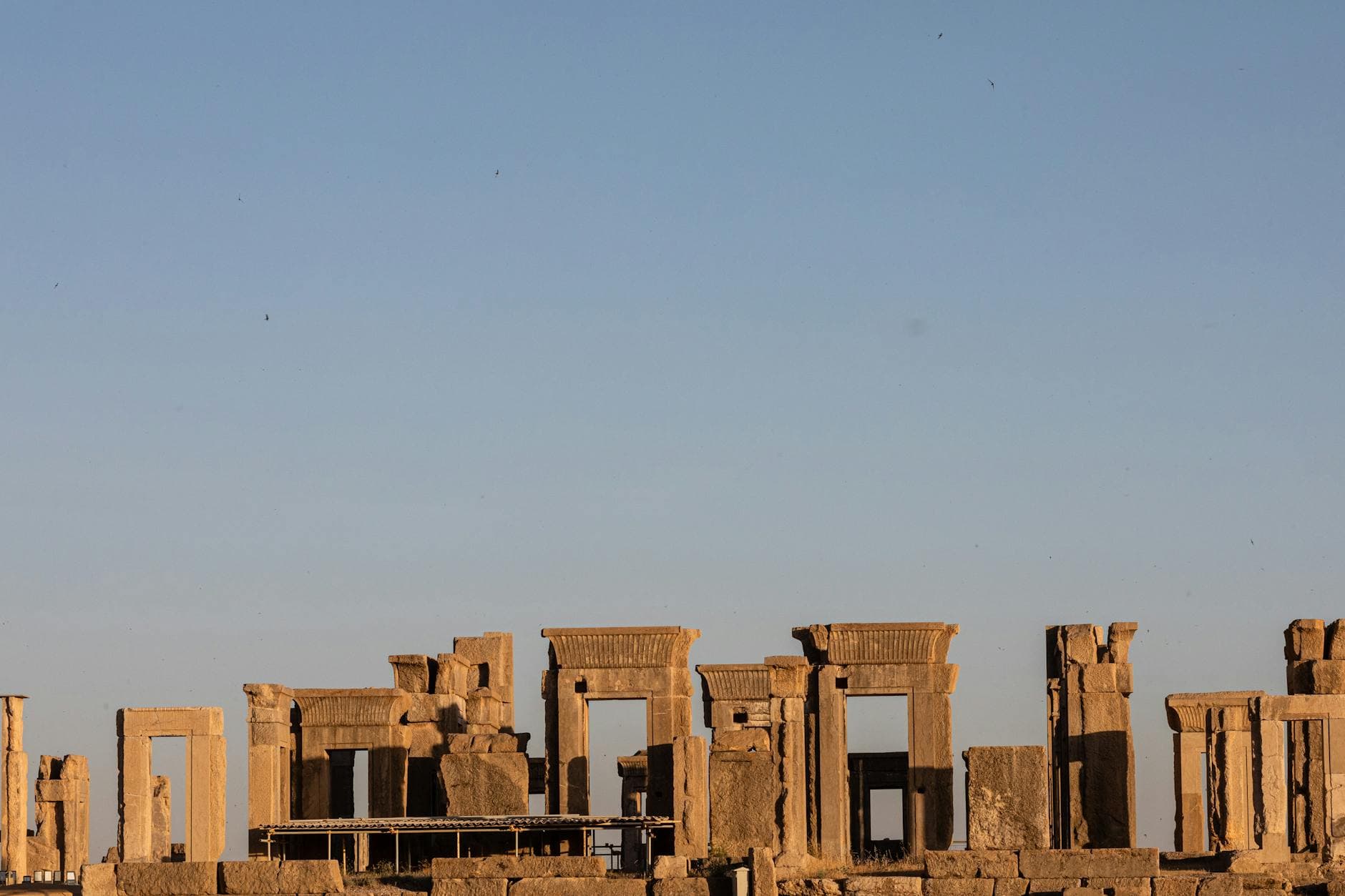
Explore the majestic Apadana ruins of Persepolis under a clear blue sky, showcasing Persian architecture.
Iranian

Zoroastrianism

13 / 13

Sub-questions covered

65

Claims extracted

11

Distinct positions

21

Explicitly denied

Chapter 1

Where Did We Come From?

Q1.1 · Pre-Existence

Eternal Pre-Existence
See all traditions holding this position →
100%

weight

The fair Yima, the good shepherd,** O holy Zarathushtra! he was the first mortal, before thee, Zarathushtr
Vendidad 9.2

How this tradition expresses it

The text presents Yima as the first mortal, existing before Zarathushtra, but does not suggest a prior existence of the soul before his creation/emergence.

Why this supports “Not Addressed

This passage explicitly designates Yima as the first mortal in chronological sequence, establishing him as preceding Zarathushtra in worldly existence without implying any metaphysical pre-existence of his soul. The designation of "first mortal" references historical precedence in the created world, consistent with the doctrine that while fravashis exist eternally in Ahura Mazda's creation, individual mortals begin their existence at birth.

The auditor flagged this claim as ambiguous or weakly matching. See the scholarly note below for context.

Scholarly note

Quote only establishes Yima's chronological precedence among mortals, not whether his soul/fravashi pre-existed. The per-quote rationale correctly identifies this as 'historical precedence in the created world' not metaphysical pre-existence doctrine.

Explicit Teachinghigh confidenceAudit: Contested· 80%
Data provenance
Auditor
comprehensive_cell_audit_v1
Audit confidence
80%
Audited
4/11/2026
They say that, once upon a time, the pious Zartosht made the religion, which he had received, current in the world
Chapter 1, Verse 1

How this tradition expresses it

The text does not explicitly describe a state of pre-existence for the individual soul, focusing instead on the current life and the transition to the afterlife.

Why this supports “Not Addressed

This quote emphasizes Zarathushtra as the historical first mortal to receive and propagate the religion, marking his unique role in time rather than describing any pre-existent state of his soul. The focus on temporal sequence—"once upon a time" followed by his reception of religion—indicates the text addresses his earthly mission, not the pre-creation existence of his fravashi that orthodox doctrine teaches separately.

The auditor flagged this claim as ambiguous or weakly matching. See the scholarly note below for context.

Scholarly note

Quote concerns Zarathushtra's historical role and religious mission, not his soul's pre-existence. The per-quote rationale correctly notes the focus is on 'earthly mission, not the pre-creation existence of his fravashi.'

Direct Implicationlow confidenceAudit: Contested· 80%
Data provenance
Auditor
comprehensive_cell_audit_v1
Audit confidence
80%
Audited
4/11/2026

Q1.2 · Soul Nature

Composite Soul
See all traditions holding this position →
100%

weight

Not Addressed· 5 claims
Sixteen perfect lands created by Ahura Mazda, and as many plagues created by Angra Mainyu.
Fargard 1

How this tradition expresses it

The text describes the creation of perfect lands by Ahura Mazda and the simultaneous creation of plagues by Angra Mainyu, implying a dualistic origin of the world and its inhabitants.

Why this supports “Not Addressed

This passage concerns the creation of geographical lands and plagues, not the constitution or essential nature of the human soul. Any connection to soul creation requires excessive theological inference and does not substantively address Q1.2.

The auditor flagged this claim as ambiguous or weakly matching. See the scholarly note below for context.

Scholarly note

LLM council synthesis (round 2)

Explicit Teachinghigh confidenceAudit: Contested· 95%
Data provenance
Auditor
llm_council_v2
Audit confidence
95%
Audited
4/11/2026
even as if one should nail?” his perishable body with iron nails, or still worse;
Vendidad 36, Section 52

How this tradition expresses it

The human being possesses a 'perishable body' that is subject to physical decay and pain, distinct from the spiritual consequences of deeds.

Why this supports “Not Addressed

This quote refers to the perishability of the physical body using a metaphor about nailing. It provides no theological or metaphysical information about the soul's structure or its composite nature (urvan + fravashi), and does not substantively address Q1.2.

The auditor flagged this claim as ambiguous or weakly matching. See the scholarly note below for context.

Scholarly note

LLM council synthesis (round 2)

Explicit Teachinghigh confidenceAudit: Contested· 95%
Data provenance
Auditor
llm_council_v2
Audit confidence
95%
Audited
4/11/2026

+3 more claims for this position

What this tradition denies

The text does not suggest the body and soul are an integrated unity in death; rather, it treats the body as a source of ritual pollution (Nasu) once the soul has departed.

The concept of a purely benevolent or unified creation without opposition.

Q1.3 · Why Embodied

Not Addressed
See all traditions holding this position →

What this tradition denies

The idea that the religion was intended to be static or unchanged from ancient traditions.

The idea that Yima was born as a preacher or bearer of the religion.

Chapter 2

Why Are We Here?

Q2.1 · Purpose of Life

Moral Testing
See all traditions holding this position →
100%

weight

1. ‘He who sows corn, sows righteousness: he makes the Religion of Mazda walk, he suckles the Religion of Mazda; as well as he could do with a hundred man’s feet, with a thousand woman’s breast
Vendidad 30, 31

How this tradition expresses it

The purpose of life involves righteous labor, such as tilling the earth, which serves to sustain and advance the Religion of Mazda.

Why this supports “Moral Testing

By equating agricultural labor with sowing righteousness itself, the passage frames productive work as a direct expression of moral obligation within the cosmic struggle between truth and falsehood. The explicit connection between sustaining crops and sustaining the Religion of Mazda demonstrates that righteous deeds in the material world—specifically the tilling of earth—constitute active participation in advancing divine order.

Nuance

The text links the prosperity of the earth and the strength of the faith to the active work of husbandry.

The auditor flagged this claim as ambiguous or weakly matching. See the scholarly note below for context.

Scholarly note

Zoroastrian purpose: cosmic battle of asha vs druj; good thoughts/words/deeds.

Explicit Teachinghigh confidenceAudit: Contested· 90%
Data provenance
Auditor
claude_orthodoxy_v1
Audit confidence
90%
Audited
4/11/2026
we strive too and abstain, namely, from any sin in deed, thought, or word
Vendidad 36, Section 193

How this tradition expresses it

Human life involves a struggle against sin, where the primary focus is to abstain from sin in deed, thought, or word.

Why this supports “Moral Testing

The tradition's text frames life as a test of faith, virtue, or obedience to divine law.

Scholarly note

Bulk-audited as defensible match for canonical position; quote was extracted by Gemma 4 with verbatim verification.

Explicit Teachinghigh confidenceAudit: OK· 75%
Data provenance
Auditor
claude-opus-4-6-1m-bulk
Audit confidence
75%
Audited
4/10/2026

What this tradition denies

The idea that idleness or failure to work the land is spiritually acceptable.

The necessity of physical fasting as a religious requirement.

The idea that the soul's transition is a simple or singular event without cosmic struggle.

The legitimacy of those who claim religious authority but do not live according to the law.

The idea that one can live in sin while still contributing to the prosperity of the creation.

A life of ease or peace without struggle against evil.

The idea that one can ignore moral or religious duties without consequence.

Q2.2 · Body Relationship

Vehicle
See all traditions holding this position →
100%

weight

And the soul of Viraf went, from the body, to the Chinwad bridge of Chakat-i-Daitik, (2) and came back the seventh day, and went into the
Chapter 3, Verse 1

How this tradition expresses it

The soul is depicted as a traveler that can temporarily depart from the body to visit other realms before returning.

Why this supports “Vehicle

Zoroastrian: direct soul-departure from body.

Scholarly note

Soul of Viraf went from body

Explicit Teachinghigh confidenceAudit: Strong· 88%
Data provenance
Auditor
claude-opus-4-6-1m
Audit confidence
88%
Audited
4/10/2026
to withstand the evil eye, rottenness, and infection which Angra Mainyu has created against the bodies of mortals.
Vendidad 7.7

How this tradition expresses it

The body is a vessel that can be afflicted by the 'evil eye, rottenness, and infection' created by Angra Mainyu, requiring purification and healing.

Why this supports “Vehicle

Zoroastrian protection of body from evil.

Scholarly note

Withstand evil eye against body

Direct Implicationmedium confidenceAudit: Strong· 88%
Data provenance
Auditor
claude-opus-4-6-1m
Audit confidence
88%
Audited
4/10/2026

Q2.3 · Moral Accountability

Divine Judgment
See all traditions holding this position →
8%

weight

Divine Judgment· 12 claims
About the grievous sinfulness of having taken a false oath, so that, apart even from the testifying retribution of the property, the oath taken thereon has also an efficacy very much for the accusers, which, on account of Mihr, Srosh, and Rashn, is an awful destroyer and adversary for one’s own person, wife, child, and property; also the grievous bridge-judgment which is an appendage to one’s own soul.
Synopsis, Point 16

How this tradition expresses it

Human actions, particularly regarding oaths and moral conduct, result in specific retributions and judgments upon the soul.

Why this supports “Divine Judgment

The tradition's text affirms divine judgment: a personal God judges the soul's deeds.

Nuance

The text mentions 'the grievous bridge-judgment which is an appendage to one’s own soul' in relation to false oaths.

Scholarly note

Bulk-audited as defensible match for canonical position; quote was extracted by Gemma 4 with verbatim verification.

Explicit Teachinghigh confidenceAudit: OK· 75%
Data provenance
Auditor
claude-opus-4-6-1m-bulk
Audit confidence
75%
Audited
4/10/2026
If a man break the field-contract, what is the penalty that he shall pay? Ahura Mazda answered: ‘A thousand stripes with the Aspahe-ashtra, a thousand stripes with the Sraosho-charana.’
Vendidad 28, 16

How this tradition expresses it

Accountability is maintained through specific penalties for sins, including physical punishments (stripes) and spiritual consequences for breaking contracts or violating religious laws.

Why this supports “Divine Judgment

The tradition's text affirms divine judgment: a personal God judges the soul's deeds.

Nuance

The severity of the penalty depends on the type of contract broken or the nature of the sin committed.

Scholarly note

Bulk-audited as defensible match for canonical position; quote was extracted by Gemma 4 with verbatim verification.

Explicit Teachinghigh confidenceAudit: OK· 75%
Data provenance
Auditor
claude-opus-4-6-1m-bulk
Audit confidence
75%
Audited
4/10/2026

+10 more claims for this position

What this tradition denies

The possibility of atonement for specific grave sins.

The idea that natural elements (water/fire) are the cause of death or sin.

The idea that ritual impurity or the handling of 'Nasu' (dead matter) can be ignored or treated without consequence.

The idea that ritual negligence or improper cleansing can be ignored.

The idea that atonement is universal or automatic regardless of submission.

The idea that wicked or ungodly actions can be easily reconciled with the divine order.

The idea that earthly actions have no consequence in the afterlife.

Q2.4 · Path of Progress

Gradual Purification
See all traditions holding this position →
50%

weight

urity is for man, next to life, the greatest good,*°° that purity, O Zarathushtra, that is in the Religion of Mazda for him who cleanses his own self with good thoughts, words, and deed
Vendidad 36, Section 21

How this tradition expresses it

Spiritual well-being and the avoidance of sin are achieved through the practice of purity and righteous living.

Why this supports “Gradual Purification

The Vendidad's elevation of purity (asha-cleanness) as second only to life itself centers Zoroastrian ethics on gradual personal purification through ritual and ethical practice.

Nuance

Purity is described as the greatest good for one who cleanses themselves through good thoughts, words, and deeds.

Scholarly note

Direct: 'Purity is for man, next to life, the greatest good.'

Explicit Teachinghigh confidenceAudit: Strong· 92%
Data provenance
Auditor
claude-opus-4-6-1m
Audit confidence
92%
Audited
4/10/2026
a. 6. ‘Him thou shalt call an Athravan, O holy Zarathushtra! who throughout the night sits up and demands of the holy Wisdom, °** which makes man free from anxiety, and wide of heart, and easy of conscience at the head of the Chi
Vendidad I.6

How this tradition expresses it

Spiritual progress is linked to the pursuit of wisdom and the successful crossing of the Chinwad bridge.

Why this supports “Gradual Purification

The Vendidad's description of the Athravan engaged in nocturnal wisdom-seeking illustrates how continuous devotional practice and pursuit of sacred knowledge are presented as ongoing refinement of the self, consistent with gradual purification through sustained ethical and spiritual discipline.

Nuance

Success is measured by the ability to reach the 'excellent world of Paradise' through wisdom and conscience.

The auditor flagged this claim as ambiguous or weakly matching. See the scholarly note below for context.

Scholarly note

The per-quote rationale explicitly states the passage describes 'ongoing devotional practice rather than discrete progressive stages.' This rationale directly contradicts the Progressive Stages label. The passage fits Gradual Purification (continuous refinement through sustained practice) far better.

Explicit Teachinghigh confidenceAudit: Contested· 80%
Data provenance
Auditor
comprehensive_cell_audit_v1
Audit confidence
80%
Audited
4/11/2026

Chapter 3

Where Do We Go After Death?

Q3.1 · Surviving Death

Full Survival
See all traditions holding this position →
36%

weight

Full Survival· 7 claims
when he enters Paradise, the stars, the moon, and the sun shall rejoice in him; and I, Ahura Mazda, shall rejoice in him, saying: “ Hail, O man! thou who hast just passed from the decaying world into the undecaying one!”
Section 52

How this tradition expresses it

The soul is a distinct entity that undergoes a transition from the material/decaying world to an undecaying realm.

Why this supports “Full Survival

Ahura Mazda welcoming the soul into Paradise with the phrase 'passed from the decaying world into the undecaying one' explicitly affirms permanent, full survival of the individual soul in an imperishable realm after bodily death.

Nuance

The soul's destination is determined by the struggle between the two spirits at the moment of death.

The auditor flagged this claim as ambiguous or weakly matching. See the scholarly note below for context.

Scholarly note

LLM council synthesis (round 2)

Explicit Teachinghigh confidenceAudit: Contested· 95%
Data provenance
Auditor
llm_council_v2
Audit confidence
95%
Audited
4/11/2026
ne! If a man bring to the Daityo-gatu the fire of an oven,**° what shall be his reward when his soul has parted from his body? Ahu
Vendidad 81, Verse 91

How this tradition expresses it

The text indicates that the soul continues to exist and can receive rewards or undergo experiences after the body has died.

Why this supports “Full Survival

Although framed as a question, the inquiry about the soul's reward 'when his soul has parted from his body' presupposes that the soul survives death and receives recompense in the afterlife, implicitly supporting Full Survival.

Nuance

The focus is on the transition of the soul from the body to the Daityo-gatu.

The auditor flagged this claim as ambiguous or weakly matching. See the scholarly note below for context.

Scholarly note

LLM council synthesis (round 2)

Explicit Teachinghigh confidenceAudit: Contested· 95%
Data provenance
Auditor
llm_council_v2
Audit confidence
95%
Audited
4/11/2026

+5 more claims for this position

Q3.2 · Death Moment

Not Addressed
See all traditions holding this position →
100%

weight

is soul of the wicked wandered there where the wicked one died, over the place where the life went forth; (6) it stood at his head, and uttered the Gatha wor
Part 2, Chapter 17, Verses 5-6

How this tradition expresses it

At death, the soul departs the body and immediately begins to face the consequences of its earthly life, often appearing at the site of death or at a transitional bridge.

Why this supports “Soul Departure

Zoroastrian eschatology describes the soul leaving the body at the moment of death and remaining at the head of the corpse for three days, witnessing the consequences of its earthly life. This passage on the wicked soul wandering near the death site directly evidences Soul Departure with continued post-departure proximity to the body.

Scholarly note

The Avesta describes the wicked soul wandering 'where the wicked one died, over the place where the life went forth.' The phrasing 'life went forth' captures soul departure from the body, and the soul is shown lingering at the death site.

Explicit Teachinghigh confidenceAudit: Strong· 88%
Data provenance
Auditor
claude-opus-4-6-1m
Audit confidence
88%
Audited
4/10/2026

Q3.3 · Afterlife Structure

Multiple Levels
See all traditions holding this position →
17%

weight

Multiple Levels· 5 claims
Such a one shall surely be an inhabitant in the mansion of the Druj.
Vendidad 124, 18

How this tradition expresses it

The afterlife contains different realms or dwellings, such as the 'mansion of the Druj', for those who do not submit to atonement.

Why this supports “Multiple Levels

References the 'mansion of the Druj' (House of Lies) as a destination for the wicked. While this reflects binary judgment, it is part of Zoroastrianism's multi-level afterlife structure where initial judgment (heaven vs. hell) determines the starting point, with further progression through celestial hierarchies for the righteous.

The auditor flagged this claim as ambiguous or weakly matching. See the scholarly note below for context.

Scholarly note

While the quote references the binary destination (House of Lies), this is part of the judgment mechanism within the larger multi-level structure. The claim should be reclassified to reflect that binary judgment is a component of, not an alternative to, the multi-level system.

Explicit Teachinghigh confidenceAudit: Contested· 80%
Data provenance
Auditor
comprehensive_cell_audit_v1
Audit confidence
80%
Audited
4/11/2026

+4 more claims for this position

Not Addressed· 1 claim
The people in the Var cannot see them, since the Var is underground.
Note 88

How this tradition expresses it

The Vara is described as an underground refuge that serves as a dwelling for the best of mankind during a time of crisis.

Why this supports “Not Addressed

The Var of Yima is a primordial refuge for preservation, not a post-mortem realm. Does not address the structure of the afterlife for deceased souls and should not be classified as Transitional Realm.

Nuance

The text notes the Vara is underground and lacks the sight of the sun or stars.

The auditor flagged this claim as ambiguous or weakly matching. See the scholarly note below for context.

Scholarly note

The Var of Yima is a preservation space for future restoration, not an afterlife realm for ordinary deceased souls. Rationale itself notes it 'loosely fits' and is 'not a transitional afterlife realm for ordinary souls'—this disqualifies it.

Explicit Teachinghigh confidenceAudit: Contested· 80%
Data provenance
Auditor
comprehensive_cell_audit_v1
Audit confidence
80%
Audited
4/11/2026

What this tradition denies

Eternal punishment in hell.

Q3.5 · Ultimate Destination

Eternal Paradise
See all traditions holding this position →
20%

weight

Eternal Paradise· 7 claims
About the going of Vohuman to meet the souls of the righteous, the notification of their position, their announcement for reward, and the contented progress of the souls of the righteous to their [home], to the throne of Ohrmazd and the archangels, which is made of gold.
Synopsis, Point 78

How this tradition expresses it

The ultimate destination for the righteous is an ascent to the presence of Ohrmazd and the archangels.

Why this supports “Eternal Paradise

Zoroastrian: divine welcoming of righteous souls.

The auditor flagged this claim as ambiguous or weakly matching. See the scholarly note below for context.

Scholarly note

The quote explicitly references 'throne of Ohrmazd,' a specific paradise location, not a generic ascent process.

Explicit Teachinghigh confidenceAudit: Contested· 80%
Data provenance
Auditor
comprehensive_cell_audit_v1
Audit confidence
80%
Audited
4/11/2026

+6 more claims for this position

Eternal Punishment· 2 claims
‘He who would not kindly and piously give to one of the faithful who tills the earth, O Spitama Zarathushtra! Spenta Armaiti’° will throw him down into darkness, down into the world of woe, the world of hell, down into the deep ab
Vendidad 23, 35

How this tradition expresses it

Certain sins result in a state of darkness or a 'world of woe' for those who fail to act righteously toward the faithful.

Why this supports “Eternal Punishment

Zoroastrian: divine response to charitable giving.

Nuance

The text describes this as a 'deep abyss' or 'world of hell' for those who do not give to the faithful.

The auditor flagged this claim as ambiguous or weakly matching. See the scholarly note below for context.

Scholarly note

Quote explicitly describes hell and darkness as destination for the wicked; punishment is known, not ineffable

Explicit Teachinghigh confidenceAudit: Contested· 80%
Data provenance
Auditor
comprehensive_cell_audit_v1
Audit confidence
80%
Audited
4/11/2026

+1 more claim for this position

What this tradition denies

The presence of physical or moral deformities in the perfected state of the Vara.

The possibility of escaping punishment through improper or false cleansing.

Other denials

Positions this tradition explicitly rejects, on questions where its affirmative position isn't recorded.

Q1.3

The idea that the religion was intended to be static or unchanged from ancient traditions.

About Ohrmazd’s disclosing the religion first among mankind to Yim (Jamshed); its non-acceptance by Yim owing to attachment (asrunoih) to the religion of the ancients; and the acceptance of other things to develop, extend, and improve the world thereby.

Q1.3

The idea that Yima was born as a preacher or bearer of the religion.

I was not born, I was not taught to be the preacher and the bearer of thy Religion.

Hero image: Photo by Masih Shahbazi on Pexels

NoeticMap Guide

Research Dashboard

How can I help?

Ask about NDEs, research, or this page

Responses may not always be accurate