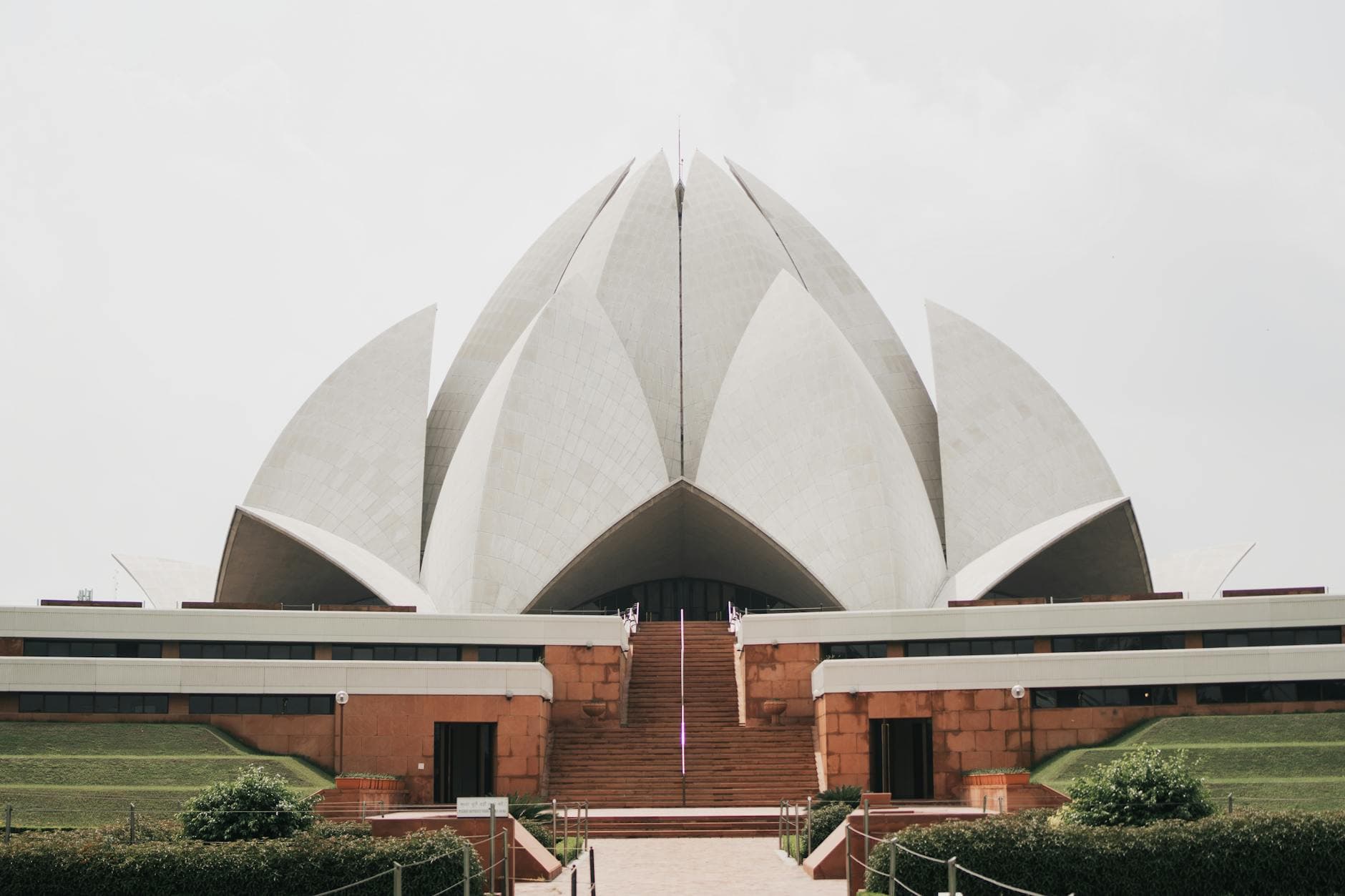
Stunning view of the iconic Lotus Temple in New Delhi, a marvel of modern architecture.
Abrahamic

Baha'i

13 / 13

Sub-questions covered

91

Claims extracted

12

Distinct positions

44

Explicitly denied

Chapter 1

Where Did We Come From?

Q1.1 · Pre-Existence

No Pre-Existence
See all traditions holding this position →
100%

weight

"From it (earth) have We created you, and unto it will We return you, and out of it will We bring you forth a second time."
Section: chunk 11/16

How this tradition expresses it

Humanity is created from dust and will undergo a process of being brought forth from the earth again, implying a cycle of creation and return.

Why this supports “Not Addressed

This is a Qurʼanic verse (20:55) concerning the physical body's creation from earth, return to earth, and resurrection. While the Bahá'í tradition reveres the Qurʼan, no verified Bahá'í source has been provided that cites or interprets this specific verse in the context of the soul's pre-existence. The verse does not directly address the Bahá'í teaching on the origin of the individual soul and therefore cannot substantiate any Bahá'í position on this sub-question.

Nuance

The text presents this as a divine ordinance for all who dwell on earth.

The auditor flagged this claim as ambiguous or weakly matching. See the scholarly note below for context.

Scholarly note

LLM council synthesis (round 2)

Explicit Teachinghigh confidenceAudit: Contested· 95%
Data provenance
Auditor
llm_council_v2
Audit confidence
95%
Audited
4/11/2026

What this tradition denies

The idea that earthly prosperity or authority is the primary goal of existence.

Q1.2 · Soul Nature

Created Soul
See all traditions holding this position →
11%

weight

Created Soul· 12 claims
For in him are potentially revealed all the attributes and names of God to a degree that no other created being hath excelled or surpassed.
baha'i_808

How this tradition expresses it

Humanity possesses the potential to reflect all the names and attributes of God, with man being a unique mystery of the Divine.

Why this supports “Created Soul

The phrase 'potentially revealed all the attributes and names of God' indicates the soul mirrors divine qualities without ontological identity with God. The explicit qualifier 'no other created being' identifies the human soul as a created entity, albeit the highest among created things, supporting Created Soul.

Nuance

The intensity of this revelation varies among created beings, with the Manifestations of God being the most perfect expression.

The auditor flagged this claim as ambiguous or weakly matching. See the scholarly note below for context.

Scholarly note

LLM council synthesis

Explicit Teachinghigh confidenceAudit: Contested· 95%
Data provenance
Auditor
llm_council_v1
Audit confidence
95%
Audited
4/11/2026

+11 more claims for this position

Composite Soul· 3 claims
the appearance of that immortal Beauty in the image of mortal man, with such human limitations as eating and drinking, poverty and riches, glory and abasement, sleeping and waking
Kitab-i-Iqan, Section: chunk 3/9

How this tradition expresses it

The human being possesses a mortal body and a spiritual essence that is subject to the limitations of human form while being capable of divine ascent.

Why this supports “Composite Soul

This passage describes the Manifestation of God appearing in human form with physical limitations (eating, drinking, poverty, sleeping), illustrating the composite nature of human existence as both physical and spiritual. It supports the twofold anthropology of body and soul characteristic of Bahá'í teaching.

Nuance

The text distinguishes between the 'mortal bodies' and the spiritual reality of the Manifestations.

The auditor flagged this claim as ambiguous or weakly matching. See the scholarly note below for context.

Scholarly note

LLM council synthesis

Explicit Teachinghigh confidenceAudit: Contested· 95%
Data provenance
Auditor
llm_council_v1
Audit confidence
95%
Audited
4/11/2026

+2 more claims for this position

What this tradition denies

The idea that the Manifestations of God are purely physical or lack human limitations.

The idea that God's essence is subject to human attributes like corporeal existence or physical movement.

The idea that the physical/fleshly life is the true or permanent life.

The idea that the Manifestations of God are distinct, separate individuals with no essential unity.

The idea that spiritual understanding is a product of human learning or academic study.

The idea that the physical and spiritual are of the same substance or that the soul is purely material.

The concept of a self-sufficient, independent ego or identity.

The idea that the soul's nature can be fully understood or described by human intellect.

The idea that all created things are equal in rank or that the creature is indistinguishable from the Creator.

The text denies that the speaker (the Manifestation) is merely a man claiming divinity through personal whim; it asserts he is a servant of God.

The concept of an 'Inner Reality' derived from human imagination.

Q1.3 · Why Embodied

Spiritual Growth
See all traditions holding this position →
100%

weight

The purpose of God in creating man hath been, and will ever be, to enable him to know his Creator and to attain His Presence.
Section XXIX

How this tradition expresses it

Humanity was endowed with unique capacities to enable the individual to know the Creator and reflect His glory.

Why this supports “Spiritual Growth

Baha'u'llah's foundational teaching on the purpose of human creation: to know God and attain divine presence - Spiritual Growth framed as theognosis.

Scholarly note

Direct Baha'i: 'purpose of God in creating man... to enable him to know his Creator and to attain His Presence.'

Explicit Teachinghigh confidenceAudit: Strong· 94%
Data provenance
Auditor
claude-opus-4-6-1m
Audit confidence
94%
Audited
4/10/2026
The purpose underlying Their revelation hath been to educate all men, that they may, at the hour of death, ascend, in the utmost purity and sanctity and with absolute detachment, to the throne of the Most High.
LXXXII

How this tradition expresses it

The purpose of the Prophets' revelation is to educate humanity so that they may ascend to the presence of God at the time of death.

Why this supports “Spiritual Growth

Baha'i teaching: the purpose of revelation is to educate humans for spiritual ascent at death - direct Spiritual Growth purpose.

Scholarly note

Direct: 'to educate all men, that they may, at the hour of death, ascend.'

Explicit Teachinghigh confidenceAudit: Strong· 92%
Data provenance
Auditor
claude-opus-4-6-1m
Audit confidence
92%
Audited
4/10/2026

What this tradition denies

The idea that revelation is a static, finished event tied to a single historical figure or law.

Chapter 2

Why Are We Here?

Q2.1 · Purpose of Life

Spiritual Development
See all traditions holding this position →
73%

weight

Spiritual Development· 13 claims
Sanctify your souls, O ye peoples of the world, that haply ye may attain that station which God hath destined for you and enter thus the tabernacle which, according to the dispensations of Providence, hath been raised in the firmament of the Bayan.
Part One

How this tradition expresses it

The purpose of life involves attaining a destined station through sanctification and the pursuit of divine knowledge and understanding.

Why this supports “Spiritual Development

Bahá'u'lláh's call to 'sanctify your souls' to attain the station God has destined directly frames earthly life's purpose as progressive spiritual purification and development toward a divinely ordained station.

Nuance

Attainment is contingent upon being detached from earthly things and the words of mortal men.

The auditor flagged this claim as ambiguous or weakly matching. See the scholarly note below for context.

Scholarly note

LLM council synthesis (round 2)

Explicit Teachinghigh confidenceAudit: Contested· 95%
Data provenance
Auditor
llm_council_v2
Audit confidence
95%
Audited
4/11/2026

+12 more claims for this position

Knowledge· 4 claims
a soul seeking the truth, and wishing to attain unto the knowledge of God, should know not where to go for it and from whom to seek it?
Section: chunk 2/9

How this tradition expresses it

The purpose of life involves seeking the knowledge of God and attaining spiritual understanding through the guidance of the Manifestations.

Why this supports “Knowledge

This passage explicitly identifies seeking truth and attaining the knowledge of God as the fundamental orientation of the awakening soul. While integral to spiritual development in Bahá'í theology, the quote's specific emphasis on knowing God warrants the KNOWLEDGE label.

Nuance

The text emphasizes that true purpose is found in the 'way of certitude' rather than earthly pursuits.

The auditor flagged this claim as ambiguous or weakly matching. See the scholarly note below for context.

Scholarly note

LLM council synthesis (round 2)

Explicit Teachinghigh confidenceAudit: Contested· 95%
Data provenance
Auditor
llm_council_v2
Audit confidence
95%
Audited
4/11/2026

+3 more claims for this position

What this tradition denies

The validity of using human standards or the words of men to understand God.

The notion that earthly sovereignty or political power is the true meaning of divine sovereignty.

The notion that earthly sovereignty or worldly dominion is the true measure of power or purpose.

The notion that the purpose of life is to follow traditionalist or legalistic interpretations that serve to maintain authority.

The idea that religious laws are static and should never be altered or renewed.

The belief that religious laws are immutable and cannot be superseded by new Manifestations.

The notion that earthly status or worldly success equates to spiritual success.

The pursuit of worldly status, power, or 'idols' of the flesh as a valid purpose of life.

The pursuit of material benefits as a primary purpose of the holy station.

The pursuit of material wealth and earthly power as a valid end-goal for humanity.

The idea that acting like animals is a valid way to live.

The text denies that worldly status or the 'vanities of the world' provide lasting purpose or protection from divine judgment.

The idea that personal pride or nationalistic love is the highest purpose of life.

The pursuit of worldly desires and material attachments as a valid purpose for life.

The pursuit of worldly vanity and carnal desires as a valid purpose for life.

The sufficiency of worldly wealth or status for spiritual fulfillment.

Q2.2 · Body Relationship

Temple
See all traditions holding this position →
80%

weight

Temple· 4 claims
the divine Beauty will be made manifest from the heaven of the will of God, and will appear in the form of the human temple.
Kitab-i-Iqan, Section: chunk 3/9

How this tradition expresses it

The human body serves as a temporary vessel or 'temple' for the divine spirit, though it is subject to earthly limitations.

Why this supports “Temple

Baha'i: divine manifestation appears in and inhabits the human temple—body as sacred consecrated form.

Nuance

The text notes that while the spirit is eternal/divine, it manifests through the 'human temple'.

The auditor flagged this claim as ambiguous or weakly matching. See the scholarly note below for context.

Scholarly note

Quote explicitly states 'human temple'; metaphor is sacred receptacle, not instrumental vehicle.

Explicit Teachinghigh confidenceAudit: Contested· 80%
Data provenance
Auditor
comprehensive_cell_audit_v1
Audit confidence
80%
Audited
4/11/2026
those luminous Gems of Holiness to appear out of the realm of the spirit, in the noble form of the human temple, and be made manifest unto all men
baha'i_808

How this tradition expresses it

The human form serves as a 'temple' or 'mirror' through which the light of the divine can be manifested and communicated to the world.

Why this supports “Temple

Baha'i: divine manifested in human temple - body as sacred receptacle.

Nuance

The physical form is a vessel for the spiritual reality of the soul and the attributes of God.

Scholarly note

Luminous Gems in human temple

Direct Implicationhigh confidenceAudit: Strong· 88%
Data provenance
Auditor
claude-opus-4-6-1m
Audit confidence
88%
Audited
4/10/2026

+2 more claims for this position

Q2.3 · Moral Accountability

Divine Judgment
See all traditions holding this position →
100%

weight

God hath throughout His Book and in His holy and immortal Tablet warned them that deny and repudiate the revealed verses, and hath announced His grace unto them that accept the
Section: chunk 8/9

How this tradition expresses it

Accountability is tied to the acceptance or rejection of the revealed verses of God, with consequences ranging from hellish fire to the loss of spiritual grace.

Why this supports “Divine Judgment

The tradition's text affirms divine judgment: a personal God judges the soul's deeds.

Scholarly note

Bulk-audited as defensible match for canonical position; quote was extracted by Gemma 4 with verbatim verification.

Explicit Teachinghigh confidenceAudit: OK· 75%
Data provenance
Auditor
claude-opus-4-6-1m-bulk
Audit confidence
75%
Audited
4/10/2026
None can escape the snares He setteth, and no soul can find release except through submission to His will.
Kitab-i-Iqan, Section: chunk 9/9

How this tradition expresses it

Humanity is subject to the divine decree and the will of God, where no soul can find release except through submission to His will.

Why this supports “Divine Judgment

The tradition's text affirms divine judgment: a personal God judges the soul's deeds.

Scholarly note

Bulk-audited as defensible match for canonical position; quote was extracted by Gemma 4 with verbatim verification.

Explicit Teachinghigh confidenceAudit: OK· 75%
Data provenance
Auditor
claude-opus-4-6-1m-bulk
Audit confidence
75%
Audited
4/10/2026

What this tradition denies

The idea that divine guidance is incomplete or insufficient due to human rejection.

The validity of religious leadership that is based on selfish calculation and pride rather than divine truth.

The notion that religious laws or rituals are static and cannot be abrogated.

The ability to excuse disbelief by claiming that one was merely following the example of others.

The notion that one can be justified in following those who live in opposition to spiritual truth.

The notion that worldly power, wealth, or possessions constitute true glory or provide a valid basis for pride.

The idea that outward profession of faith is sufficient for righteousness if it contradicts inward reality.

Q2.4 · Path of Progress

Progressive Stages
See all traditions holding this position →
57%

weight

Gradual Purification· 4 claims
they that tread the path of faith, they that thirst for the wine of certitude, must cleanse themselves of all that is earthly--their ears from idle talk, their minds from vain imaginings, their hearts from worldly affections, their eyes from that which perisheth.
Part One

How this tradition expresses it

Spiritual progress requires the cleansing of the self from earthly attachments, vain imaginings, and worldly affections to become worthy of divine grace.

Why this supports “Gradual Purification

Baha'i mystical writings prescribe gradual self-purification as the path of faith. The seeker must cleanse themselves of earthly attachments stage by stage.

Scholarly note

Direct cleansing language - 'must cleanse themselves of all that is earthly.'

Explicit Teachinghigh confidenceAudit: Strong· 92%
Data provenance
Auditor
claude-opus-4-6-1m
Audit confidence
92%
Audited
4/10/2026

+3 more claims for this position

Progressive Stages· 3 claims
For the break of the morn of divine guidance must needs follow the darkness of the night of error.
Section: chunk 2/9

How this tradition expresses it

Spiritual progress is tied to the ability to recognize the Manifestations of God and to transition from the darkness of error to the light of guidance.

Why this supports “Progressive Stages

Baha'u'llah's dawn-after-night metaphor describes the soul's progressive awakening from spiritual error to divine guidance—a model for personal spiritual advancement.

Nuance

This progress is contingent upon the individual's capacity to receive divine truth.

The auditor flagged this claim as ambiguous or weakly matching. See the scholarly note below for context.

Scholarly note

Keep classification but strengthen rationale: metaphor of darkness-to-dawn is used for personal spiritual awakening, not merely historical dispensation transition

Explicit Teachinghigh confidenceAudit: Contested· 80%
Data provenance
Auditor
comprehensive_cell_audit_v1
Audit confidence
80%
Audited
4/11/2026

+2 more claims for this position

What this tradition denies

The sufficiency of human intellect and learning to grasp the nature of divine revelation.

The validity of spiritual standing for those who follow corrupt inclinations or worldly desires.

Chapter 3

Where Do We Go After Death?

Q3.1 · Surviving Death

Full Survival
See all traditions holding this position →
100%

weight

It hath quickened the dead with the breath of life, and caused them to speed out of the sepulchres of their mortal bodies.
Kitab-i-Iqan, Section: chunk 3/9

How this tradition expresses it

Death involves the separation of the spirit from the mortal body, allowing for a transition to higher spiritual realities.

Why this supports “Full Survival

The image of souls "speeding out of the sepulchres of their mortal bodies" emphasizes the spirit's continued conscious existence and movement into new realms after bodily death, rather than cessation or dissolution, supporting the doctrine that the individual soul persists eternally as a distinct entity.

Nuance

The text describes the body as a 'sepulchre' from which the life-breath escapes.

The auditor flagged this claim as ambiguous or weakly matching. See the scholarly note below for context.

Scholarly note

Baha'i doctrine: the soul continues to exist eternally as a distinct entity.

Explicit Teachinghigh confidenceAudit: Contested· 90%
Data provenance
Auditor
claude_orthodoxy_v1
Audit confidence
90%
Audited
4/11/2026
This life knoweth no death, and this existence is crowned by immortality.
Kitab-i-Iqan, Section 5/9

How this tradition expresses it

The life of the spirit is immortal and continues beyond the death of the flesh.

Why this supports “Full Survival

Direct Baha'i immortality.

Scholarly note

Direct: 'this existence is crowned by immortality'

Explicit Teachinghigh confidenceAudit: Strong· 92%
Data provenance
Auditor
claude-opus-4-6-1m
Audit confidence
92%
Audited
4/10/2026

What this tradition denies

The full disclosure of the mechanics of death and return.

Q3.3 · Afterlife Structure

Spirit World
See all traditions holding this position →
100%

weight

They that are of the same grade and station are fully aware of one another's capacity, character, accomplishments and merits. They that are of a lower grade, however, are incapable of comprehending adequately the station, or of estimating the merits, of those that rank above them.
LXXXVI

How this tradition expresses it

The afterlife involves different grades and stations where souls of different spiritual capacities interact.

Why this supports “Multiple Levels

Baha'u'llah's writings describe the next world as having graded stations of spiritual development, with souls progressing through them. The reference to 'grade and station' directly evidences a multi-level afterlife structure.

Nuance

The ability to comprehend others depends on their relative spiritual grade and station.

Scholarly note

Baha'i doctrine of progressive spiritual stations: 'they that are of the same grade and station' - explicit hierarchical structure of the next world.

Explicit Teachinghigh confidenceAudit: Strong· 88%
Data provenance
Auditor
claude-opus-4-6-1m
Audit confidence
88%
Audited
4/10/2026

Q3.4 · Long-Term Destiny

One Life Only
See all traditions holding this position →
100%

weight

In like manner, in every subsequent Revelation, the return of the former Revelation is a fact, the truth of which is firmly established.
Section: chunk 6/9

How this tradition expresses it

The text teaches the 'return' of the souls of the Prophets and their companions in subsequent dispensations, where the same spiritual qualities are manifested in new bodies.

Why this supports “One Life Only

This quote describes the Bahá'í doctrine of 'return' as it applies to successive divine Revelations—the recurrence of spiritual qualities and prophetic themes across dispensations. Bahá'u'lláh explicitly distinguishes this from individual soul reincarnation; the 'return' of a former Revelation means the reappearance of its spiritual attributes in a new Manifestation, not the rebirth of individual souls. In orthodox Bahá'í teaching, this passage reinforces the One Life Only position for individual humans by clarifying that 'return' operates at the level of divine qualities and prophetic stations, not personal souls.

Nuance

The text uses the metaphor of the rose to explain that while the form changes, the essence remains the same.

The auditor flagged this claim as ambiguous or weakly matching. See the scholarly note below for context.

Scholarly note

LLM council synthesis (round 2)

Explicit Teachinghigh confidenceAudit: Contested· 95%
Data provenance
Auditor
llm_council_v2
Audit confidence
95%
Audited
4/11/2026

What this tradition denies

The denial of the 'return' of the Prophets and their companions.

The idea that the purpose of the Prophets' lives was limited to earthly existence.

The concept of dualism or the existence of two Gods.

Q3.5 · Ultimate Destination

Ultimate Transcendence
See all traditions holding this position →
10%

weight

Ultimate Transcendence· 9 claims
e may enter the celestial City: "Verily, we are God's," and abide within the exalted habitation: "And unto Him we do return."
baha'i_808

How this tradition expresses it

The ultimate end of human existence is to return to the Divine and abide in the exalted habitation of God.

Why this supports “Ultimate Transcendence

Direct Baha'i eternal celestial dwelling.

Nuance

This is achieved through the cleansing of the heart and the realization of divine knowledge.

Scholarly note

Celestial City, abide within exalted habitation

Explicit Teachinghigh confidenceAudit: Strong· 88%
Data provenance
Auditor
claude-opus-4-6-1m
Audit confidence
88%
Audited
4/10/2026
For that holy soul is immortal, liveth the life of God, and abideth within the retreats of celestial glory upon the Sadrih of heavenly reunion.
Kitab-i-Iqan, Section 5/9

How this tradition expresses it

The ultimate destination for the righteous is a state of heavenly reunion and celestial glory.

Why this supports “Ultimate Transcendence

Direct Baha'i eternal life.

Nuance

The text describes this in terms of 'the retreats of celestial glory'.

Scholarly note

Holy soul immortal, lives life of God

Explicit Teachinghigh confidenceAudit: Strong· 88%
Data provenance
Auditor
claude-opus-4-6-1m
Audit confidence
88%
Audited
4/10/2026

+7 more claims for this position

What this tradition denies

The idea that the 'heavens' or 'mansions' are the ultimate end of the soul.

The permanence of earthly power, wealth, or status in the face of death.

Hero image: Photo by Vishal Adhikari on Pexels

NoeticMap Guide

Research Dashboard

How can I help?

Ask about NDEs, research, or this page

Responses may not always be accurate